TL;DR: AI-assisted security shifts safety from reaction to prevention by continuously analyzing video, sensor, and access data to spot risks early. It reduces blind spots, cuts false alarms, and gives teams time to act before minor issues turn into injuries, shutdowns, or liability events. For organizations responsible for people and property, this means fewer surprises and better outcomes.
How AI-Assisted Security Helps Detect Safety Hazards Before They Become Incidents
Most safety incidents do not start as emergencies. They begin as small, easy-to-miss warning signs. A spill that goes unnoticed. A propped door that defeats access control. A piece of equipment overheating after hours. Traditional security systems record these moments but do nothing with them until someone is already hurt or operations are disrupted.
AI-assisted security changes that equation. Instead of relying on human monitoring or post-incident review, AI systems analyze activity in real time and flag abnormal conditions as they happen. That is the difference between documenting an incident and preventing one.
What Does “AI-Assisted Security” Actually Mean?
AI-assisted security uses machine learning models to interpret what cameras and sensors are seeing and hearing. The system understands patterns of normal behavior and alerts teams when something falls outside those patterns.
This is not about replacing people. It is about giving your team early, actionable insight.
Examples include:
Video analytics that detect slips, falls, or unsafe congestion
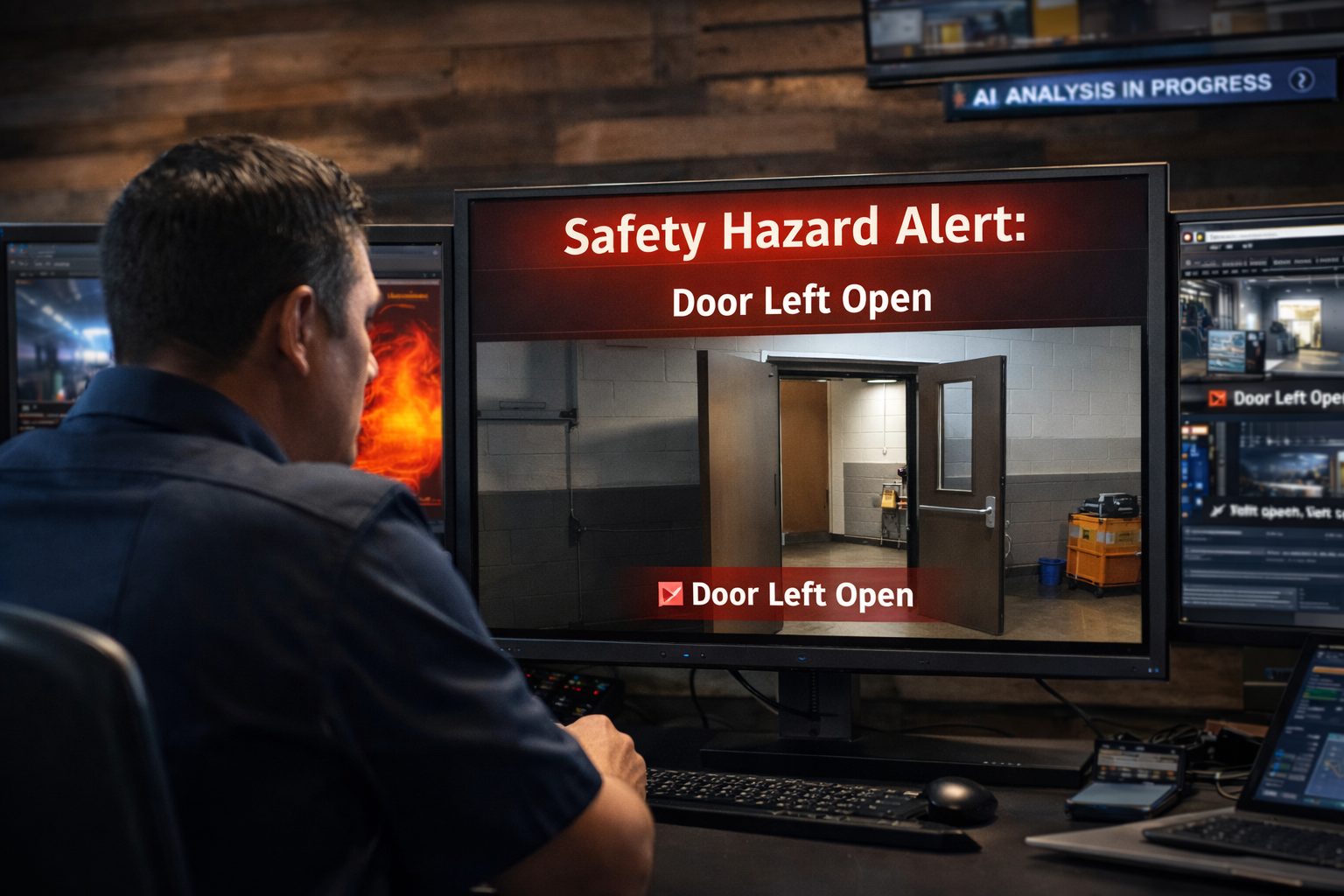
AI models that recognize blocked exits or doors left open
Environmental sensors that identify air quality issues, vape aerosols, smoke, or abnormal noise levels
Thermal analytics that flag overheating equipment or electrical risks
Platforms like Avigilon, Verkada, HALO Smart Sensors, and Motorola Solutions work together to turn raw data into clear alerts your team can act on.
How Does AI Identify Hazards Humans Miss?
Humans get tired. Cameras do not. AI systems watch continuously and consistently across every facility.
AI excels at:
Detecting gradual changes, such as rising heat or increasing occupancy
Spotting patterns across multiple locations
Reducing false alarms by learning what is normal in your environment
Triggering alerts before thresholds are crossed, not after damage is done
Instead of reviewing footage after an incident, your team receives a real-time notification while there is still time to intervene.
What Types of Safety Risks Can AI Detect Early?
AI-assisted security helps identify a wide range of non-criminal safety hazards, including:
Slip-and-fall risks from spills or wet floors
Unauthorized access into restricted or hazardous areas
Overcrowding in hallways, stairwells, or event spaces
Vape, smoke, or chemical indicators in schools and healthcare settings
Equipment overheating or abnormal temperature changes
Escalating noise patterns that signal distress or conflict
These are the types of risks that rarely make headlines but quietly drive insurance claims, compliance issues, and operational downtime.
Preventing a Shutdown Before It Happened
A manufacturing facility was experiencing intermittent equipment failures during overnight shifts. Traditional alarms were not triggering, and the issue was only discovered after production delays occurred.
Hoosier deployed AI video analytics paired with thermal monitoring. The system detected abnormal heat patterns on a specific machine after hours and alerted operations staff before failure occurred. Maintenance addressed the issue the same night.
The result:
No production shutdown
No safety incident
Reduced downtime and repair costs
This is what proactive safety looks like in practice.
Why Integrated Systems Matter More Than Standalone AI
AI is most effective when systems work together. Video, access control, alarms, and environmental sensors should not live in silos.
An integrated security platform allows:
A camera alert to trigger access control lockdowns
Environmental sensors to escalate video monitoring automatically
Centralized dashboards for multi-site visibility
Faster response with fewer handoffs
Hoosier designs systems that work as a single ecosystem, not disconnected tools.
FAQ
Q: Does AI-assisted security create more false alarms?
A: No. In fact, it reduces them. AI models learn normal behavior over time, which helps filter out routine activity and surface only meaningful exceptions.
Q: Is this technology only for large enterprises?
A: No. AI-assisted security scales well for schools, healthcare facilities, manufacturers, multi-family properties, and multi-site businesses.
Q: Will AI replace human safety or security staff?
A: No. AI supports people by giving them better information sooner. Human judgment and response remain essential.
Q: How difficult is it to add AI to an existing system?
A: Many AI capabilities can be layered onto modern camera and sensor platforms. A site assessment determines what upgrades, if any, are needed.
Q: Does AI help with compliance and documentation?
A: Yes. AI systems create audit trails, alerts, and event records that support safety policies, inspections, and regulatory reviews.
See Real Solutions in Action
You should not have to wait for an incident to find out where your risks are. AI-assisted security gives you visibility before something goes wrong.
Schedule a visit to the Hoosier Security Experience Center to see how AI video analytics, environmental sensors, and integrated platforms work together to protect people, operations, and peace of mind.