TL;DR: In 2026, video evidence is judged on clarity, context, and integrity, not just whether a camera was recording. Footage must clearly show who was involved, what happened, when and where it occurred, and prove it was not altered. Organizations that design for evidence quality up front avoid failed investigations, legal exposure, and costly disputes when incidents occur.
What “Good” Video Evidence Looks Like in 2026 and How to Ensure Your Footage Actually Holds Up
Most organizations assume that having cameras means they have evidence.
That assumption is wrong.
In 2026, video evidence is judged on clarity, context, integrity, and chain of custody. Grainy clips, missing timestamps, poor angles, or unverifiable footage can delay investigations, weaken legal cases, and undermine trust with law enforcement, insurers, and attorneys.
When an incident happens, the question is not “Do you have video?”
It is “Does your video actually hold up?”
What Actually Qualifies as “Good” Video Evidence Today?
Good video evidence is no longer just about resolution. It is about whether the footage can clearly answer who, what, when, where, and how without creating doubt.
In 2026, strong evidence typically includes:
Clear facial and object detail, even in motion
Accurate timestamps and synchronized system clocks
Consistent frame rates with no dropped footage
Multiple angles that show context, not just a single viewpoint
Secure storage that proves footage was not altered
Modern platforms from partners like Axis Communications, Motorola Solutions, Genetec, and Verkada are designed around these requirements, but only when systems are properly designed and maintained.
Technology helps. Design discipline matters more.
Why So Much Security Footage Still Fails Under Review
Most failed footage does not fail because of one big mistake. It fails because of small, compounding gaps.
Common failure points include:
Cameras mounted too high or too far away
Backlighting or glare that obscures faces
Poor low-light performance at night or indoors
Inconsistent retention policies
No documented access logs for exported clips
These issues often surface only after an incident, when it is too late to fix them.
This is why proactive system reviews and real-world testing matter.
Checklist: What Your Video Evidence Must Include in 2026
Use this checklist as a baseline for evidence-ready video systems.
Image Quality
Faces and license plates are identifiable, not just visible
Motion does not blur key details
Low-light scenes remain usable
Context
Coverage includes entry points, approaches, and exits
Multiple camera angles tell a complete story
Audio or analytics support where appropriate
Data Integrity
Timestamps are accurate and synchronized
Footage is watermarked or hashed to prevent tampering
Exports include audit trails
Accessibility
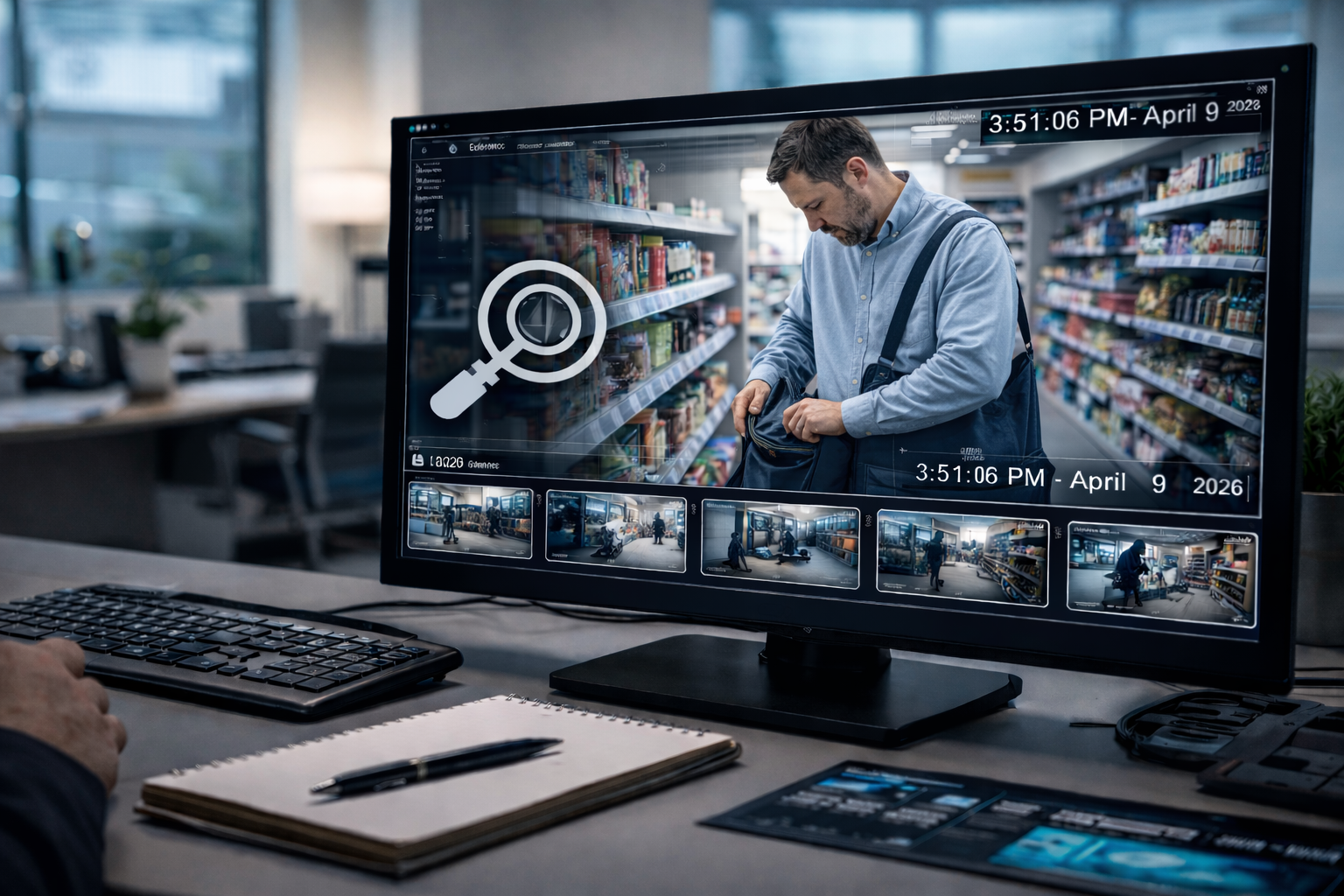
Video can be retrieved quickly without manual searching
Clips export in formats accepted by law enforcement and courts
Authorized access is logged and controlled
If any of these boxes are unchecked, your evidence is vulnerable.
When “Recorded” Was Not Enough
A commercial client experienced a theft that escalated into a legal dispute. Cameras were installed and recording, but the footage failed to clearly show the suspect’s face or actions due to poor placement and lighting.
After a system redesign that included repositioned cameras, improved low-light coverage, and a modern video management platform, the same site later captured an incident with clear facial detail, accurate timestamps, and verifiable exports.
Law enforcement accepted the footage immediately. The case moved forward without delay.
The difference was not more cameras. It was better evidence.
How AI and Modern VMS Platforms Strengthen Evidence
AI-powered video analytics now play a critical role in evidence quality, not just detection.
Modern systems can:
Flag motion or behaviors that matter
Improve visibility in challenging lighting
Speed up search during investigations
Preserve metadata that supports authenticity
When video, analytics, and access control work together, evidence becomes faster to find and harder to challenge.
Integration is what turns footage into proof.
FAQ
Q: Is higher resolution always better for evidence?
A: Not by itself. Resolution must be paired with proper camera placement, lighting, and frame rate. A poorly placed 4K camera can produce worse evidence than a well-designed HD setup.
Q: How long should video footage be retained?
A: Retention depends on risk, compliance requirements, and incident response needs. Many organizations underestimate how quickly footage may be needed for investigations or claims.
Q: Does cloud storage weaken evidence integrity?
A: No, when implemented correctly. Cloud platforms often provide stronger audit trails, redundancy, and access controls than legacy on-prem systems.
Q: What role does system maintenance play in evidence quality?
A: A major one. Dirty lenses, outdated firmware, and offline cameras silently degrade evidence until an incident exposes the problem.
See What Evidence-Ready Video Systems Look Like in Practice
If you are relying on video footage to protect your people, your property, or your organization’s reputation, it needs to stand up under real scrutiny.
Schedule a walkthrough of the Hoosier Security Experience Center to see what evidence-ready video systems look like in practice, or talk with a Hoosier service advisor about evaluating your current footage before an incident puts it to the test.
Good evidence is not accidental. It is designed.