Renovations are necessary for growth, modernization, and operational efficiency. They are also one of the most vulnerable times in your facility’s lifecycle.
Doors are propped open. Cameras are disconnected. Contractors move in and out. Alarm zones get disabled for convenience. Access control rules loosen.
If you manage facilities, operations, IT, or security, you are likely asking:
How do I protect my building when normal operations no longer exist?
TL;DR: Major renovations create temporary security gaps that increase the risk of theft, unauthorized access, and operational disruption. To stay protected, you must adjust access control for contractors, maintain surveillance coverage with temporary or mobile solutions, and use AI-driven alerts to monitor changing activity patterns. A proactive, layered plan keeps your facility secure throughout construction and prevents costly setbacks.
Why Renovations Create Security Gaps You Cannot Ignore
Construction changes behavior patterns inside and outside your building.
Normal access points shift. Temporary walls go up. Loading docks operate differently. New vendors enter daily. Power and network interruptions occur.
This creates three levels of risk:
External problem
Theft, vandalism, and unauthorized access increase.
Internal problem
Your team feels out of control because established processes no longer apply.
Philosophical problem
You should not have to accept higher risk simply because you are improving your facility.
Renovations are not dangerous by default. They become dangerous when security planning lags behind construction planning.
What Should a Renovation Security Plan Include?
Security should adapt with the project, not pause during it.
A strong renovation security strategy includes the following components.
1. Controlled Contractor Access
Modern access control platforms such as Brivo, PDK, and Verkada allow you to:
Issue temporary credentials that expire automatically
Restrict access by time of day
Limit contractors to designated work zones
Instantly deactivate credentials when work is complete
This eliminates the common problem of open doors and shared badges that linger long after the project ends.
2. Temporary and Mobile Surveillance Coverage
During renovations, permanent cameras may be removed, repositioned, or temporarily disconnected. Leaving blind spots is not an option.
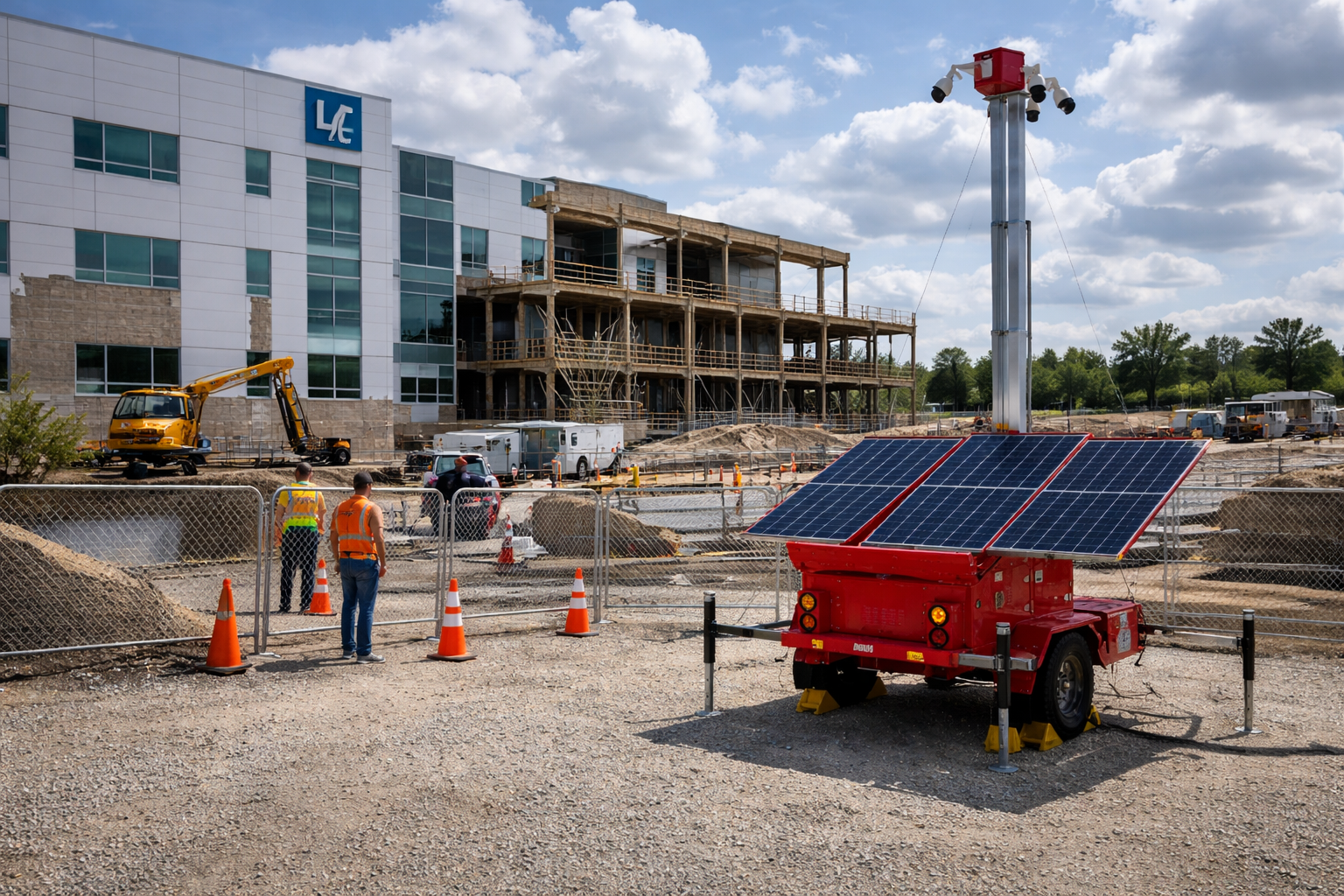
This is where Hoosier Security Mobile Security Trailers provide immediate value.
Mobile trailers are fully self-contained surveillance units that include:
Solar power with battery backup
Cellular connectivity without on-site infrastructure
High-definition cameras with remote viewing
Deterrent lighting
AI-based analytics
Optional live monitoring and talk-down capability
They deploy quickly and can be repositioned as work zones move. They are ideal for:
Construction staging areas
Parking lots
Exterior expansions
Material storage zones
Municipal or public works renovations
Unlike temporary cameras that require building infrastructure, mobile trailers operate independently and can be monitored by Hoosier’s team if needed.
This keeps visibility intact when permanent systems are offline.
3. AI Video Analytics Tuned for Construction Environments
Construction changes what “normal” looks like. Traditional motion detection becomes noisy and ineffective.
AI-assisted video analytics can be configured to alert on:
After-hours activity
Access to restricted zones
Loitering near valuable materials
Vehicles entering unauthorized areas
Instead of someone watching cameras all day, the system flags behavior that falls outside defined parameters.
This protects your facility without overwhelming your team.
What Areas Should You Prioritize First?
If budget or time is limited, secure these five areas immediately:
Server rooms and network closets
High-value inventory
Financial or cash-handling offices
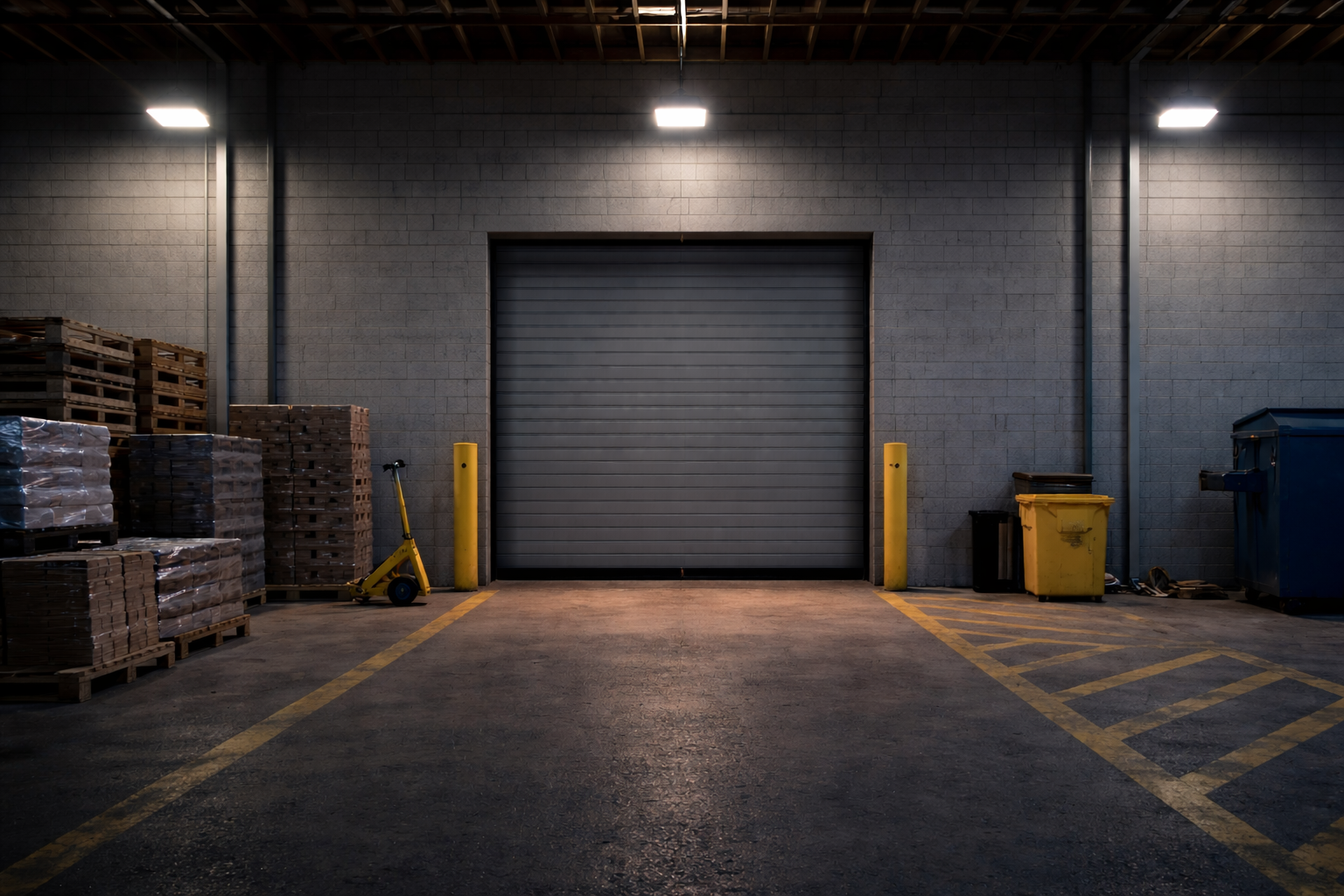
Main entrances and loading docks
Construction material storage areas
Protecting these spaces dramatically reduces financial and operational exposure.
Renovations are expensive. Theft and downtime make them worse.
Renovation Without Increased Risk
A regional manufacturer began a multi-phase expansion that required wall removal, equipment relocation, and evening contractor work.
Within weeks, doors were being propped open for convenience. Several cameras covering the loading dock were offline due to electrical changes. Alarm zones had been broadly disabled to reduce nuisance alerts.
Risk increased quickly.
Hoosier implemented:
Temporary repositioned cameras with cloud-based management
Contractor credentials that expired automatically
AI alerts for after-hours activity
Monitored alarm coverage during the entire renovation period
The outcome:
Zero theft during a four-month project
No production downtime
No insurance issues
Seamless transition to the upgraded permanent system
Security did not slow the project. It protected the investment.
How Do You Coordinate Security With Your General Contractor?
Security should be addressed in the first pre-construction meeting.
Ask these questions:
Which doors will be removed or replaced?
Which cameras will lose power or network access?
Will alarm zones require temporary reprogramming?
Where will materials be stored overnight?
Who is responsible for managing contractor credentials?
When security is reactive, you chase problems.
When security is integrated into the project plan, you prevent them.
FAQ
Q: Should we disable parts of our security system during renovations?
A: No. Systems can be strategically reconfigured without disabling protection entirely. Broad shutdowns create unnecessary exposure.
Q: Are mobile security trailers really necessary for temporary projects?
A: For exterior renovations or new builds without infrastructure, they provide immediate, independent coverage that prevents blind spots and theft.
Q: Do insurance carriers care about security during renovation?
A: Yes. Many require active alarm and video coverage. Gaps in protection can complicate claims.
Q: How do we prevent contractors from accessing sensitive areas?
A: Use time-bound credentials and access level restrictions through a modern access control platform. Avoid shared badges or open-door policies.
Q: Can AI analytics work effectively during active construction?
A: Yes. When properly configured, AI tools distinguish between normal construction activity and suspicious behavior, reducing false alarms.
Renovation Security Checklist
Before construction begins, confirm:
Contractor credentials are temporary and documented
Critical cameras are mapped and repositioned as needed
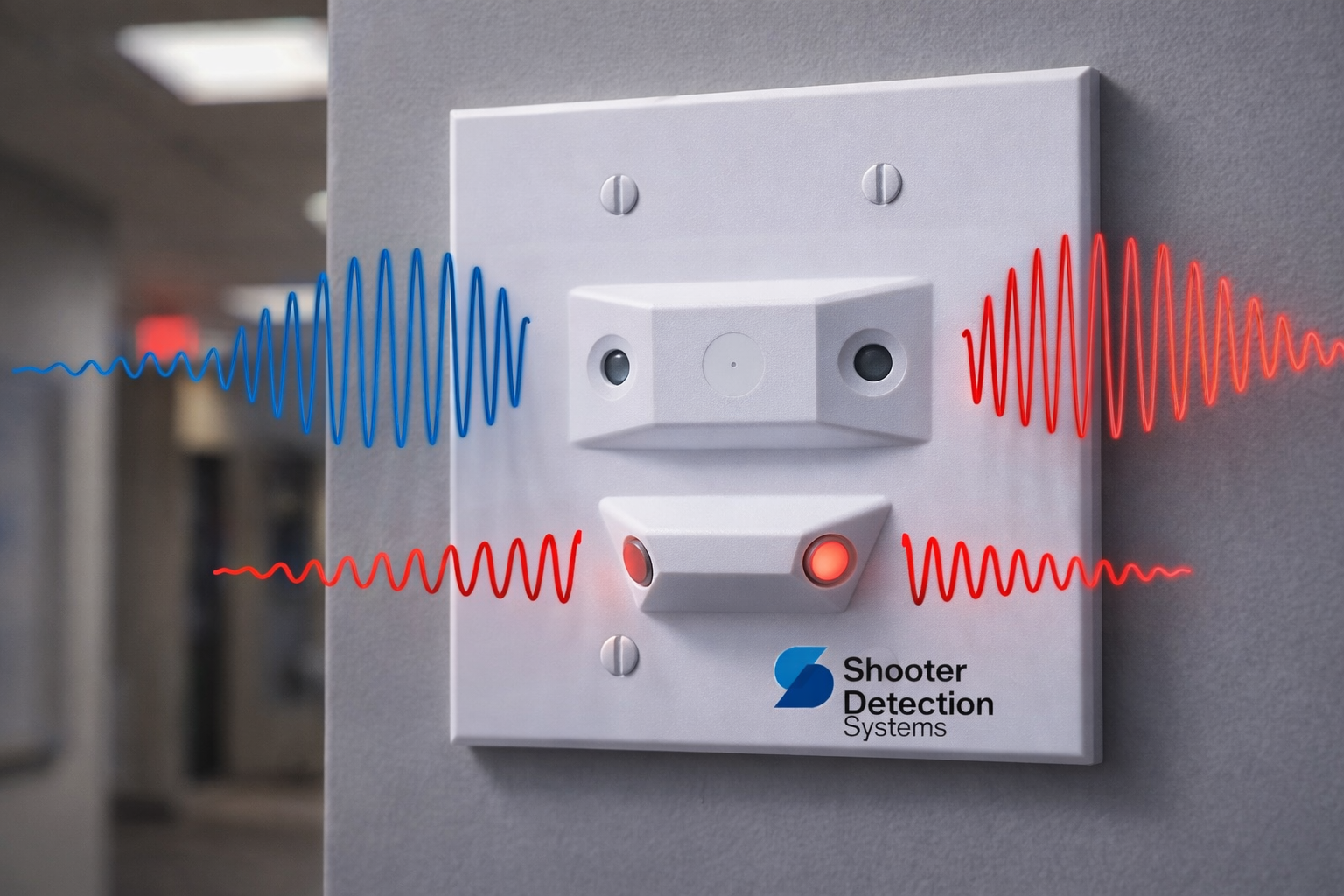
Alarm zones are reprogrammed strategically
AI alerts are adjusted for new activity patterns
Monitoring remains active
A final reactivation plan is documented
Small oversights become expensive incidents. Planning prevents both.
See How Mobile, Temporary, and Permanent Systems Integrate Seamlessly
Renovations represent growth and investment. They should not represent increased risk.
If a renovation is planned or already underway, schedule a security walkthrough with Hoosier Security. Visit our Experience Center to see how mobile, temporary, and permanent systems integrate seamlessly.
Or speak with a service advisor about our Just Fix It Service Level Agreement to ensure your system stays reliable before, during, and after construction.
When everything in your facility is changing, your protection should remain consistent.