TL;DR: Security system outages now create cascading business failures. When cameras, access control, or monitoring go down, organizations lose visibility, slow operations, expose themselves to compliance and liability risk, and force staff into costly manual workarounds. Downtime is no longer a security inconvenience. It is an operational, financial, and reputational threat that compounds the longer it goes unresolved.
The Rising Cost of Downtime: How Security System Outages Now Impact More Than Safety
Security systems used to be viewed as passive tools. Cameras recorded. Doors locked. Alarms waited for something to go wrong.
That mindset no longer works.
Today, your security infrastructure touches IT networks, cloud platforms, compliance requirements, staffing models, and customer trust. When a camera goes offline or an access control server fails, the impact is immediate and far-reaching. Downtime now costs more than peace of mind. It costs productivity, audit readiness, and real dollars.
This is not theoretical. We see it daily across healthcare, manufacturing, education, multi-site retail, and commercial facilities.
How does security system downtime impact operations?
When security systems fail, operations feel it first.
Common operational impacts include:
Facilities teams unable to verify incidents or resolve disputes
Delayed opening or closing procedures due to access control failures
Manual workarounds that pull staff away from primary responsibilities
IT teams scrambling to diagnose systems they do not fully own
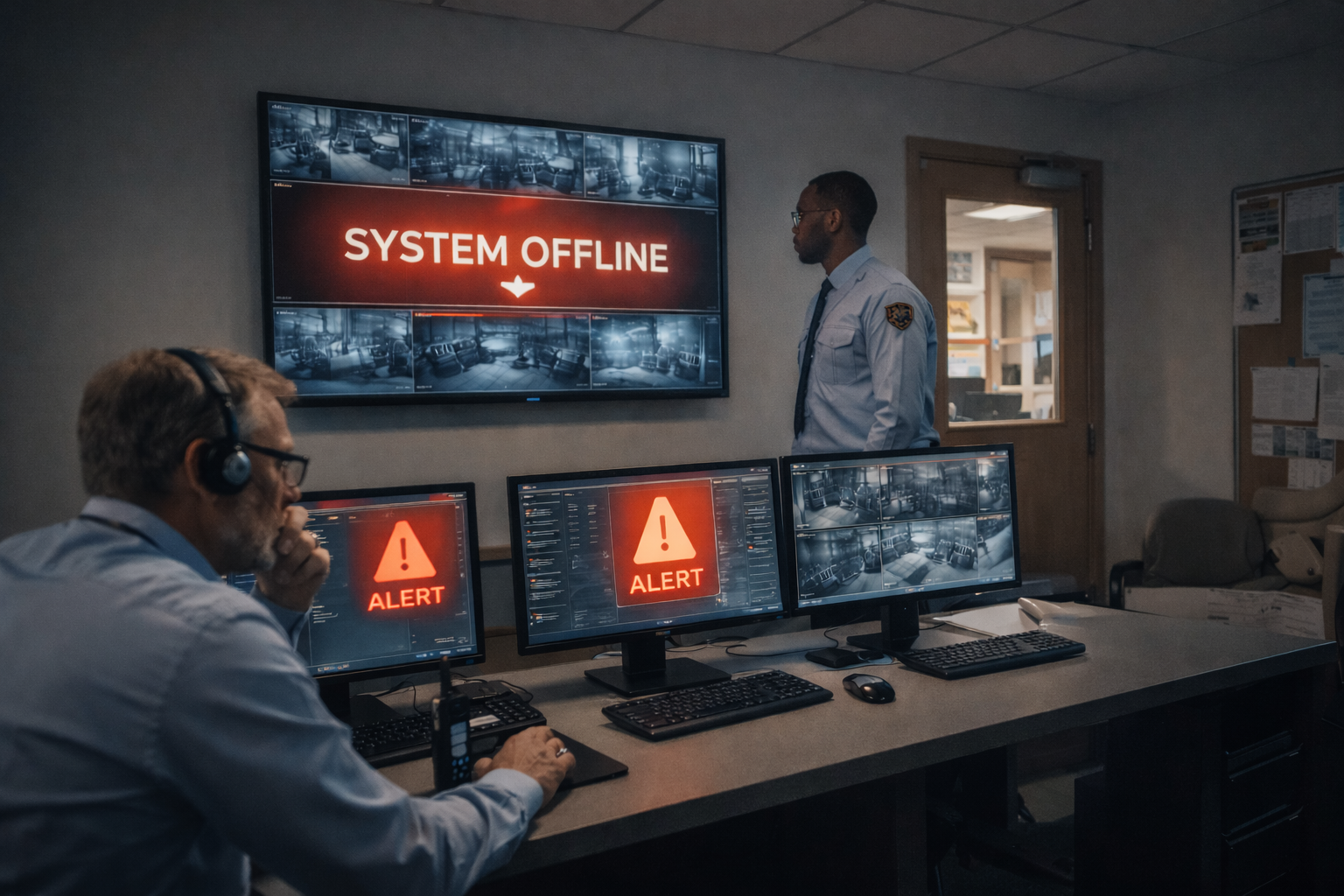
In multi-site environments, a single outage can cascade across locations. Centralized dashboards go dark. Alerts stop flowing. Decision-makers lose visibility when they need it most.
Security downtime creates friction. Friction slows business.
Why does downtime increase compliance and liability risk?
Many organizations rely on security systems to meet regulatory and contractual obligations.
When systems are offline:
Video evidence may be unavailable during audits or investigations
Access logs required for HIPAA, PCI, or internal policies may be incomplete
Environmental or safety alerts may be missed entirely
For healthcare, education, and critical infrastructure, this is not a minor inconvenience. It is a documented risk. An outage at the wrong time can mean failed audits, legal exposure, or reputational damage that far exceeds the cost of the system itself.
What has changed in modern security environments?
Security is now deeply integrated with IT and operations.
Modern platforms from partners like Motorola Solutions and Verkada connect video, access control, analytics, and cloud services into unified systems. That integration delivers value, but it also raises the stakes.
When one component fails, the impact spreads faster.
This is why uptime, proactive monitoring, and service responsiveness matter more than feature lists or camera specs.
What actually causes most security downtime?
In our experience, outages rarely come from one dramatic failure. They come from small, ignored issues that stack up.
Common causes include:
Aging hardware without redundancy
Network changes that break camera or controller communication
Cloud dependencies without local failover
Slow service response or unclear ownership between IT and security
Downtime is usually predictable. It is rarely unavoidable.
Downtime that cost more than safety
A regional manufacturer relied on an older, mixed-vendor security system across multiple facilities. When a network change took several cameras offline, no one noticed for days.
During that window:
A safety incident occurred without video documentation
Operations paused while leadership assessed exposure
IT and facilities teams spent hours troubleshooting
After upgrading to an integrated platform with health monitoring and a proactive service agreement, outages dropped significantly and incident response time improved. Most importantly, leadership regained confidence that systems would work when needed.
Checklist: How to reduce the true cost of security downtime
Use this as a starting point:
Monitor system health, not just incidents
Build redundancy into critical components
Align IT and security ownership clearly
Choose platforms that integrate cleanly
Work with a service partner that responds fast and fixes root causes
Downtime is not just a technology problem. It is an accountability problem.
FAQ
Q: Is occasional security downtime unavoidable?
A: No system is perfect, but most downtime is preventable. Proactive monitoring, modern platforms, and clear service ownership dramatically reduce outages and recovery time.
Q: Why does cloud security change the downtime conversation?
A: Cloud systems improve visibility and scalability, but they require reliable networks and thoughtful failover planning. The right design reduces risk. The wrong design increases it.
Q: How fast should a security service provider respond to outages?
A: For mission-critical systems, response should be measured in hours, not days. Delayed response is where cost multiplies.
Q: Can downtime really affect revenue?
A: Yes. Lost productivity, delayed operations, compliance penalties, and incident fallout all have direct financial impact.
Understand Your System Vulnerabilities Today
Security downtime is no longer just a safety issue. It is a business continuity issue.
If you want to understand where your systems are vulnerable and how to reduce risk before the next outage, schedule a conversation with a Hoosier Security service advisor or visit our Experience Center to see how modern, integrated security is designed to stay online when it matters most.