If you lead a House of Worship, you have probably wrestled with this question:
How do we protect our people today without overbuilding a system we cannot afford tomorrow?
Your congregation may be growing. Ministries expand. Children’s programs multiply. Weekday events increase. What started as a single Sunday gathering can quickly become a multi-day, multi-building operation.
Security should not slow that growth down. It should support it.
TL;DR: Small Houses of Worship can build a scalable security plan by starting with high-risk areas like main entrances and children’s ministries, choosing cloud-based platforms that expand without replacement, and implementing a phased growth strategy. By focusing on integration, ease of use, and long-term flexibility, leadership can protect their congregation today while avoiding costly rip-and-replace upgrades as attendance, programs, and facilities grow.
What Does a “Scalable” Security Plan Actually Mean for a House of Worship?
A scalable security plan is not about buying the biggest system upfront. It is about choosing the right foundation so you can expand without starting over.
For Houses of Worship, scalability means:
Adding doors to access control without replacing the software
Expanding camera coverage without swapping recorders
Integrating new buildings into the same dashboard
Supporting volunteer turnover without complex retraining
Cloud-based platforms like Brivo, PDK, and Verkada are designed with growth in mind. You can start with a few key doors and cameras, then expand as attendance, ministries, or facilities grow.
The goal is simple: one system, one login, full visibility.
Where Should Small Houses of Worship Start?
You do not need to secure every square foot on day one. Start with risk-based prioritization.
Here is a practical starting checklist:
Main Entrances
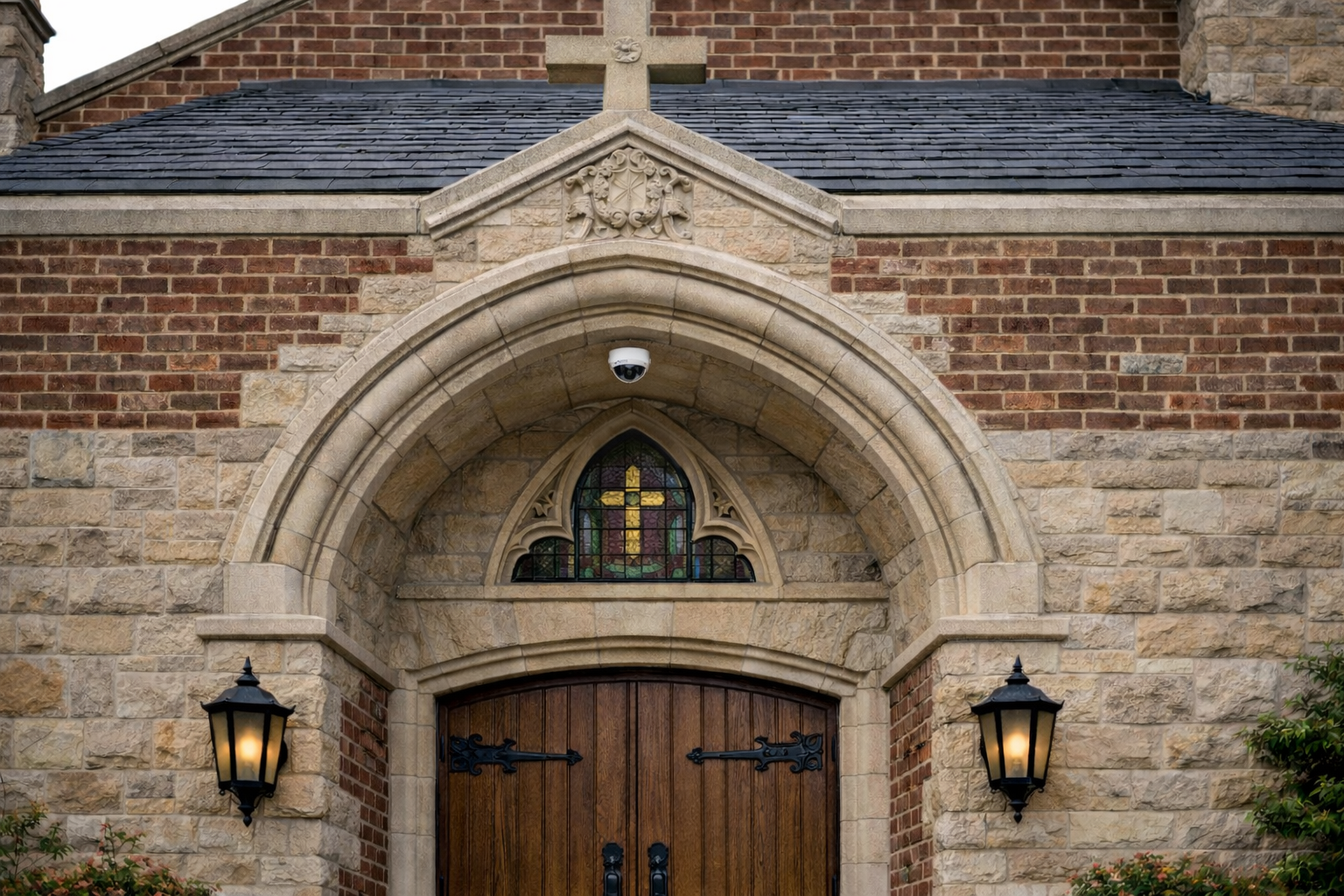
High-quality surveillance cameras
Clear visibility of entry and exit points
Proper lighting
Children’s Ministry Areas
Controlled access using credentialed entry
Audit trail of who enters and exits
Interior hallway cameras
After-Hours Vulnerabilities
Alarm systems for intrusion detection
Mobile alerts for leadership
Environmental sensors in sensitive rooms
Communication Tools
Two-way radios for safety teams
Integrated emergency notification options
This layered approach mirrors what we outline in our article on building a layered defense strategy with the Motorola ecosystem. Security works best when protection, detection, analysis, communication, and response operate together.
How Do You Avoid Outgrowing Your System in Three Years?
The biggest mistake small Houses of Worship make is buying “temporary” systems that cannot grow.
Here is what to look for:
Cloud-based management instead of on-site servers
License-based expansion rather than hardware replacement
Open integrations between cameras, access control, and alarms
Mobile app access for pastors and administrators
For example, platforms from Motorola Solutions and Genetec allow multiple technologies to live inside a unified ecosystem. That means as you add buildings or services, you are expanding, not rebuilding.
Think long-term. Even if you are small today, plan like growth is coming.
How Can Volunteer-Driven Teams Manage Modern Security?
Most Houses of Worship rely heavily on ministry teams and part-time administrators. That reality matters.
Modern systems should:
Be intuitive
Require minimal technical expertise
Offer role-based permissions
Provide remote access
With the right setup, a safety team member can review camera footage from a phone. A facilities leader can grant temporary access to a contractor without meeting onsite. A pastor can receive alerts without sitting in front of a monitor.
Security should not require a full-time IT department. It should quietly support the mission.
Phased Growth Without Replacing the System
One growing House of Worship started with:
6 cameras
3 controlled doors
A basic intrusion alarm
Within two years, attendance increased. They added weekday childcare and multiple evening ministries.
Because their system was built on a scalable platform, they:
Added 12 additional cameras
Integrated new classroom access control
Centralized everything into one dashboard
No rip-and-replace. No retraining from scratch. No wasted investment.
The result was stronger safety coverage and lower long-term cost.
That is the difference between buying equipment and building a strategy.
What Should a 3-Phase Growth Plan Look Like?
Here is a simple roadmap many Houses of Worship follow:
Phase 1: Foundation
Secure main entrances
Protect children’s areas
Install basic alarm coverage
Implement mobile visibility for leadership
Phase 2: Integration
Expand camera coverage
Add additional credentialed doors
Introduce AI-assisted analytics
Improve internal communication tools
Phase 3: Optimization
Integrate environmental sensors
Connect to community safety programs
Add advanced analytics or monitoring
Standardize processes across ministries
This mirrors principles discussed in our blogs on future-proofing security systems and the hidden costs of outdated access control. Growth is smoother when systems are designed for it.
FAQ
Q: Is scalable security only for large Houses of Worship?
A: No. Scalability matters most for smaller organizations because budgets are tighter. Starting with the right platform prevents expensive replacements later.
Q: Do we need someone watching cameras all day?
A: Not necessarily. AI-assisted video systems can flag unusual activity and send alerts. Many organizations rely on event-based review rather than full-time monitoring.
Q: What if our budget is limited right now?
A: Phasing is the answer. Start with your highest-risk areas and expand over time. The key is choosing technology that allows growth without starting over.
Q: Will security make our environment feel unwelcoming?
A: When designed correctly, modern cameras and access control are discreet. Most congregants never notice them. Leadership gains peace of mind without changing the atmosphere.
See What Scalable Security Really Looks Like
You do not need to guess what scalable security looks like.
Schedule a visit to the Hoosier Security Experience Center and see how access control, video systems, alarms, and communication tools integrate into one simple dashboard.
We will walk through:
Your current layout
Your growth goals
A phased plan that protects your people today and scales tomorrow
Protection should preserve your mission, not compete with it.
Let’s build a system that grows with you.