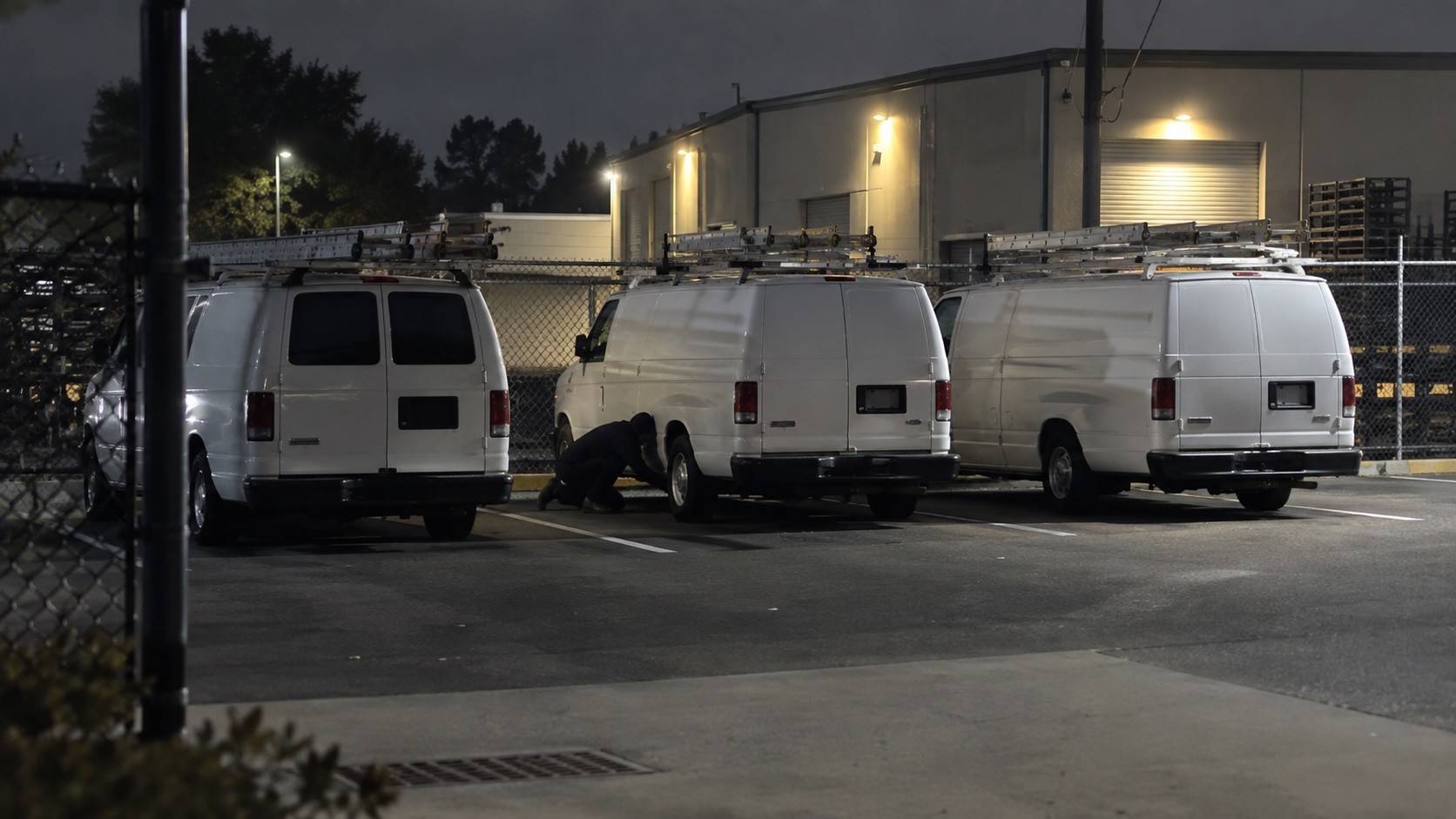
Parking lot crime is one of the most common and frustrating issues for businesses. Break-ins, theft, and vandalism often happen in seconds, and by the time someone reviews footage, the damage is already done.
Many leaders ask the same question: how do we stop incidents before they happen, not just record them after?
Traditional cameras give you evidence. They do not stop behavior in real time. That gap is where most losses occur.
TL;DR: Parking lot crime happens when no one is actively watching or responding in real time. Presence detection identifies suspicious behavior as it happens, and live video talk-down stops it immediately by addressing individuals on site. Together, these tools turn your cameras into a system that prevents theft instead of just recording it.What Is a Parking Lot Crime Prevention System and How Does It Work?
A modern parking lot crime prevention system combines AI video analytics, presence detection, and live human response.
Instead of passively recording video, the system actively monitors behavior and responds when something looks wrong.
Here is how it works:
- Presence detection: AI identifies people, vehicles, and movement patterns in real time
- Behavior filtering: The system flags unusual activity like loitering, after-hours presence, or repeated movement between vehicles
- Live monitoring: A remote team verifies the threat
- Talk-down intervention: A live voice addresses the individual directly through speakers
This shifts your system from reactive to proactive.
You are no longer asking, “What happened?”
You are actively preventing it from happening.
How Does Presence Detection Identify Threats Before They Escalate?
Presence detection is not just motion detection. It understands context.
Instead of triggering alerts for every movement, it focuses on behavior that actually matters.
For example, your system can identify:
- Someone lingering between parked cars after hours
- A vehicle circling the lot multiple times
- Individuals approaching multiple doors without entry
- Movement in restricted areas during closed hours
This reduces false alarms and ensures your team only responds to real risks.
In high-traffic environments like retail centers, healthcare facilities, and multi-family properties, this level of filtering is critical. Your team cannot chase every alert. They need the right alerts.
What Is Live Video Talk-Down and Why Does It Work So Well?
Live video talk-down is one of the most effective deterrents in physical security.
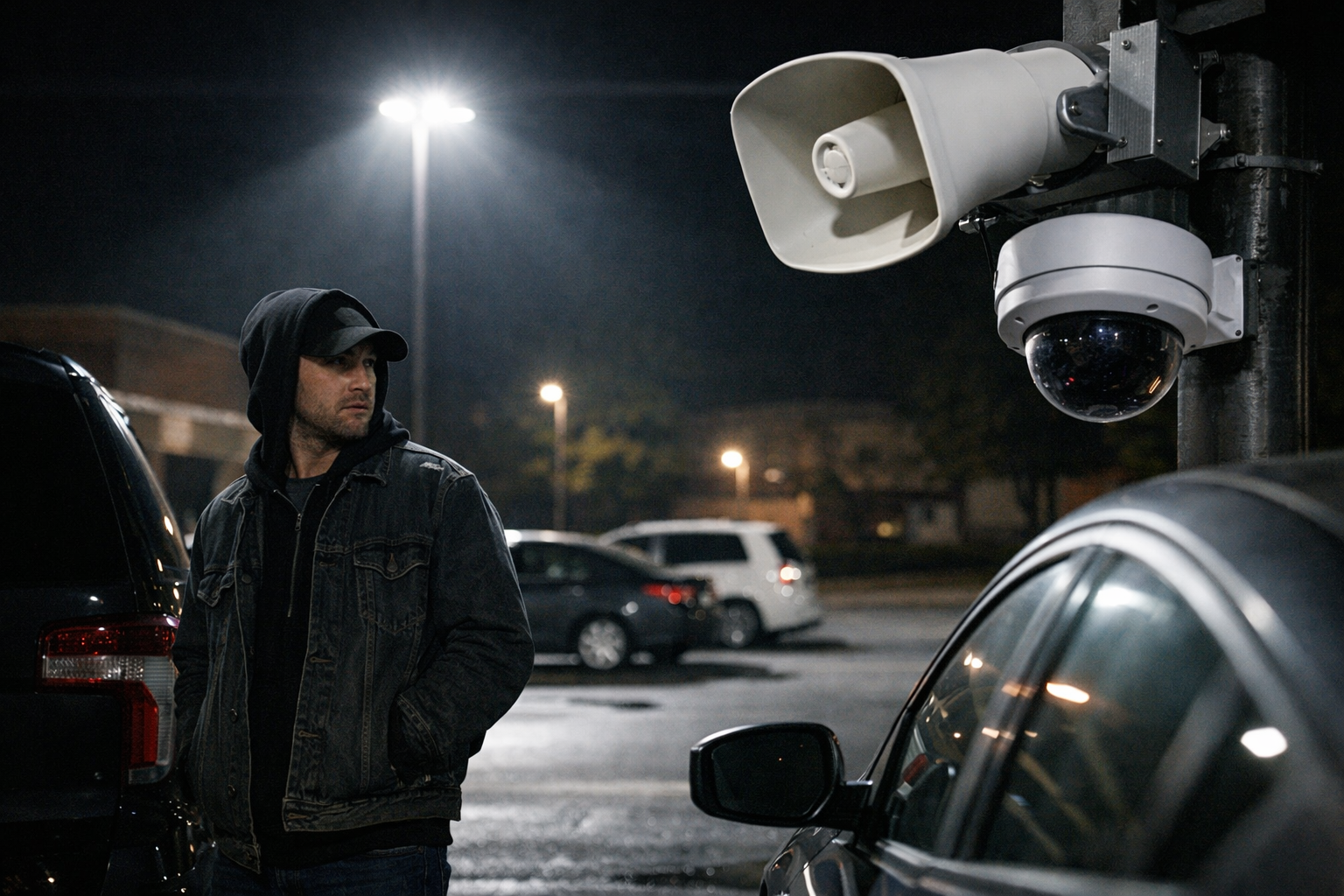
When a verified threat is identified, a live operator speaks directly to the individual through on-site speakers.
For example:
“Attention. You are being monitored. Leave the area immediately.”
This does three things instantly:
- Confirms the person has been seen
- Removes anonymity
- Introduces immediate consequences
Most opportunistic crime relies on being unnoticed. The moment someone realizes they are actively being watched and addressed, the behavior stops.
This is especially effective in parking lots where:
- Lighting is inconsistent
- Foot traffic varies
- Security presence is limited
You are not just recording crime. You are interrupting it.
What Should You Look for in a Parking Lot Crime Prevention System?
Not all systems deliver real prevention. Many still rely on outdated alerting models.
Use this checklist when evaluating your system:
Parking Lot Crime Prevention Checklist
- AI-based presence detection, not basic motion alerts
- Real-time monitoring with human verification
- Live audio talk-down capability
- Coverage designed for entrances, exits, and blind spots
- Integration with your existing cameras when possible
- Reliable uptime with service support like Hoosier’s Just Fix It model
If your system cannot actively intervene, it is still reactive.
From Break-Ins to Prevention: How Real-Time Response Changed Everything
A multi-site retail client came to Hoosier after repeated parking lot break-ins.
Their existing setup included cameras across the property, but incidents continued. The issue was not visibility. It was response.
The system was upgraded to include presence detection and live video talk-down.
Within the first 60 days:
- Multiple after-hours loitering incidents were identified and addressed in real time
- Two attempted vehicle break-ins were stopped before entry
- Reported incidents dropped significantly across locations
The biggest shift was behavioral.
Once individuals realized the property was actively monitored and responded to, the site became a harder target.
FAQ
Q: Does live talk-down replace security guards?
A: No. It extends your coverage. Many businesses cannot justify full-time on-site guards for parking lots. Talk-down provides immediate response without the cost of constant physical presence.
Q: Will this work with my existing cameras?
A: In many cases, yes. Modern parking lot crime prevention systems can integrate with existing infrastructure, depending on camera quality and placement.
Q: How does this reduce false alarms?
A: Presence detection uses AI to filter activity based on behavior, not just movement. Combined with human verification, this significantly reduces unnecessary alerts.
Q: What types of businesses benefit most from this?
A: Retail centers, healthcare facilities, multi-family properties, dealerships, and any location with open parking areas and after-hours risk.
Q: What happens if no one responds to alerts?
A: Without real-time response, detection alone does not stop incidents. The combination of detection and intervention is what drives results.
See How to Stop Parking Lot Crime Before It Happens
If your parking lot incidents are still being discovered after the fact, your system is not designed to prevent them.
The best way to understand how parking lot crime prevention systems work is to see them in action.
Schedule a visit to the Hoosier Security Experience Center to test real-world scenarios, including presence detection and live talk-down. Or connect with a Hoosier advisor to evaluate how your current system performs today.
Your cameras are already capturing activity.
Now it is time to act on it before it becomes a problem.