TL;DR A mobile surveillance trailer can typically be operational in 5 to 10 business days when the site is ready and the right information is provided up front. The biggest delays usually come from poor trailer placement options, limited sunlight, unclear decision-making, or missing site details.

For industrial property managers, construction leaders, and facility teams searching “rent security trailer Indianapolis,” the fastest path is simple: confirm the problem area, provide site access details, identify the decision-maker, and work with a local team that already has trailers nearby.
Why Does Deployment Speed Matter for After-Hours Risk?
Security problems rarely wait for a perfect timeline.
Vacant properties, construction sites, industrial yards, parking lots, and shared tenant areas can become vulnerable quickly. A tenant moves out. A gate gets damaged. Copper theft hits a neighboring property. Vehicles start gathering after-hours. Suddenly, you need coverage before the next weekend, not six weeks from now.
This ties directly to one of the biggest questions in property security:
Are you alerted before tenants call?
That is the real value of a properly placed mobile surveillance trailer. It gives your team visibility into activity after-hours, especially in the windows when no one is onsite and no one wants to drive across town to verify what happened.
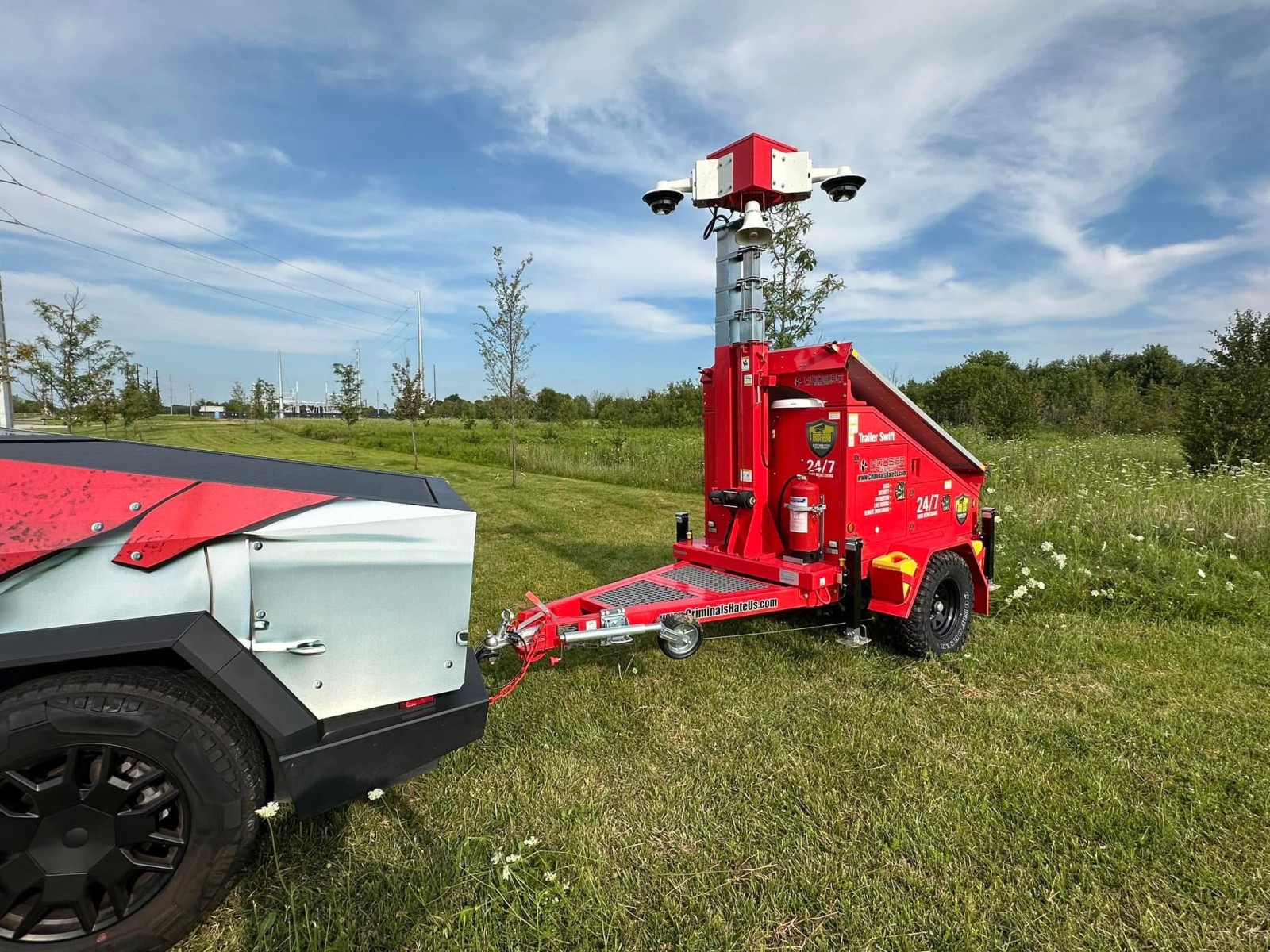
A trailer is not just a camera on wheels. When deployed correctly, it gives your site temporary visibility, deterrence, and optional live monitoring while you decide whether a permanent solution is needed.
How Fast Can a Mobile Surveillance Trailer Be Operational?
For most sites, Hoosier Security can typically get a mobile surveillance trailer operational in 5 to 10 business days.
That timeline depends on three things:
- Trailer availability
- Site readiness
- How quickly decisions and access are confirmed
Because Hoosier has a local team and local trailers, customers are not waiting on a national vendor to schedule freight, coordinate a third-party delivery, or work through several layers of dispatch. That matters when the request is urgent.
A national provider may have inventory, but that does not always mean a trailer is close, available, or easy to get to your property. Local deployment helps shorten the distance between “we need coverage” and “the system is live.”
Repeat customers may move even faster because site profiles can be kept on file. When Hoosier already knows the property layout, access points, trailer placement options, and key contacts, there are fewer details to confirm before deployment.
What Happens Between the Request and Deployment?
A strong mobile surveillance deployment is not just about dropping a trailer in a parking lot. The setup needs to match the actual risk.
A typical deployment process looks like this:
- Initial request
You identify the property, the issue, the urgency, and the type of coverage needed. - Site review
Hoosier reviews the layout, photos, GPS pin, ingress and egress points, lighting, power options, cellular signal needs, and trailer placement options. - Scope confirmation
The team confirms what the trailer needs to watch: gates, dock doors, parking areas, vacant suites, outdoor storage, equipment yards, or public access points. - Monitoring decision
The customer decides whether the trailer will be used for recording and deterrence only, or whether live monitoring should be added through options like CHEKT or SiteWatch. - Deployment scheduling
Hoosier schedules delivery, placement, setup, testing, and customer notification. - System verification
Cameras, analytics, cellular connection, recording, lighting, audio talkdown, and monitoring workflows are tested before the trailer is considered operational.
The most important part is the final step. A trailer is not truly deployed just because it is parked onsite. It is operational when the cameras are aimed correctly, the connection is verified, alerts are configured, and the response plan is clear.
What Can Slow Down a Mobile Surveillance Deployment?
Most deployment delays are preventable. The trailer may be available, but the site can still slow things down.
Here are the most common issues.
No Level Pad or Stable Placement Area
Mobile surveillance trailers need a safe, stable surface. A sloped gravel area, muddy yard, blocked loading zone, or tight turning radius can create placement problems.
The trailer should have a clear view of the risk area without blocking normal vehicle traffic, fire lanes, tenant access, or delivery routes.
Poor Solar Positioning
Solar-powered trailers need access to sunlight. A site with no south-facing sun exposure, heavy tree coverage, tall buildings, or shaded dock areas may require a different placement strategy.
The goal is not just to point cameras at the problem. The goal is to keep the trailer powered and reliable while still covering the right area.
No Clear Decision-Maker
This is one of the simplest delays and one of the most frustrating.
A property manager may want the trailer. A tenant may be asking for it. Corporate may need to approve it. The facilities team may control access. The accounting team may need the quote before anything moves.
When no one knows who can sign, deployment stalls.
Missing Site Access Details
The team needs to know how to access the property, where to enter, where not to drive, and who to call if a gate is locked.
A trailer deployment can slow down quickly when the technician arrives and cannot reach the placement area.
Unclear Coverage Goals
A request like “we need security” is a start, but it is not enough.
The trailer needs to be aimed at the most important activity zones. For example:
- Are vehicles entering after-hours?
- Are people loitering near dock doors?
- Is there theft from outdoor storage?
- Is the concern a vacant suite?
- Is the goal deterrence, investigation, or live response?
The clearer the problem, the faster the deployment.
What Does Hoosier Need From the Site?
The fastest mobile surveillance deployment starts with a clean handoff.
Before deployment, Hoosier will typically need:
- A GPS pin for the desired trailer location
- Recent photos of the site and surrounding area
- An ingress and egress map
- Hours of normal business activity
- Hours of expected after-hours concern
- A point of contact for site access
- Gate codes, lockbox details, or access instructions
- A description of what needs to be watched
- Any known power, cellular, or lighting concerns
- Approval from the signing decision-maker
For vacant properties, include any information about recent incidents, open suites, unsecured doors, broken fencing, or tenant move-out timing.
For construction sites, include active work zones, material storage areas, equipment locations, and expected subcontractor hours.
For industrial properties, include loading docks, shared drives, truck courts, tenant entrances, trailer parking, and outdoor storage areas.
When Should You Add Live Monitoring?
Some sites only need visibility and deterrence. Others need someone watching for activity and taking action.
That is where live monitoring can become valuable.
With optional CHEKT or SiteWatch monitoring, a mobile surveillance trailer can support a more active response model. Instead of discovering footage the next morning, trained operators can verify activity and intervene based on the agreed response plan.
That matters for after-hours risk.
A camera can record someone testing a fence line at 2:00 a.m. A monitored trailer can help detect and respond while that activity is still happening.
Live monitoring is especially useful for:
- Vacant industrial properties
- Construction sites with tools or materials onsite
- Outdoor storage yards
- Properties with repeat trespassing
- Sites with recent theft or vandalism
- Lots with vehicle break-ins
- Tenant transition periods
- Locations with limited onsite staff
The question is not just, “Can we see what happened?”
The better question is, “Can we verify and respond before the tenant, contractor, or police call us?”
What Makes Local Trailer Deployment Different?
When a site needs fast coverage, distance matters.
Hoosier’s advantage is local execution. Local team. Local trailers. Local site knowledge. That helps customers avoid the slow process of waiting on a national vendor to locate inventory, ship equipment, and schedule an installer who may not know the property type or the market.
For Indianapolis-area properties, this can make a real difference.
Industrial property managers often need help during narrow windows:
- Before a holiday weekend
- After a tenant leaves
- During a vacancy
- After a break-in
- During buildout
- While permanent cameras are being quoted or installed
- After repeated after-hours complaints
A local deployment model helps close that gap faster.
It also improves repeat deployments. Once Hoosier has a site profile on file, future trailer requests become easier because the team already understands the property layout, contact chain, access points, and known risk areas.
Is a Mobile Surveillance Trailer Right for a Vacant Property?
A security trailer for vacant property coverage is often one of the fastest ways to reduce exposure during a risky transition period.
Vacant properties create predictable problems. There are fewer people onsite. Lighting may be limited. Former tenants, vendors, or unknown visitors may still know the property layout. Exterior areas may sit quiet long enough for trespassing, dumping, vandalism, or theft to go unnoticed.
A mobile surveillance trailer can help cover:
- Vacant suite entrances
- Loading docks
- Shared truck courts
- Rear drives
- Outdoor storage
- Utility areas
- Gate entrances
- Parking lots
- Areas where permanent cameras are not currently installed
It also helps property managers avoid overcommitting too early. Sometimes a trailer is the right temporary bridge while the long-term security plan is being reviewed.
What Does a Typical Urgent Deployment Look Like?
Here is a common scenario.
A property manager has a vacant industrial suite that just turned over. The tenant is gone, but the space still has exterior exposure. Over the weekend, someone damages a rear door and several vehicles are seen entering the lot after-hours.
The property manager needs visibility fast, but a permanent camera expansion will take longer to scope and approve.
Hoosier reviews the property map, confirms the best trailer placement, checks sun exposure, identifies the main after-hours activity zone, and schedules deployment. The trailer is positioned to cover the rear drive, dock area, and vehicle approach. Monitoring can be added if the customer wants live intervention instead of recording only.
The result is not complicated. The property gets coverage where it is exposed, and the manager has a practical bridge while deciding what permanent improvements make sense.
How Can You Speed Up the Deployment Timeline?
The best way to speed up mobile surveillance deployment is to send the right information early.
Use this checklist before requesting a trailer:
- Confirm the property address
- Drop a GPS pin where you think the trailer should go
- Send 3 to 5 photos of the area
- Mark key vehicle entrances and exits
- Identify the main activity concern
- Share normal business hours
- Share after-hours activity concerns
- Confirm who can approve the rental
- Confirm who can provide site access
- Flag any solar, shade, or cellular concerns
- Decide whether live monitoring is needed
The faster those items are confirmed, the fewer back-and-forth steps are needed before scheduling deployment.
How Does Deployment Speed Connect to Trailer Effectiveness?
Getting a mobile surveillance trailer onsite quickly matters, but speed alone does not make the site safer. The trailer still needs the right features to deter activity, capture useful video, and support the response your property actually needs.
For example, a trailer covering a vacant industrial property may need solar power, cellular connectivity, AI analytics, audio talkdown, visible lighting, and camera coverage across the main vehicle entry points. A trailer placed at a construction site may need a different setup focused on material storage, equipment areas, and after-hours motion.
That is why deployment should always start with the risk, not just the rental request. The goal is not simply to park a trailer on the property. The goal is to place the right trailer in the right location with the right features working before the site becomes another after-hours problem.
For a deeper breakdown, read our guide on mobile surveillance trailer features that actually impact deterrence.
FAQ
How fast can Hoosier deploy a mobile surveillance trailer?
Most mobile surveillance trailer deployments can be operational in 5 to 10 business days, depending on trailer availability, site readiness, access details, and approval timing. Repeat customers with site profiles already on file may be able to move faster.
What can delay a mobile surveillance trailer rental?
The most common delays include no level placement area, poor solar exposure, unclear site access, missing photos or maps, and no confirmed signing decision-maker. Deployment also slows down when the coverage goal is vague or the site contact is unavailable.
Can I rent a security trailer in Indianapolis for a vacant property?
Yes. A mobile security trailer can be a strong temporary option for vacant industrial properties, construction sites, outdoor storage areas, and lots with after-hours activity. It helps provide visibility and deterrence while a permanent security plan is being reviewed.
Does a surveillance trailer require power?
Many mobile surveillance trailers are built for solar operation, but placement matters. The trailer needs enough sun exposure to stay reliable. Sites with heavy shade, poor south-facing sun, or obstructed placement areas may require a different plan.
Can live monitoring be added to a mobile surveillance trailer?
Yes. Hoosier can discuss optional monitoring add-ons through platforms like CHEKT or SiteWatch when the site needs live operator response. This can help verify activity and support intervention instead of only reviewing footage after the fact.
What information should I send before requesting a trailer?
Send the property address, GPS pin, site photos, ingress and egress map, hours of activity, after-hours concern, point of contact, access instructions, and approval contact. These details help Hoosier place the trailer correctly and avoid preventable delays.
Ready to See How Mobile Trailer Deployment Works?
A mobile surveillance trailer can help close the gap between risk and response. The key is placing it correctly, powering it reliably, and deciding whether the site needs recording, deterrence, or live monitoring.
If you manage an industrial property, vacant site, construction area, or exterior lot that needs temporary coverage, schedule a Virtual Experience Center session with Hoosier Security. You will see how mobile trailers, video monitoring, and real response workflows come together before you commit to a deployment.