TL;DR: You can secure an off-grid construction jobsite before permanent power, internet, lighting, or cameras are available. Solar power, battery storage, cellular connectivity, mobile surveillance, video analytics, and remote monitoring can provide temporary protection, but "off-grid" does not mean zero infrastructure. The right solution depends on cellular coverage, solar exposure, equipment placement, what needs to be protected, and how the site will change as construction progresses. Lumber gets delivered. Copper arrives. Appliances and HVAC equipment show up. Subcontractors bring tools and trailers onsite. Skid steers, lifts, generators, vehicles, and other equipment may stay overnight.
Meanwhile, permanent electrical service may still be weeks away. The network is not built. Exterior lighting is incomplete. Fencing may be temporary. Final camera locations may not even exist yet.
That leaves builders, general contractors, project managers, and construction teams with an important question: Can you actually secure a construction site before the infrastructure exists?
Yes. But doing it correctly requires understanding what off-grid security can realistically accomplish, what it still needs to operate, and when temporary coverage makes more sense than rushing a permanent system.
Can You Secure a Construction Site Without Permanent Power or Internet?
Yes. Temporary security systems can operate without relying on the project’s permanent electrical service or wired internet connection.
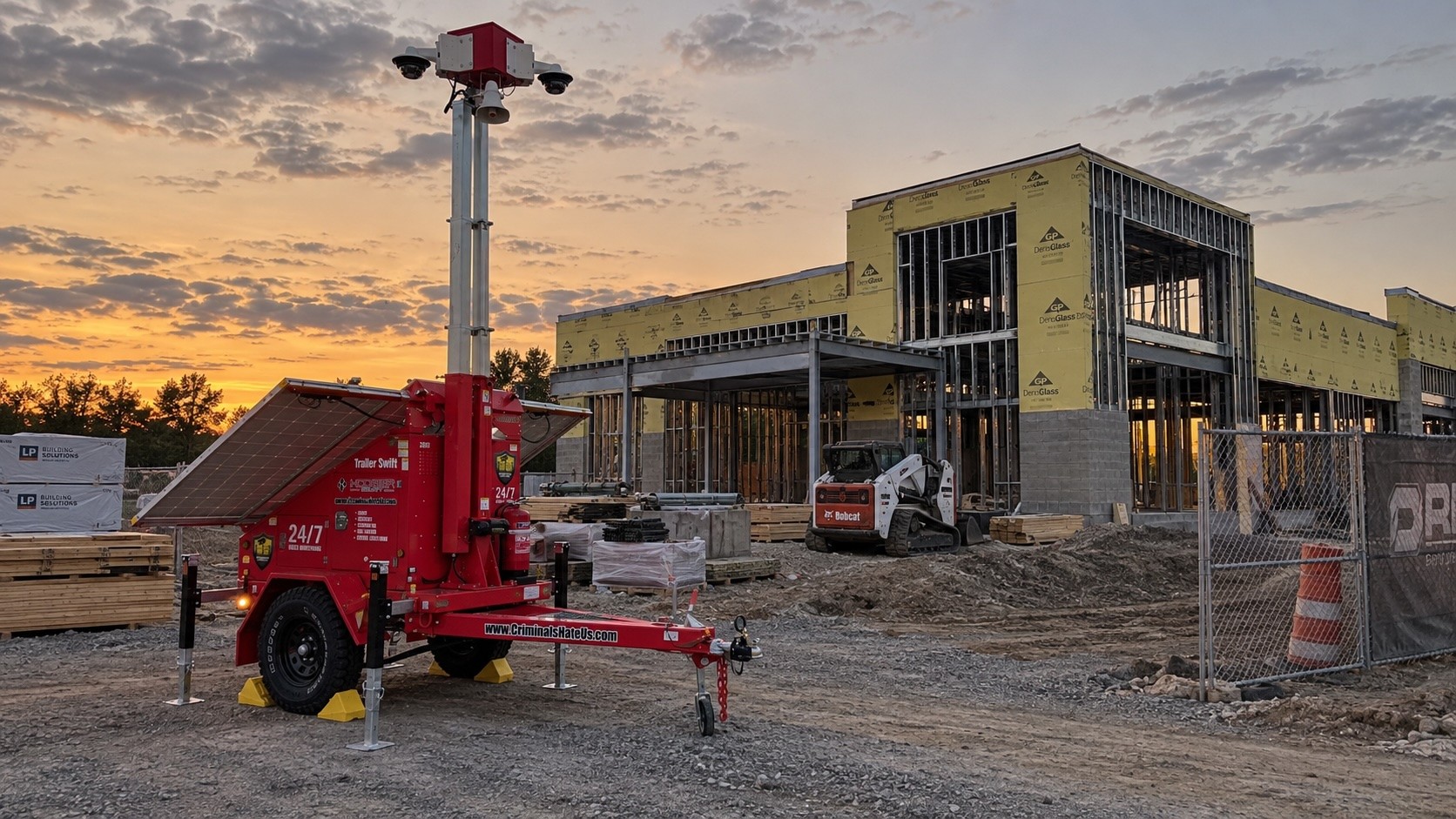
A mobile surveillance trailer can bring much of its own infrastructure to the site, including solar power, battery storage, cellular connectivity, cameras, recording, and remote access.
That makes mobile surveillance especially useful during the gap between site mobilization and permanent security installation.
By the time valuable materials, tools, trailers, vehicles, or heavy equipment arrive, a project may still lack dependable power, internet, lighting, fencing, or permanent camera locations.
Temporary security gives construction teams a way to protect what is already onsite without forcing a permanent system into an environment that is still changing.
The goal is not necessarily to make the temporary system behave exactly like the finished building’s security system.
The goal is to protect the risk that exists right now.
What Does "Off-Grid Construction Site Security" Actually Mean?
“Off-grid” can sound like the equipment needs nothing around it to operate.
That is not quite true.
An off-grid security system simply brings more of its own infrastructure instead of relying on the unfinished building.
Depending on the setup, that can include:
- Solar panels to generate power
- Batteries to store power
- Cellular service instead of the site’s wired internet
- Cameras mounted to a mobile trailer or temporary structure
- Local or onboard video recording
- Video analytics to identify specific types of activity
- Remote access for authorized users
- Live video monitoring
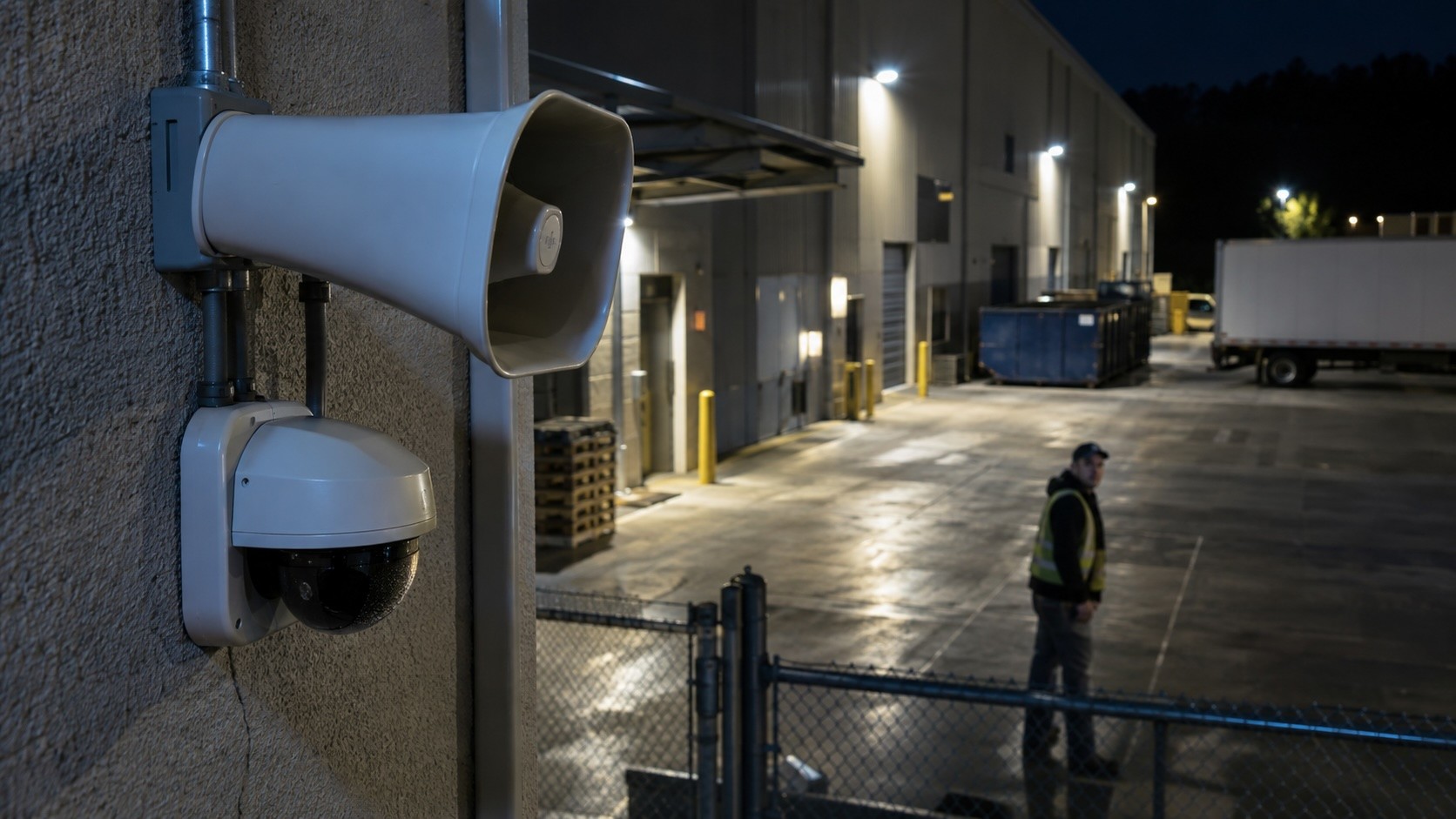
- Audible warnings or talk-down speakers
There is also an important distinction between no internet and no connectivity.
A temporary security system may not need the site’s Wi-Fi or wired network, but remote viewing, alerts, cloud communication, and live monitoring still need a way to communicate.
For many mobile systems, that connection is cellular.
That means cellular coverage should be considered before deployment, not after the equipment is already sitting on the jobsite.
What Infrastructure Does Temporary Security Still Require?
A mobile trailer reduces infrastructure requirements, but it does not eliminate them.
A successful deployment still depends on several practical conditions.
1. Adequate Solar Exposure
Solar-powered equipment needs access to sunlight.
Heavy tree cover, tall structures, or other obstructions can affect how well a solar-powered system performs. The position with the best camera view is not always the position with the best solar exposure, so both need to be considered.
2. Reliable Cellular Coverage
If the system uses cellular service for alerts, remote access, cloud communication, or live monitoring, the proposed location needs adequate signal.
This can become especially important on remote projects, large developments, or sites outside dense commercial areas.
The question should not simply be, “Do we have Wi-Fi?”
It should be: How will this system communicate from this exact location?
3. A Stable Place to Put the Equipment
A surveillance trailer needs a safe, accessible location with a useful view of the property.
Mud, steep grades, active excavation, delivery routes, narrow access points, and constantly changing site conditions can all affect placement.
A good location should account for:
- Stable ground
- Trailer access
- Solar exposure
- Cellular coverage
- Construction traffic
- Ingress and egress
- Camera sightlines
- The assets that actually need protection
4. A Defined Area to Protect
A camera cannot protect “the construction site” as one vague concept.
Someone needs to decide what matters most.
Is the priority the equipment yard?
A material staging area?
The main vehicle entrance?
Copper stored inside a partially enclosed building?
A row of nearly completed structures?
A job trailer?
The right camera position depends on what would create the biggest financial, operational, or scheduling problem if it disappeared tomorrow.
What Should a Construction Team Protect First?
Construction sites constantly change.
Security should follow the risk instead of assuming the same camera position will make sense throughout the project.
Early in a project, the biggest exposure might be:
- Heavy equipment
- Generators
- Fuel
- Job trailers
- Storage containers
- Construction vehicles
Later, the concentration of value may shift toward:
- Copper wire
- Electrical components
- HVAC equipment
- Appliances
- Plumbing fixtures
- Lumber
- Tools
- Trailers
- Finished materials waiting for installation
A practical site security review should answer five questions.
1. What is valuable onsite today?
Identify the materials, vehicles, tools, equipment, and storage areas that would create a meaningful loss or project delay if stolen.
2. How could someone reach it after hours?
Look at temporary gates, access roads, adjacent properties, unfinished fencing, wooded boundaries, and other ways someone could enter without being noticed.
3. Where is value concentrated overnight?
A strong view of a material staging area may be more useful than a wide camera angle that technically sees the entire property but cannot clearly capture activity where it matters.
4. What should happen when suspicious activity is detected?
Decide whether the site needs recorded footage, alerts, live verification, audible intervention, or a defined escalation process.
5. How will the site look 30 or 60 days from now?
Temporary coverage should be able to move as construction progresses.
That is one of the biggest advantages of mobile security.
The jobsite moves.
The security coverage can move with it.
When Does a Mobile Surveillance Trailer Make More Sense Than Permanent Cameras?
Permanent cameras are usually designed around a finished environment.
Construction sites are anything but finished.
Installing permanent cameras too early can create unnecessary compromises.
The walls may not exist yet. Final entrances may change. Electrical service may still be under construction. Network pathways may not be complete. Equipment storage areas may move several times before the project is finished.
A permanent camera installed to watch today’s risk may be pointed at the wrong thing six months later.
Temporary security is often a better fit when:
- Permanent power is unavailable
- Wired internet or networking is incomplete
- The property layout is still changing
- Valuable assets are already onsite
- Coverage needs to move during different construction phases
- The risk is temporary
- Permanent camera locations cannot yet be properly engineered
- Immediate coverage is needed while the long-term system is being planned
Permanent security makes more sense once the finished environment becomes predictable.
That may include final entrances, parking lots, loading areas, exterior doors, access-controlled spaces, building perimeters, and other areas that will remain important after occupancy.
A phased approach can work well:
- Use mobile security during the active construction phase.
- Install the permanent system as power and networking become available.
- Keep temporary coverage in place until the permanent system has been tested and is fully operational.
You do not have to choose between protecting the property now and designing the permanent system correctly later.
What Can a Mobile Surveillance Trailer Realistically Do?
A mobile surveillance trailer can do considerably more than put a camera on a pole.
Depending on the configuration, temporary surveillance can provide:
- 24/7 video recording
- Remote live viewing
- Mobile access
- Video analytics
- Visible security presence
- Strobes or lights
- Audible warnings
- Talk-down speakers
- License plate capture
- Live video monitoring
- A defined escalation process
For a construction team, those capabilities support four basic goals.
Visibility
See what is happening at the site after crews leave.
Detection
Use analytics to identify defined activity instead of expecting someone to stare at camera feeds all night.
Verification
Determine whether an alert represents an actual security concern before escalating it.
Response
Follow a predetermined response process while an event is still happening.
That last piece matters.
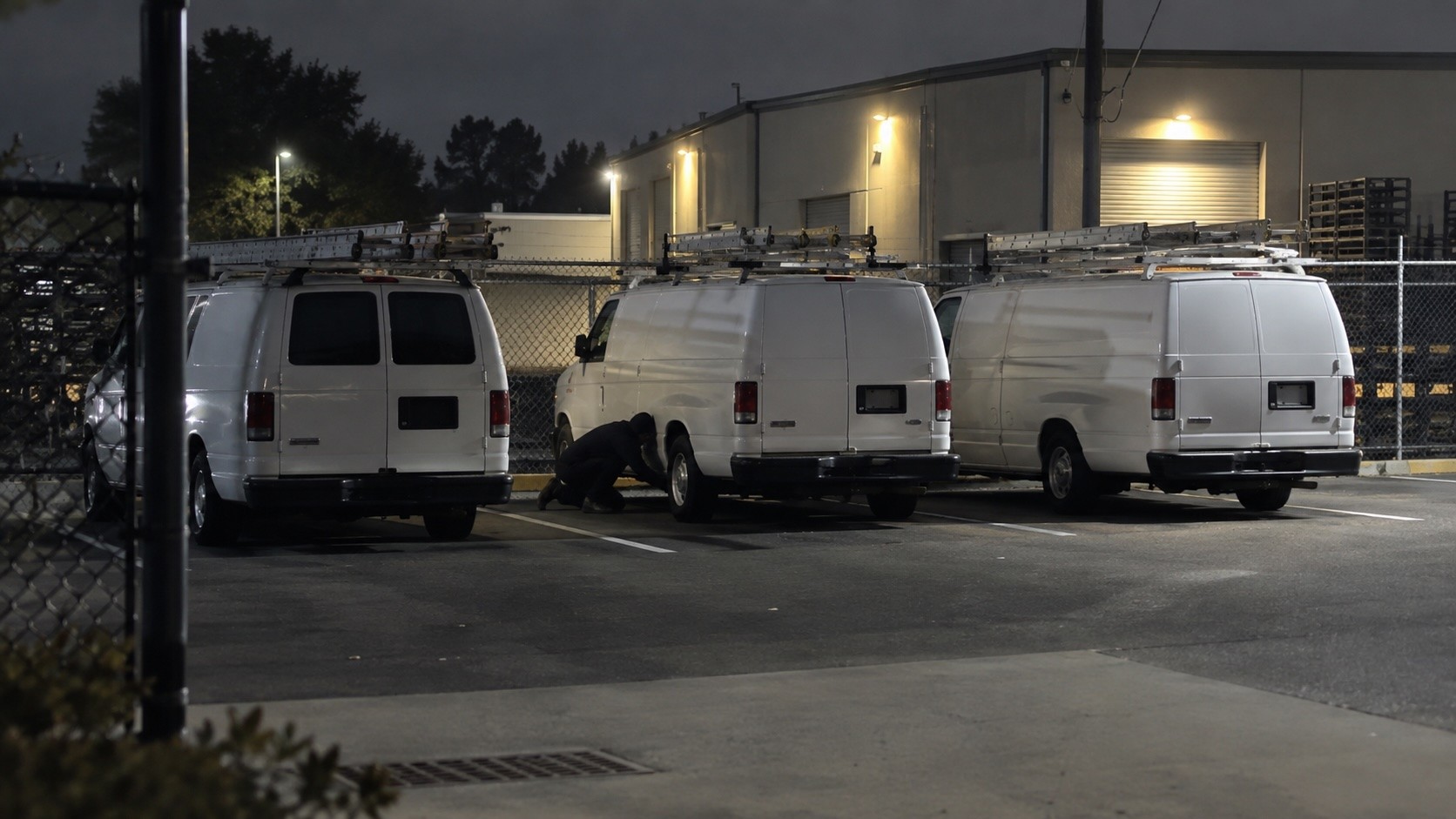
There is a major difference between having footage of someone stealing materials and having a process designed to identify suspicious activity while that person is still onsite.
What Can't Temporary Security Solve?
Mobile security is useful, but it is not magic.
It cannot fix poor site planning.
It cannot see through a stack of materials placed directly in front of a camera.
It cannot reliably communicate through a cellular connection that does not exist.
It cannot protect a sprawling property with one camera angle simply because the trailer is tall.
And a monitored system cannot follow the right response process if nobody has decided what that response should be.
Temporary security works best when the project team answers the operational questions first:
- What are we trying to protect?
- When should activity be considered suspicious?
- Where should cameras be positioned?
- Who is authorized onsite after hours?
- Who should receive alerts?
- Should monitoring personnel intervene?
- When should law enforcement be contacted?
- When will the coverage need to move?
The hardware comes after those decisions.
How Should Security Change as the Jobsite Changes?
The highest-risk area on a construction site today may not be the highest-risk area two months from now.
On a residential development, early coverage might focus on equipment, lumber, and a central material staging area. Later, that risk can shift toward completed homes where appliances, HVAC components, copper, and fixtures have been installed.
On a commercial build, the first priority may be generators, trailers, lifts, and exterior material storage. Once the building closes in, the priority may shift to entrances, loading areas, electrical rooms, or equipment stored inside.
On an industrial or infrastructure project, valuable equipment and materials may move across a large footprint as each phase of the work progresses.
In each case, the security problem changes before the permanent property is ready.
That is where temporary coverage earns its value.
You are not protecting where the risk will eventually be.
You are protecting where it is today.
What Does This Look Like on a Real Project?
Consider a site where expensive equipment and materials are already in place, but the finished security infrastructure is months away.
The project may have cameras planned for the completed property, but those future camera locations do little to protect a temporary equipment yard sitting on the opposite side of the site today.
A mobile surveillance trailer can be positioned around the current concentration of value, then moved as construction progresses.
For example:
- Early phase: monitor heavy equipment, generators, and storage containers.
- Mid-project: move coverage toward material staging and active building areas.
- Later phase: focus on finished materials, appliances, HVAC equipment, entrances, or nearly completed structures.
- Final phase: transition coverage to the permanent video and access control system.
That approach avoids designing a permanent security system around temporary construction conditions.
How Far Ahead Should You Plan for Temporary Jobsite Security?
Ideally, before valuable materials and equipment begin staying onsite overnight.
Waiting until after a theft, break-in, or vandalism incident means the project has already absorbed the first loss.
A security walkthrough can happen while the team is still preparing for major deliveries.
That gives you time to identify:
- The highest-risk assets
- Planned material staging areas
- Normal working hours
- Expected subcontractor activity
- Main entrances and exits
- Trailer placement options
- Solar exposure
- Cellular conditions
- Monitoring requirements
- Future construction phases that may require coverage to move
A mobile surveillance trailer can often be operational within 5 to 10 business days once site access, placement, availability, and other deployment requirements are confirmed.
Complicated access, poor trailer placement options, limited solar exposure, or unclear site conditions can extend that timeline.
Security belongs on the construction schedule just like other temporary infrastructure.
Checklist: Is Off-Grid Security a Good Fit for Your Site?
Temporary or mobile security may be worth evaluating if you answer yes to several of these questions:
- Are valuable materials or equipment already onsite?
- Is permanent electrical service unavailable or unreliable?
- Is the project’s permanent network still being installed?
- Are exterior lighting conditions poor or temporary?
- Will material and equipment locations change during construction?
- Would permanent cameras installed today need to be relocated later?
- Does the site sit empty for long periods overnight or on weekends?
- Is cellular service available?
- Is there a stable location with adequate solar exposure for a mobile trailer?
- Do you need more than recorded footage after an incident?
- Would theft or vandalism cause meaningful project delays in addition to replacement costs?
If several of those answers are yes, temporary coverage may make more sense than forcing a permanent solution into an unfinished site.
Frequently Asked Questions About Off-Grid Construction Site Security
Can security cameras work on a construction site without electricity?
Yes. Solar-powered mobile surveillance systems can operate without permanent electrical service by generating and storing their own power. Performance still depends on factors such as battery capacity, solar exposure, weather conditions, and the equipment being powered.
Do mobile surveillance trailers need internet?
They do not necessarily need the site’s wired internet or Wi-Fi. Mobile surveillance trailers can use cellular connectivity instead. Remote viewing, monitoring, alerts, and other connected functions still require a reliable communications path.
What happens if cellular coverage is weak?
Weak cellular service can affect remote communication, alerts, monitoring, and video access. Cellular conditions should be reviewed before equipment is positioned so the system is not placed somewhere it cannot reliably communicate.
Can a surveillance trailer move as construction progresses?
Yes. Mobility is one of the main advantages of temporary surveillance. Coverage can be repositioned as material staging areas, equipment parking, entrances, and active construction zones change.
Is a mobile surveillance trailer only useful after a site has experienced theft?
No. Temporary security can be deployed proactively when valuable equipment or materials begin arriving before permanent security is ready. You do not have to wait for an incident to identify an obvious exposure.
Should we install permanent cameras at the beginning of construction?
Not necessarily. If final power, networking, walls, entrances, or camera locations are not established, installing permanent equipment too early can lead to unnecessary relocation or poor long-term placement. Temporary coverage can protect the construction phase while the permanent system is designed around the finished property.
Protect the Site You Have Today
The challenge with construction security is not simply that the building is unfinished.
It is that the risk starts before the infrastructure does.
Equipment arrives. Materials get staged. Contractors come and go. Valuable areas of the site change from one phase to the next.
Meanwhile, permanent electrical service, internet, lighting, fencing, and cameras may still be months away.
Off-grid construction site security gives builders, general contractors, and construction teams another option.
Instead of leaving the site exposed or rushing permanent cameras into temporary locations, you can use mobile coverage to protect the current risk and build the permanent system when the property is actually ready for it.
The first step is understanding what needs protection and whether the site can support the right temporary solution.
Call Hoosier Security at 317-644-0570 to schedule a Site Security Walkthrough. We will review the property, identify the biggest areas of exposure, and determine whether a mobile surveillance trailer, SiteWatch monitoring, temporary cameras, or another approach makes sense for the project.
After the walkthrough, you can visit the Hoosier Security Experience Center to see the recommended technology in action before making a final decision.