TL;DR: Work truck security is not just about keeping someone from stealing a van. For HVAC, plumbing, electrical, roofing, landscaping, restoration, and other home service companies, each vehicle may contain the tools, parts, materials, and specialized equipment needed to complete the next day’s jobs. Protecting the fleet means securing the entire yard with layered perimeter visibility, intelligent detection, lighting, monitoring, live intervention, and a clear response plan. Your Trucks Are Worth More to the Business Than Their Replacement Value
At 6:30 a.m., your dispatcher should be thinking about routes, technicians, and the first appointments of the day.
Not about a broken gate.
Not about three vans with doors pried open.
Not about which technicians are missing the equipment they need for their 8 a.m. calls.
That is what makes theft especially disruptive for a home service company. The truck itself is only one part of the exposure.
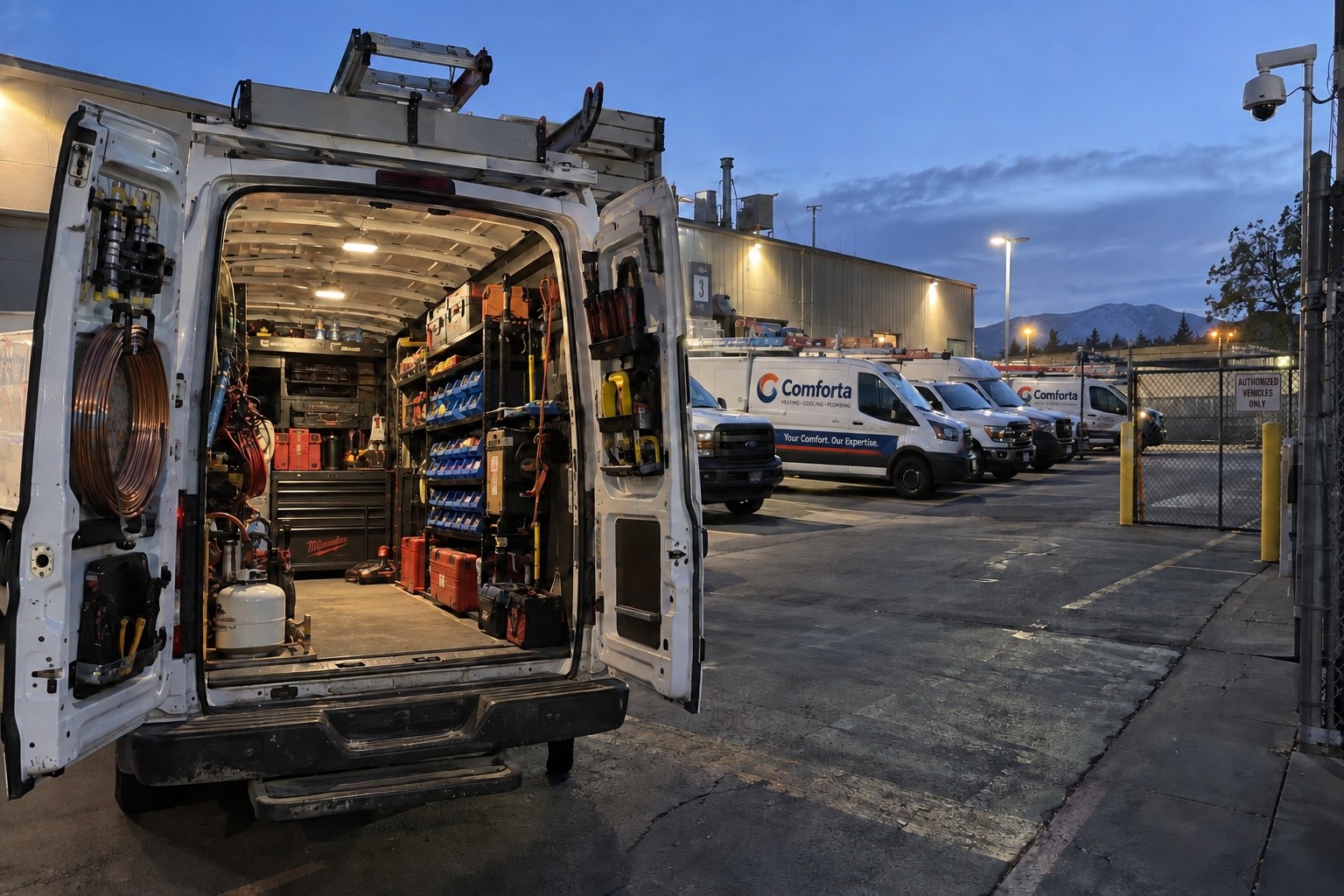
An HVAC van might carry vacuum pumps, recovery machines, refrigerant tools, combustion analyzers, meters, fittings, and job-specific replacement parts.
A plumbing truck may have press tools, drain cameras, sewer equipment, copper, valves, fittings, and specialty hand tools.
An electrical van can contain wire, cable, meters, testers, drills, saws, batteries, and materials already assigned to upcoming jobs.
Roofing, landscaping, restoration, and other service fleets have their own version of the same problem.
Your work trucks are rolling warehouses.
That changes how you should think about work truck security.
Why Is Work Truck Theft an Operations Problem, Not Just a Security Problem?
The easiest loss to calculate is the item that disappeared.
The harder costs show up the next morning.
A missing specialized tool can leave a technician unable to complete a job. A damaged vehicle may need to be pulled from the route. Stolen customer materials may have to be reordered. Managers start rearranging schedules while employees document losses and deal with police reports, insurance, repairs, and replacement purchases.
One incident can affect:
What Is Lost or Damaged | What Operations Feels the Next Day |
Service van or truck | Route capacity disappears |
Diagnostic or specialty equipment | Technician cannot complete certain calls |
Power tools | Crew productivity drops |
Copper, wire, fittings, or parts | Replacement material has to be sourced |
Customer-specific equipment | Installation may be delayed |
Vehicle doors, locks, or windows | Truck may need repair before returning to service |
Catalytic converter or vehicle components | Vehicle can become temporarily unusable |
Yard gate or fence | Property remains exposed until repaired |
That is why the true question is not simply, “How much would it cost to replace what was stolen?” It is, “What happens to tomorrow’s schedule when this truck cannot leave the yard fully equipped?”
That is a much more expensive question.
Why Aren’t Locks and Vehicle Alarms Enough?
Individual vehicle protection still matters.
Strong locks, secure compartments, ladder locks, immobilizers, catalytic converter protection, and sensible tool-storage practices can make a truck harder to target. Work-truck manufacturers and upfitters commonly treat locks and secured compartments as important layers for protecting tools and equipment.
But a home service company with 15, 30, or 75 vehicles does not really have 15, 30, or 75 separate security problems.
It has one fleet yard problem.
A thief who gets through the back fence may suddenly have access to an entire row of vehicles. Someone who can move unnoticed between trucks has time to check doors, compartments, ladder racks, catalytic converters, trailers, storage areas, and anything else left outside.
Protecting each vehicle without addressing the property around it leaves a major gap.
The goal of fleet yard security is to make the entire environment harder to enter, harder to move through unnoticed, and harder to steal from without triggering a response.
What Areas of a Home Service Fleet Yard Need the Most Attention?
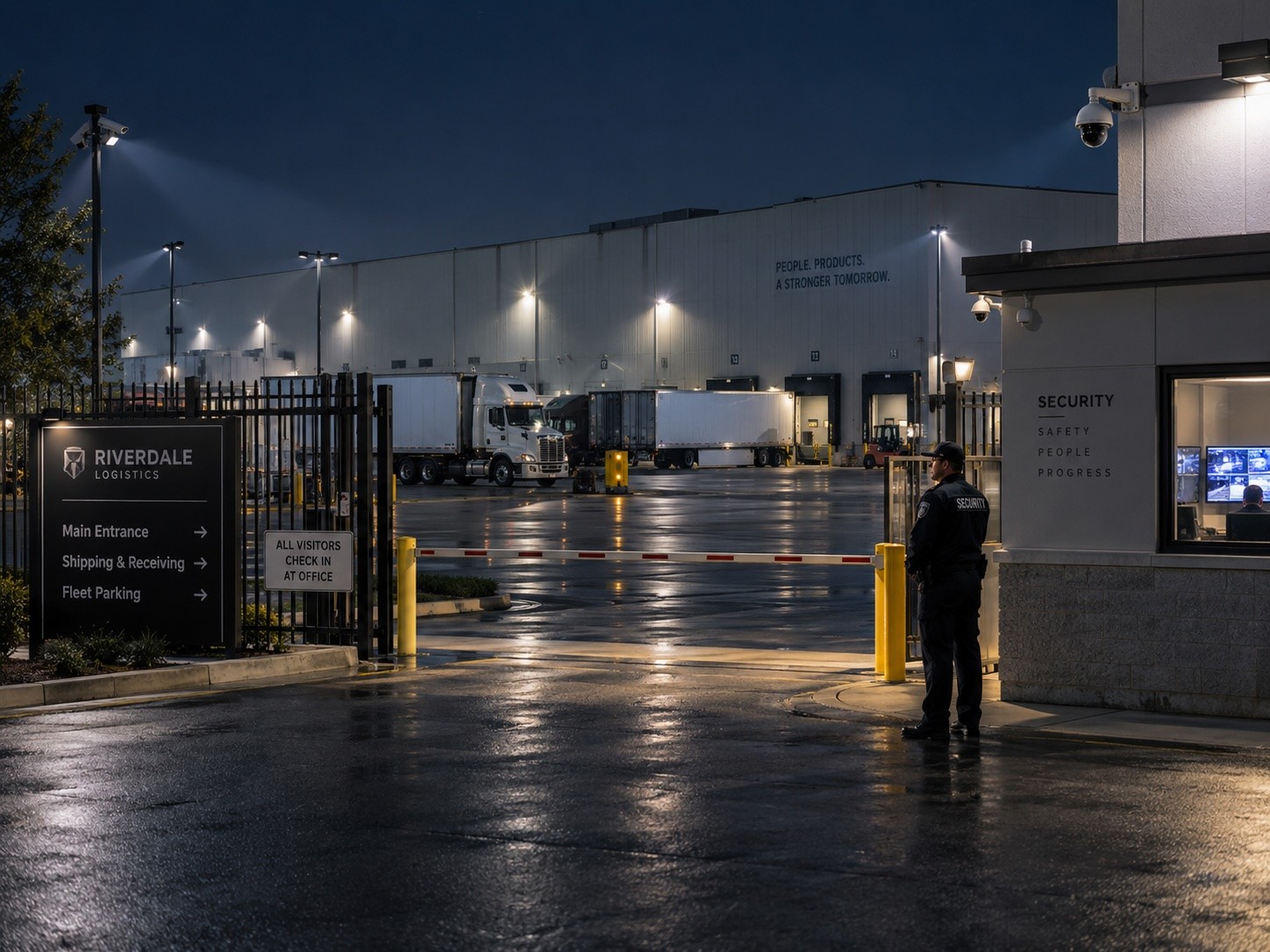
Good work truck security starts by looking at the yard the way someone would actually move through it after hours.
Do not only point cameras at the front gate.
Look at the full path from the property line to the assets.
1. Gates and Vehicle Entrances
You should be able to clearly see who enters, who leaves, and what vehicle is involved.
That includes normal employee activity before sunrise. Many home service businesses have technicians arriving at 5:00 or 6:00 a.m., on-call employees returning late at night, and managers coming and going outside traditional office hours.
A security plan has to account for those schedules without treating every legitimate employee as a threat.
2. Fence Lines and Rear Property Boundaries
Front entrances are obvious.
Rear fence lines, neighboring lots, tree lines, drainage areas, alleys, and dark property edges often are not.
Those are exactly the areas that deserve clear visibility.
3. The Spaces Between Trucks
A wide camera view of 40 vans may look impressive on a monitor.
It may still be nearly useless when someone walks between the rows.
Camera placement should account for the spaces where a person could crouch, move between vehicles, access side doors, or work underneath a truck without being clearly visible.
4. Material and Equipment Storage
Many service companies store more than vehicles outside.
Common examples include:
- Trailers
- Generators
- Compressors
- Pipe or conduit
- Roofing materials
- Scrap metal
- Landscaping equipment
- Portable machinery
- Fuel tanks
- Dumpsters or recycling areas
- Customer equipment awaiting installation
- Returned or staged inventory
Your security system should treat these areas as part of the same property, not as separate afterthoughts.
5. Building Doors and Parts Areas
The fleet yard may be the obvious target, but an intruder who reaches the building may also gain access to additional inventory, keys, tools, offices, or warehouse space.
Exterior security should connect back to the building rather than ending at the parking lot.
What Should Fleet Yard Security Actually Do After Everyone Leaves?
A useful system needs to do more than produce clear footage the next morning.
For a home service fleet, there are six jobs the security strategy should perform.
See the Perimeter
Cameras should provide usable views of entrances, fence lines, truck rows, exterior storage, and the approaches thieves are most likely to use.
This is where coverage design matters more than simply counting cameras.
Detect Activity That Matters
Traditional motion alerts can quickly become background noise.
A useful system should be capable of distinguishing activity such as a person entering a restricted area, someone approaching parked vehicles after hours, or a vehicle entering when the yard should be closed.
The goal is not more notifications.
The goal is identifying activity that deserves attention.
Light the Right Areas
Lighting improves visibility, helps cameras capture better images, and removes some of the concealment that makes an outdoor yard attractive after hours.
That does not mean flooding the entire property with the brightest fixtures available. Lighting should support camera views, entrances, parking rows, and vulnerable perimeter areas without creating glare that makes video worse.
Verify What Is Happening
An alert alone still leaves someone asking, “Is this real?”
Verification closes that gap.
A person walking toward a van at 2:00 a.m. could be an intruder. At some companies, a technician may also legitimately arrive early for an emergency call.
The monitoring workflow needs enough visual context to tell the difference.
Intervene While the Person Is Still There
This is where live monitoring and talk-down change the security equation.
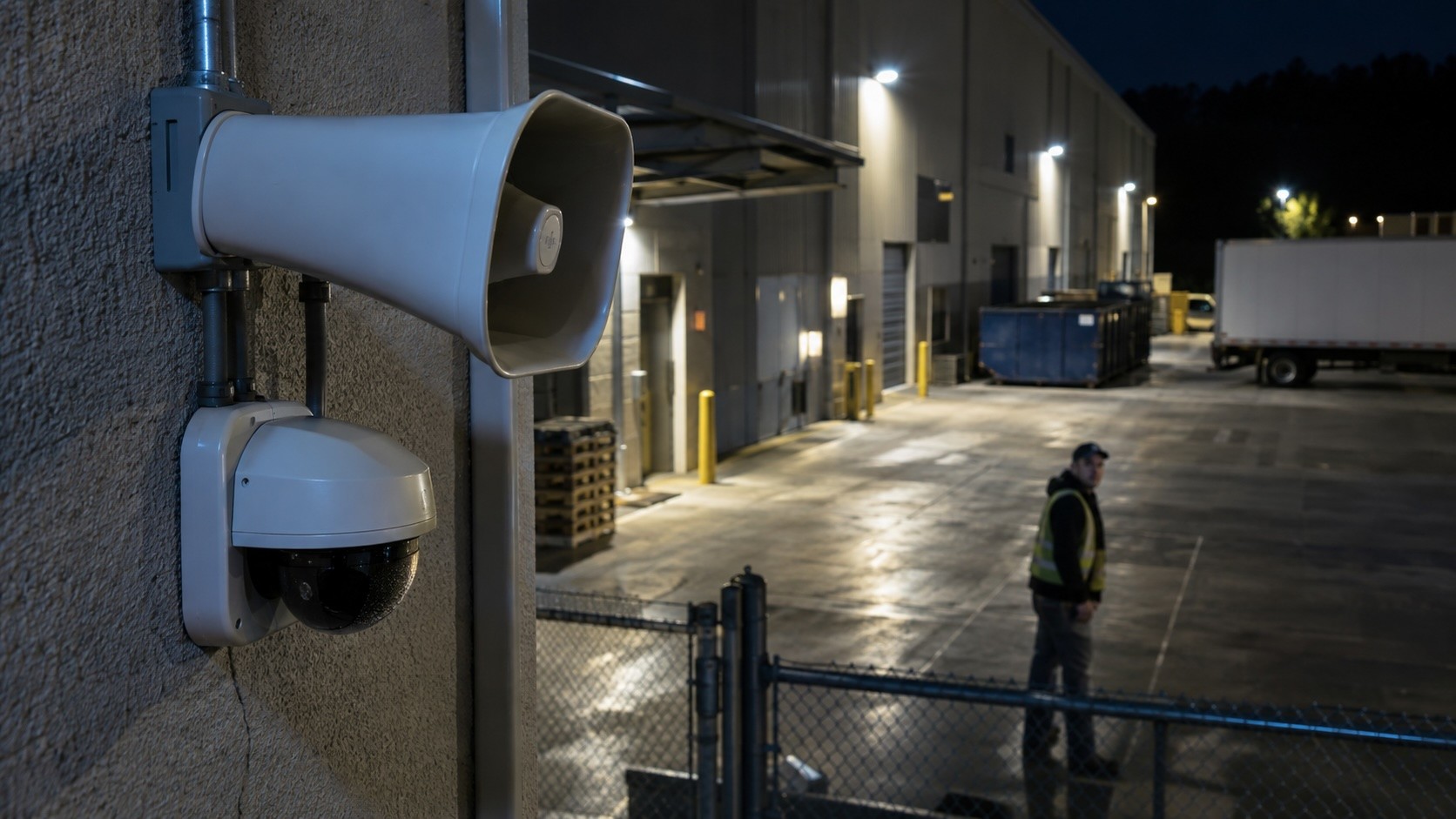
Instead of waiting until someone discovers the damage, a live operator can review a verified event and issue an audio warning while the individual is still on the property.
That matters because deterrence is most valuable before the first window breaks or the first tool leaves the yard.
Escalate When the Situation Requires It
Some people leave when they realize they have been detected.
Others do not.
Your response plan should establish what happens next, who gets contacted, what information is available, and when law enforcement should be involved.
How Can Live Video Monitoring Protect a Home Service Fleet?
This is where SiteWatch can fit into the larger fleet yard strategy.
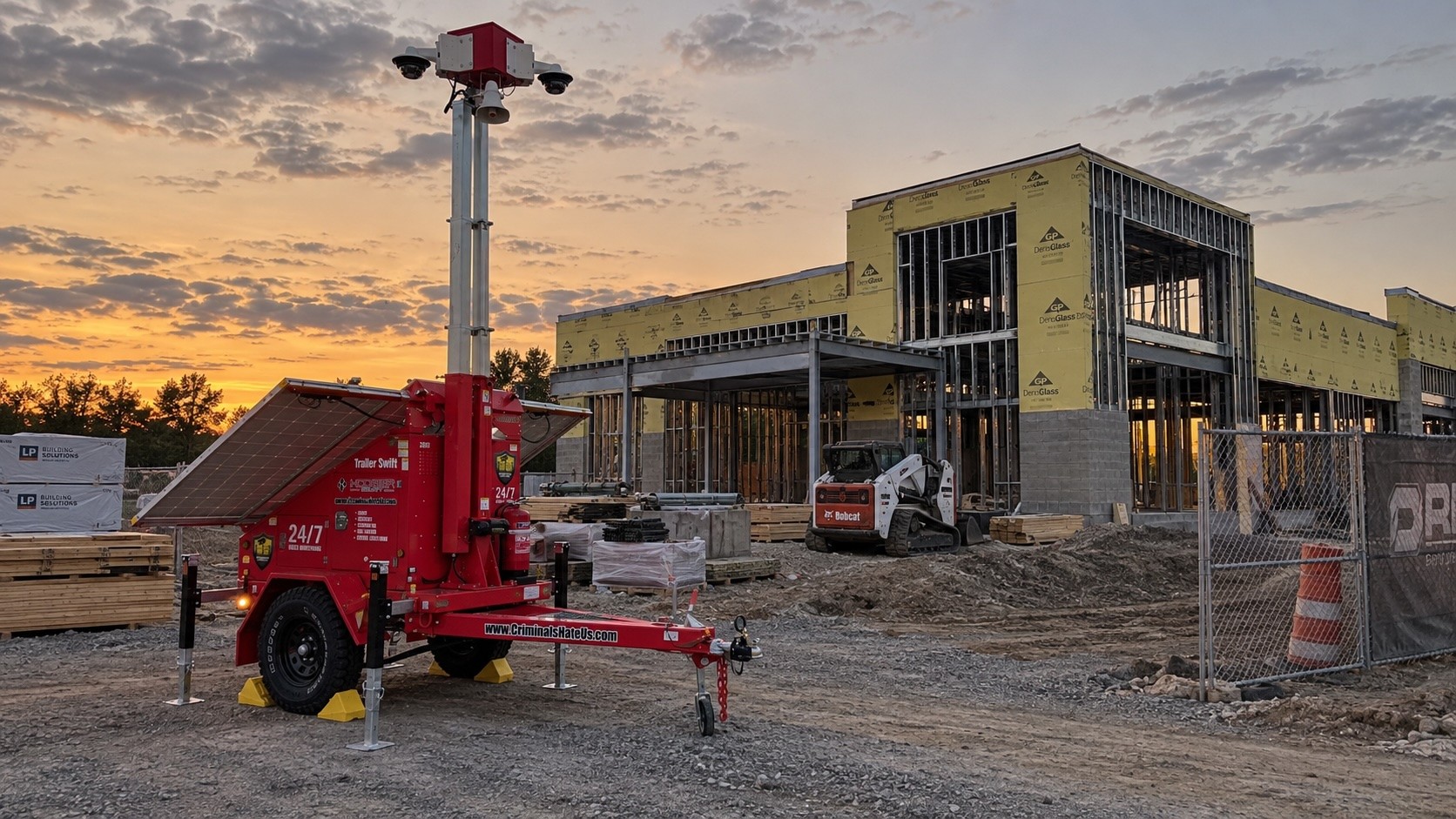
SiteWatch is designed to connect with compatible commercial camera systems rather than requiring every customer to automatically replace the cameras they already own. Its system uses AI to analyze camera activity, then sends relevant events to live operators who can verify what is happening, issue an on-site audio warning, or escalate a verified event.
For a home service operator, the important part is not the AI by itself.
It is the workflow: Detect → Verify → Respond
Consider the difference.
A traditional camera records someone entering the yard at 2:18 a.m. The owner watches the footage at 7:05 a.m. after an employee finds a damaged van.
A monitored system identifies the activity while the person is still moving through the yard. A live operator can determine whether the event appears legitimate and take action based on the agreed response procedure.
The camera stops being only an evidence tool.
It becomes part of the response.
Does That Mean Every Camera Should Trigger an Alarm?
No. For home service companies, that would become unbearable very quickly.
Fleet yards are not completely inactive at night. Operations may include:
- On-call technicians
- Emergency dispatches
- Early morning departures
- Late vehicle returns
- Cleaning crews
- Delivery drivers
- Managers
- Snow removal
- Maintenance vendors
Good monitoring needs context.
The point is to define the areas, schedules, and behaviors that actually represent risk.
For example, an employee entering through the main gate at 5:45 a.m. may be normal.
A person climbing the rear fence and walking between HVAC vans at 1:30 a.m. is different.
Those distinctions matter.
What Does Layered Fleet Yard Security Look Like?
The strongest approach does not rely on one product.
Think of the yard in layers.
Layer 1: Physical Delay
Start with practical barriers such as fencing, gates, locks, secure storage, vehicle locks, and controlled key access.
These measures buy time.
Layer 2: Visibility
Use cameras and lighting to eliminate the areas where someone could enter or move around the fleet without being seen.
Layer 3: Intelligent Detection
Create detection zones around vulnerable areas such as rear fence lines, vehicle rows, equipment storage, and gates.
Layer 4: Human Verification
Send meaningful events to someone capable of deciding whether the activity requires intervention.
Layer 5: Active Deterrence
Use live audio talk-down or other warning methods to make it clear that the activity has been detected.
Layer 6: Escalation and Documentation
Have a defined process for escalation and preserve useful video when an event requires investigation, an insurance claim, or law-enforcement involvement.
Each layer solves a different problem.
Together, they make the yard far more difficult to target quietly.
What Should Home Service Owners Ask During a Fleet Yard Security Review?
Walk the property after the last truck comes back for the day.
Then ask:
- Can we clearly see every place where someone could enter the property?
- Can our cameras actually see between rows of vehicles?
- Are valuable outdoor materials visible from outside the property?
- Are there dark areas where a person could work without being noticed?
- Could someone reach multiple vehicles after crossing the perimeter once?
- Which trucks contain the most expensive or hardest-to-replace equipment?
- Who receives an alert after hours?
- Does that person have enough information to know whether the alert is real?
- Can anyone intervene while the activity is happening?
- What happens when the first warning does not work?
- Do our security rules account for on-call technicians and early dispatch schedules?
- Would we know about an incident before the first employee arrived the next morning?
The answers tell you more than the number of cameras mounted on the building ever will.
Why Response Matters
A construction materials distributor was losing nearly $20,000 per month in outdoor inventory despite already having cameras. After adding monitored detection and response, the company reported no further theft from the site.
That business is not an HVAC contractor or plumbing company, but the underlying problem is familiar.
The valuable assets were already visible on camera.
The missing piece was action while the incident was still happening.
That same distinction matters when your high-value inventory happens to be parked in a row of service vans.
How Should a Home Service Company Start Improving Work Truck Security?
Do not start by buying another camera.
Start by understanding the exposure.
Step 1: Walk the Fleet Yard
Review gates, fences, lighting, truck parking, blind spots, material storage, building entrances, and how employees actually use the property.
Step 2: Build Security Around Your Operating Schedule
Account for the early starts, emergency calls, late returns, vendors, and irregular activity that are normal for your business.
Step 3: Test the Response
Detection is only useful when it leads somewhere.
Confirm who verifies an event, whether live intervention is available, how escalation works, and whether the system provides useful video when something does happen.
The result should be simple:
Your employees leave.
Your trucks stay parked.
Your equipment is ready.
Tomorrow’s jobs start on schedule.
Frequently Asked Questions About Work Truck Security
What is the best security for a fleet of work trucks?
The strongest approach combines vehicle-level protection with fleet yard security. Vehicle locks and secure storage help protect individual trucks, while fencing, cameras, lighting, intelligent detection, live monitoring, talk-down, and escalation protect the fleet as a whole.
Are security cameras enough to prevent tool theft from work trucks?
Cameras are important, but recording alone may only show you what happened after the theft. A stronger approach combines video with detection and a response process so suspicious activity can be reviewed and addressed while it is occurring.
Can SiteWatch work with cameras we already have?
In many cases, yes. SiteWatch is designed to connect to compatible existing commercial camera systems. Camera quality, placement, field of view, network connectivity, and the areas you need to protect still need to be evaluated before determining whether the current system provides adequate coverage.
How does live talk-down work in a fleet yard?
When suspicious activity is detected and verified, a live operator can speak through an on-site speaker and address the person directly. That lets the system intervene before an attempted theft necessarily becomes a completed theft.
Should we protect the trucks or the perimeter first?
Both matter, but companies with multiple vehicles should think beyond individual vans. Once someone gets inside the fleet yard, they may have access to many vehicles, tools, materials, and pieces of equipment. A layered plan protects the perimeter while also making each truck harder to access.
Can monitored security work with technicians arriving before normal business hours?
Yes, but the operating schedule needs to be part of the system design. Early departures, on-call employees, late returns, and approved vendors should be considered when setting monitoring schedules, detection zones, and response procedures. A home service fleet should not be secured as though the property becomes completely inactive at 5 p.m.
Protect Tomorrow’s Jobs Before Tonight Creates a Problem
Your work trucks carry more than tools.
They carry tomorrow morning’s revenue.
When a fleet yard is hit after hours, the impact can spread from the parking lot to dispatch, technicians, customers, purchasing, management, and every job that depends on the missing equipment.
That is why work truck security should protect the fleet as an operating system, not simply a collection of parked vehicles.
Start with the yard.
Find the blind spots.
Decide what should happen when someone enters after hours.
Then build the detection, verification, and response process around the way your company actually operates.
Call Hoosier Security at 317-644-0570 to schedule a Site Security Walkthrough. We can review your fleet yard, existing cameras, vehicle parking, perimeter, lighting, and after-hours response process to identify where the real gaps are.
Once the walkthrough is complete, your team can see relevant technologies in action at the Hoosier Security Experience Center before deciding what belongs in your system.