TL;DR: Overnight security guards still provide real value when a property needs a physical person onsite to control access, assist employees, handle safety issues, or immediately intervene. But when the primary job is watching cameras, patrolling a large property, detecting trespassing, and calling for help, technology-assisted live monitoring may provide broader and more consistent coverage at a lower recurring cost. The right decision is not guards versus technology. It is determining where human presence is actually necessary and where cameras, intelligent detection, and live remote operators can handle the job more efficiently. Why Are Businesses Reconsidering Overnight Guard Coverage?
Paying for overnight security can feel straightforward. You put a trained person onsite, give them a patrol route or a bank of camera feeds, and know someone is there if something happens.
The problem is that overnight protection becomes expensive quickly, especially when the site requires coverage every night, multiple guards, relief personnel, overtime, supervision, or coverage across several properties.
SiteWatch estimates that a single overnight guard can cost a business $50,000 to $80,000 per year. For context, the U.S. Bureau of Labor Statistics reported a $38,020 median annual wage for security guards in May 2025. The wage figure is not the same as the amount a business pays for contracted guard service. Vendor overhead, supervision, insurance, payroll costs, turnover, overtime, holiday coverage, and margin can all increase the actual cost of maintaining a guard post.
That makes the cost of overnight security guards worth examining as an operating decision, not simply a security decision. The question is not, “How do we get rid of our guards?”
A better question is: What work are we paying the guard to perform, and is an onsite person actually the best way to perform all of it?
What Do Overnight Security Guards Do Well?
There are security problems technology cannot physically solve.
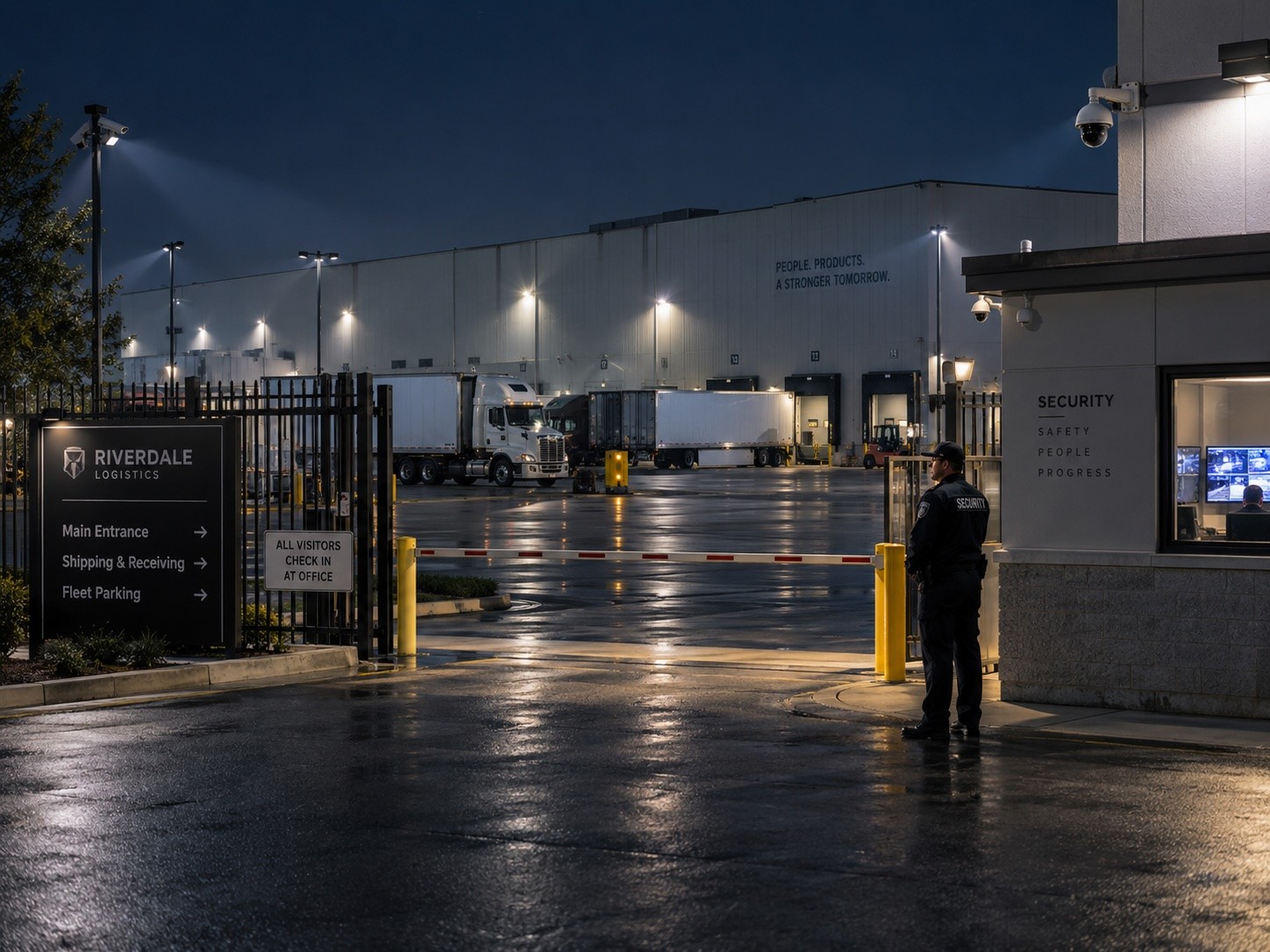
A guard can meet someone at a gate. A guard can walk an employee to a vehicle. A guard can physically investigate a problem. A guard can direct people during an emergency, enforce site procedures, check credentials, manage visitors, and provide an immediate visible presence.
Those capabilities matter.
Physical guard coverage may make sense when your overnight operation depends heavily on human interaction, including facilities with active employee traffic, controlled entry checkpoints, sensitive deliveries, complex visitor procedures, life-safety responsibilities, or locations where an immediate onsite response is required.
The mistake is assuming every security task requires that same physical presence.
Many businesses are paying guards primarily to watch screens, walk predictable patrol routes, investigate motion alerts, monitor an outdoor yard, or call management or law enforcement when something looks wrong.
Those jobs can be evaluated differently.
What Are the Hidden Costs and Limitations of Guard-Only Coverage?
The issue is not whether a guard is capable. The issue is what one person can realistically see and do during an eight-hour shift.
A large commercial property may include parking areas, loading docks, fence lines, fleet vehicles, outdoor equipment, employee entrances, rooftops, utility areas, storage yards, and multiple buildings.
One person cannot physically watch every one of those areas at the same time.
That creates several operational limitations.
Multiple-zone visibility: A guard standing near the front entrance cannot simultaneously see activity behind the warehouse, along the rear fence, and around vehicles on the opposite side of the property.
Patrol gaps: Every patrol route creates temporary blind periods somewhere else. A person investigating activity at one end of the site is unavailable at the other.
Call-offs and turnover: A staffed security post depends on someone being available for every shift. Illness, vacancies, scheduling issues, and turnover can create coverage problems or additional overtime expenses.
Documentation: The quality of incident documentation may depend on what one person saw, remembered, recorded, and reported. Camera-based systems can preserve video tied directly to the event.
Scalability: Adding another property, parking area, fleet yard, or building often means adding more guard hours. Labor cost typically grows with the amount of physical coverage required.
None of these are criticisms of the person doing the job. They are limitations of relying on a single person to monitor a complex physical environment.
How Does Live Video Monitoring Change the Equation?
Modern live video monitoring does not remove human judgment from security.
It moves that judgment to the point where it can cover more of the property.
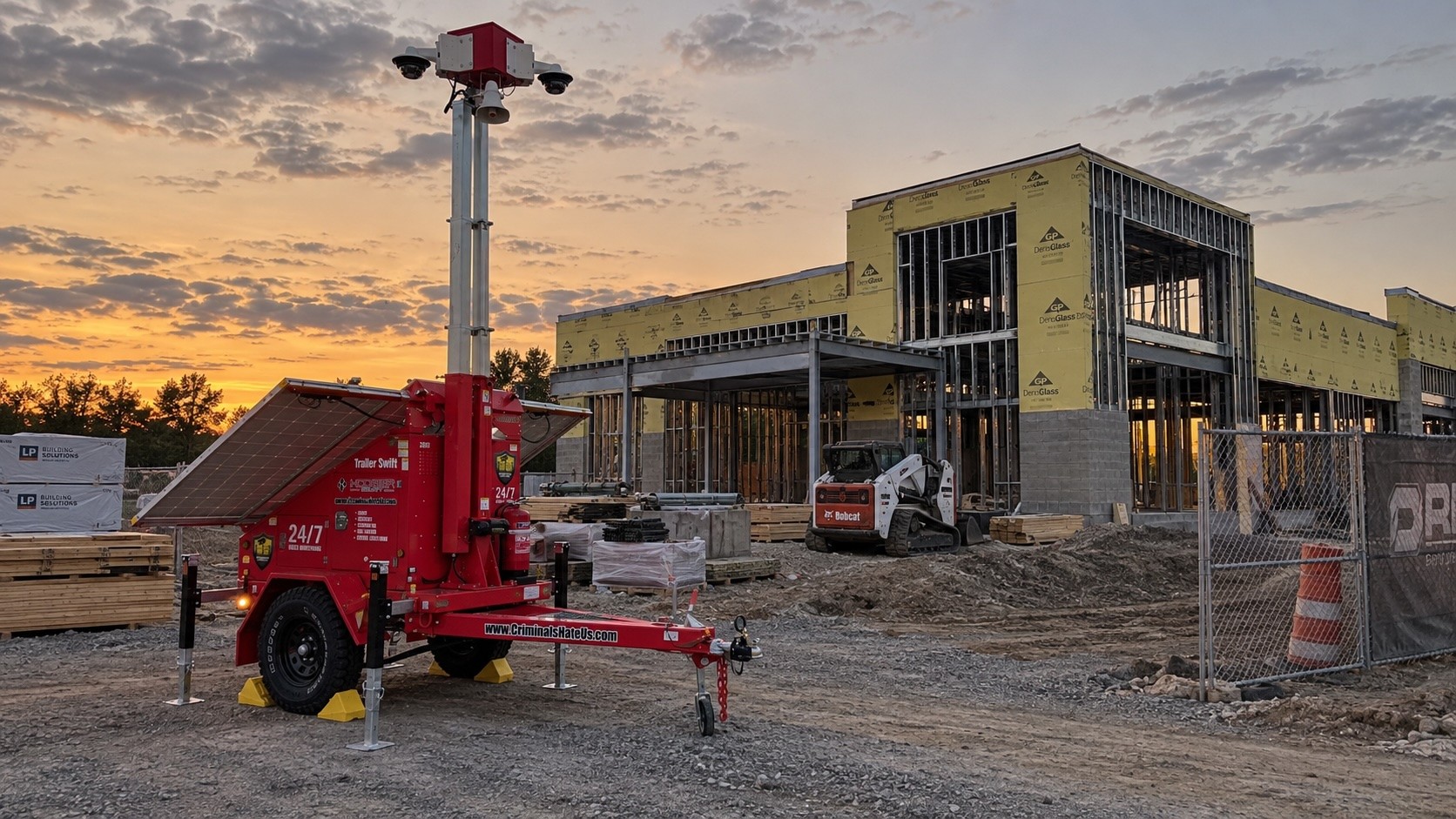
With SiteWatch Video Monitoring, existing commercial cameras can be connected to intelligent monitoring. AI analyzes camera feeds for activity such as trespassing, break-ins, or suspicious behavior. Instead of asking an operator to stare continuously at dozens of screens, the technology identifies events that deserve attention and presents those events to a live operator for verification.
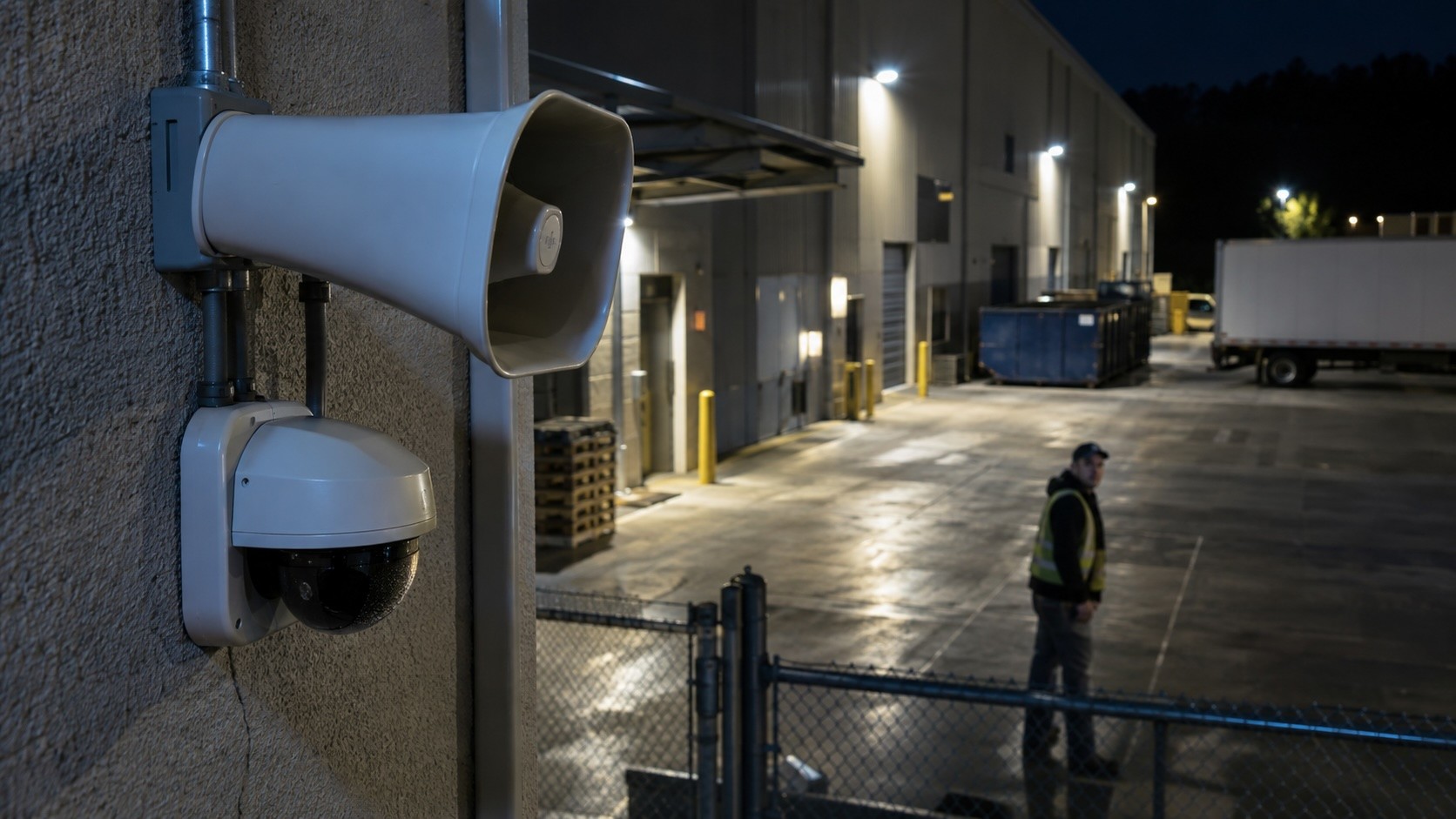
The operator can then assess what is actually happening and follow the site’s response procedure. Depending on the situation and system design, that can include an onsite audio warning, notifying a designated contact, or requesting law enforcement response with video verification. SiteWatch says the service can connect to cameras a business already owns rather than requiring the entire camera system to be replaced.
Factor | Overnight Guard | Live Video Monitoring | Hybrid Approach |
Physical presence onsite | Yes | No | Guard remains onsite |
Monitor multiple camera zones | Limited by human attention | Yes | Monitoring covers cameras while guard handles onsite duties |
Impact of employee call-offs | Can affect coverage | Not dependent on one onsite employee | Monitoring continues even if guard staffing changes |
Physical patrols | Yes | No | Guard can conduct patrols while cameras maintain coverage elsewhere |
Video documentation | Depends on camera system | Yes | Video documents events while guard provides onsite context |
Live human judgment | Yes | Yes, through monitoring operators | Both onsite guard and remote operator |
Audio intervention | Guard can speak directly | Available with talk-down equipment | Guard or remote operator can intervene |
Scalability across large properties | Usually requires more labor | Easier to expand with additional cameras | Monitoring expands coverage without requiring a guard in every area |
Immediate physical intervention | Yes, within guard training and policy | No | Guard can respond physically when appropriate |
Recurring labor exposure | Higher | Typically lower | Can reduce the number of guard hours or posts needed |
Best fit | Sites requiring regular physical interaction | Closed facilities, yards, fleets, perimeters | Sites that need some physical presence but not a guard watching every area |
This is why the answer is rarely “replace every guard.”
The better goal is to stop paying for human labor where the primary task can be performed more consistently through technology, while preserving people where physical presence creates meaningful value.
When Does Technology-Assisted Monitoring Make More Financial Sense?
Several conditions are strong indicators that a business should compare live monitoring against its current guard expense:
- Most overnight guard activity consists of watching cameras or conducting routine patrols. If the guard rarely performs tasks requiring physical interaction, part of that coverage may be a candidate for remote monitoring.
- The property has large outdoor areas or multiple blind spots. Fleet yards, manufacturing sites, industrial properties, logistics facilities, equipment storage areas, and construction sites can be difficult for one person to patrol consistently.
- Your business already has usable cameras. SiteWatch is designed to connect to existing commercial camera systems in many applications, which can change the economics compared with replacing an entire surveillance system.
- Call-offs or guard turnover regularly affect coverage. A security plan should not become less effective because one person could not make a shift.
- You manage multiple locations. Adding guard posts property by property can become expensive. A technology-assisted model can make centralized monitoring easier to scale.
- You need stronger incident verification. Recorded video tied directly to an event can give management and responding authorities more context than a basic alarm notification.
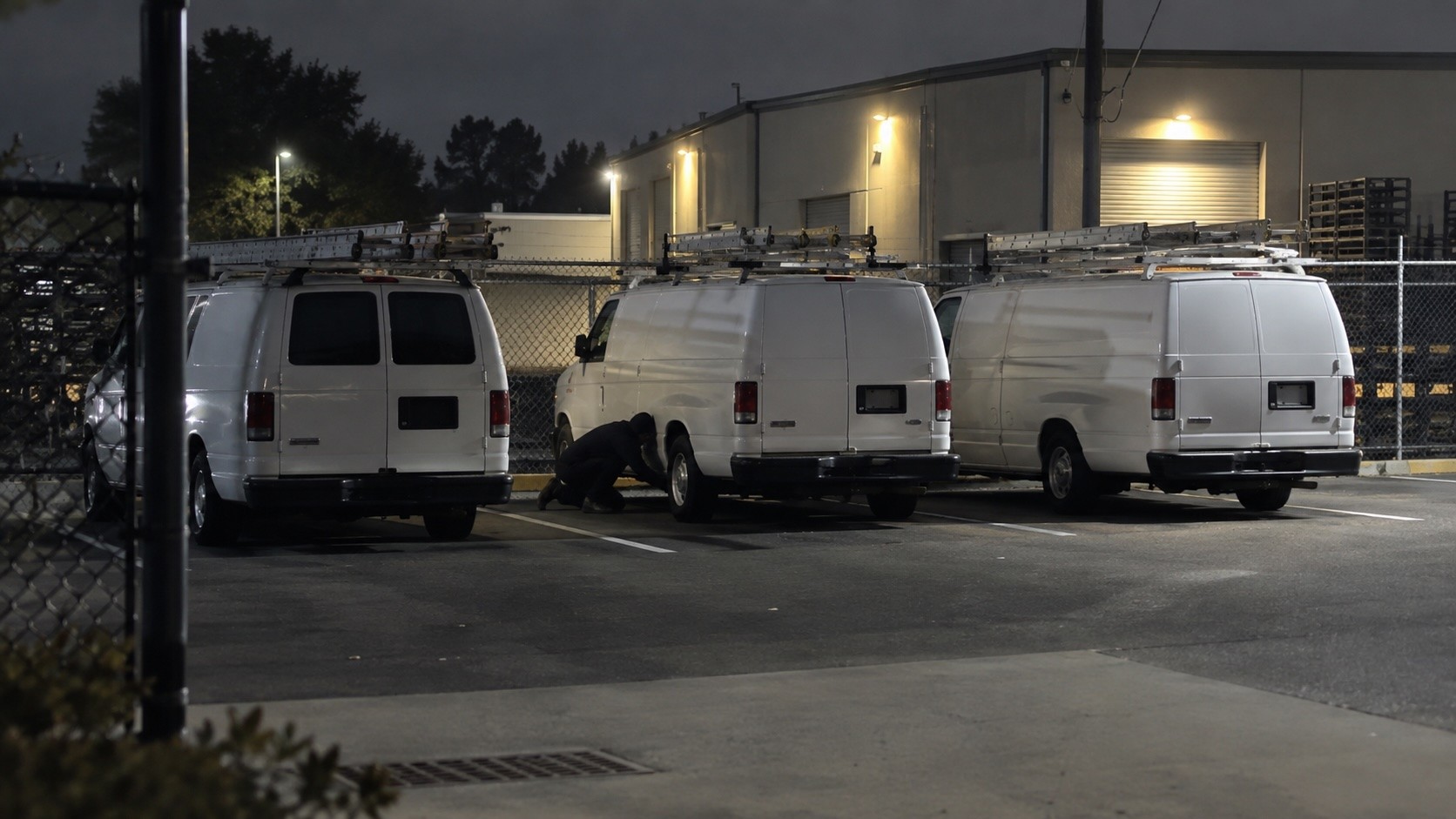
- The primary goal is preventing after-hours theft, trespassing, vandalism, or vehicle and equipment loss. These are situations where early detection and intervention may matter more than simply having a person somewhere on the property.
The more of these conditions that apply, the more important it becomes to compare the full cost and coverage of both models.
How Should You Calculate the Real ROI?
Do not compare a guard’s hourly wage with a monitoring subscription and assume you have your answer.
Compare the entire operating model.
Start with your annual guard expenditure. Include the amount paid for regular shifts, overtime, holidays, extra posts, supervision, and any related internal management time.
Then look at what those guard hours are accomplishing.
How much of the shift involves physical tasks that genuinely require a person onsite?
How much involves observing cameras, watching a gate, walking a perimeter, responding to alarms, or waiting for something to happen?
Next, compare that against the cost of implementing monitored video coverage. That may include cameras or upgrades where needed, analytics, network connectivity, speakers for live talk-down, monitoring service, maintenance, and other system components.
A useful financial calculation is:
Annual guard expense that can be reduced or removed
minus
Annual monitored security expense
equals
Potential annual operating savings
Then factor in implementation cost to calculate a realistic payback period.
The lowest-cost option is not automatically the best option. The objective is to determine which model delivers the necessary coverage, response, and documentation for the total amount being spent.
What Does This Look Like in a Real Theft Problem?
The financial decision becomes much clearer when security failure itself has a measurable cost.
A construction materials distributor that already had cameras but was still losing nearly $20,000 per month in outdoor inventory theft.
The cameras were recording activity. That was not enough.
After SiteWatch monitoring was deployed, the customer reported no additional theft from the site. The same case study reports that average police response following video-verified dispatch improved from approximately 20 minutes to approximately six minutes.
The important part of that example is not simply that monitoring cost less than theft.
It is that the business already owned cameras.
The missing piece was the ability to detect an event, verify what was happening, and trigger a response while the activity was still occurring.
That is the financial gap many businesses miss when evaluating security.
A cheaper system that only documents losses can still be extremely expensive.
When Should You Keep Physical Security Guards?
There are situations where an onsite guard remains the right answer.
A staffed post may still be appropriate when employees need regular escorts, people must be physically screened or credentialed, trucks and visitors require hands-on processing, the property stays active overnight, site policy requires a physical responder, or safety responsibilities extend beyond detecting security events.
Requirements from insurers, customers, contracts, regulations, or internal risk policies can also affect that decision.
And some properties simply benefit from both.
A guard can manage the tasks requiring a person while intelligent cameras and remote operators extend that person’s visibility across areas they cannot constantly watch.
That can be a stronger use of the guard than expecting one person to serve as gate attendant, patrol officer, camera operator, alarm investigator, and perimeter monitor at the same time.
Could a Hybrid Security Model Be the Better Answer?
For many commercial properties, yes.
The most effective financial decision may be reducing guard dependence rather than removing guard coverage entirely.
For example, a business might keep a guard at an active entrance while using monitored cameras across the fleet yard and rear perimeter. Another facility might maintain physical coverage during evening shift changes but use SiteWatch after the property becomes inactive.
A multi-site operator could maintain guards at its highest-risk locations while moving quieter properties to monitored video coverage.
This allows the security plan to match the actual risk instead of applying the same labor model everywhere.
Human presence goes where human presence matters.
Technology covers the areas where continuous detection, visibility, documentation, and scalability matter more.
FAQ
Is live video monitoring cheaper than an overnight security guard?
It can be, particularly when a business is paying for recurring guard coverage primarily to monitor cameras, patrol exterior areas, or detect trespassing. SiteWatch currently estimates that a single overnight guard may cost $50,000 to $80,000 per year. The actual comparison depends on guard hours, existing camera infrastructure, property size, monitoring requirements, and the equipment needed at the site.
Can live video monitoring completely replace security guards?
Sometimes, but not at every facility. Remote monitoring works well for detection, video verification, perimeter monitoring, exterior asset protection, documentation, live audio intervention, and requesting law enforcement response. It cannot physically escort an employee, inspect an ID, open a gate manually, provide first aid, or perform another task requiring someone onsite.
Does SiteWatch remove human operators from the process?
No. SiteWatch uses intelligent detection to identify activity across camera feeds, then alerts a live operator who can verify the event and follow the site’s response procedure. The technology helps operators focus on meaningful activity instead of requiring a person to continuously watch every screen.
Can SiteWatch work with cameras we already have?
In many cases, yes. SiteWatch states that its monitoring can connect to existing commercial camera systems through additional equipment, which means a business may not need to replace its entire surveillance system to add monitored response. Compatibility still needs to be evaluated at the property.
What is the best way to decide between guards and live monitoring?
Start by documenting exactly what your guards do during an overnight shift, what areas they are expected to cover, how often physical intervention is actually required, what your current coverage costs annually, and where visibility or response gaps still exist. From there, compare guard-only, monitored-video, and hybrid approaches against the same requirements.
Find Out What Your Overnight Coverage Is Actually Costing You
You do not need to choose between people and technology based on a sales pitch.
Start with the property.
We can walk the site with you, identify what your overnight guards are currently responsible for, look at the cameras and systems you already have, and determine where physical personnel provide real value versus where SiteWatch could provide more consistent monitored coverage.
Call Hoosier Security at 317-644-0570 to schedule a Site Security Walkthrough.
The goal is simple: put people where you actually need people, use technology where it performs the job better, and stop paying for security coverage that does not match the risk.