TL;DR: Outdoor storage areas are most effectively secured using a combination of perimeter detection, AI-powered presence alerts, live video monitoring, and talk-down audio that stops intruders in real time. This approach allows businesses to prevent theft before it happens while avoiding the high cost and limited coverage of full-time guards.How to Secure Outdoor Storage Areas Without Hiring Full-Time Guards (and Still Stop Theft)
If you manage a manufacturing yard, automotive lot, or equipment staging area, you already know the problem.
Outdoor assets are easy targets.
Materials sit exposed. Equipment is visible. Access points are harder to control.
And when theft happens, it is rarely subtle. It is fast, intentional, and often repeatable.
Hiring guards sounds like the answer until you see the cost. Full-time coverage adds up quickly, and even then, guards cannot be everywhere at once.
So the real question becomes:
How do you secure large outdoor areas without adding ongoing labor costs?
What Is the Smarter Alternative to Hiring Security Guards?
The smarter approach is layered, technology-driven monitoring that actively detects and responds to threats in real time.
This is where outdoor storage area security systems have evolved.
Instead of relying on a person to constantly watch, modern systems use:
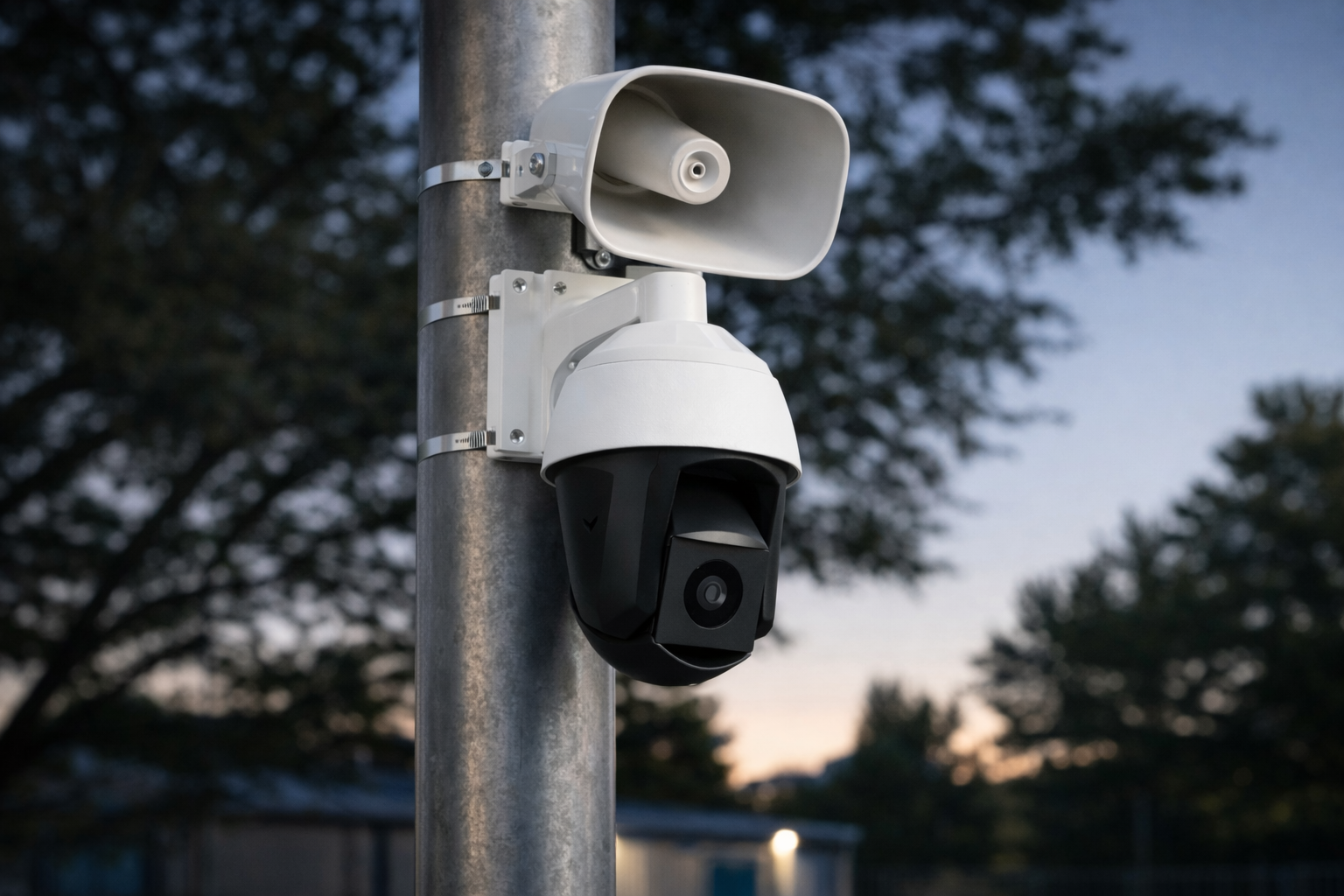
- AI-enabled cameras to detect movement and behavior
- Perimeter protection to identify intrusion early
- Remote monitoring teams to verify and respond instantly
- Live audio talk-down to stop incidents before they escalate
Solutions like Hoosier’s SiteWatch Video Monitoring combine all of these into a single system that works continuously without adding payroll.
The goal is not just to record theft.
The goal is to stop it while it is happening.
How Does Presence Detection Actually Prevent Theft?
Most outdoor security systems fail because they only provide visibility, not action.
Presence detection changes that.
Instead of reviewing footage after the fact, the system identifies:
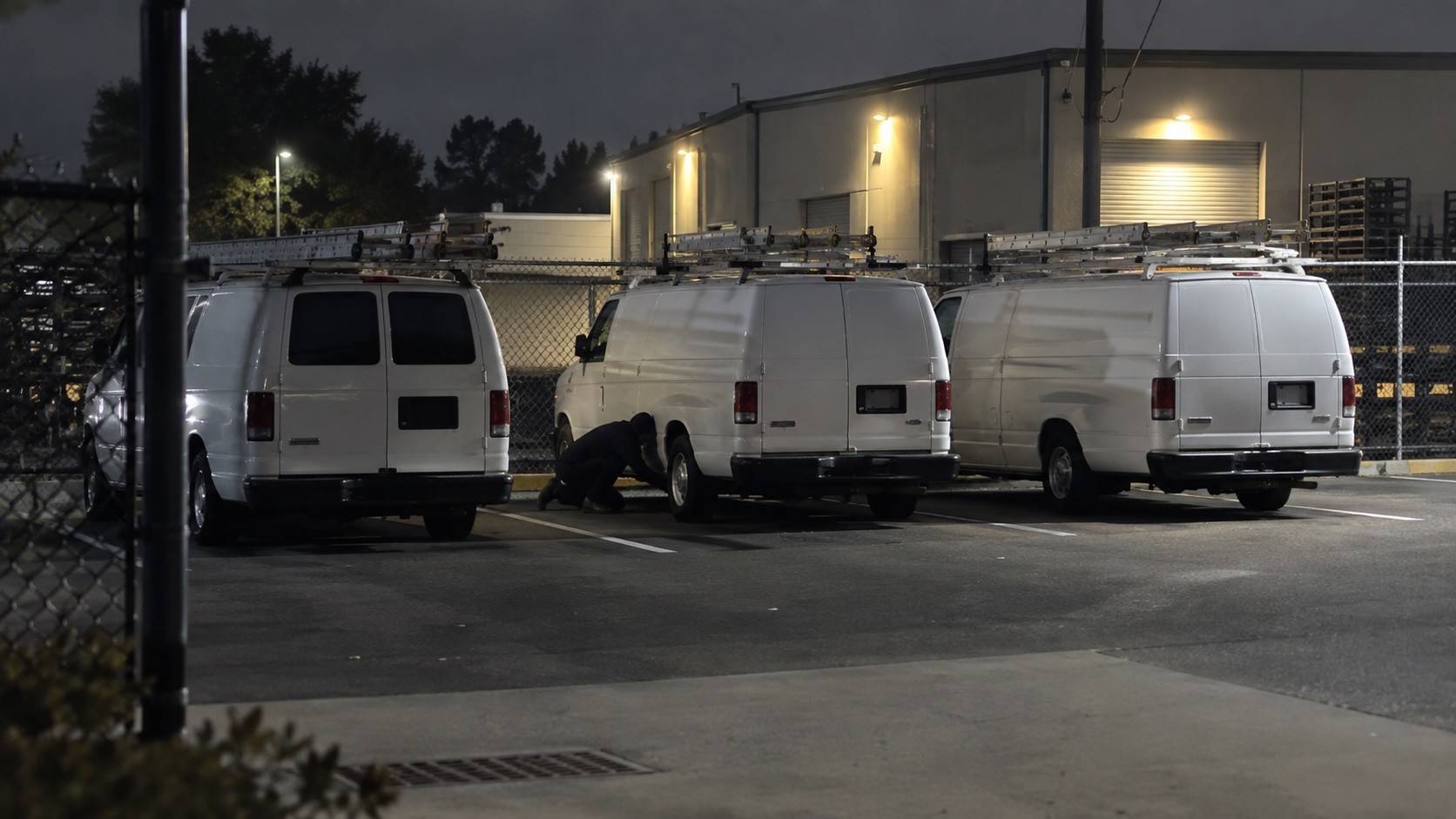
- People entering restricted zones
- Loitering near high-value assets
- Movement during off-hours
- Vehicles in unexpected areas
Once detected, the system triggers an immediate response.
This can include:
- Alerts sent to a monitoring center
- Automated or live voice warnings
- Escalation to law enforcement if needed
The key difference is timing.
You are no longer reacting hours later.
You are intervening in real time.
What Role Does Talk-Down Play in Outdoor Security?
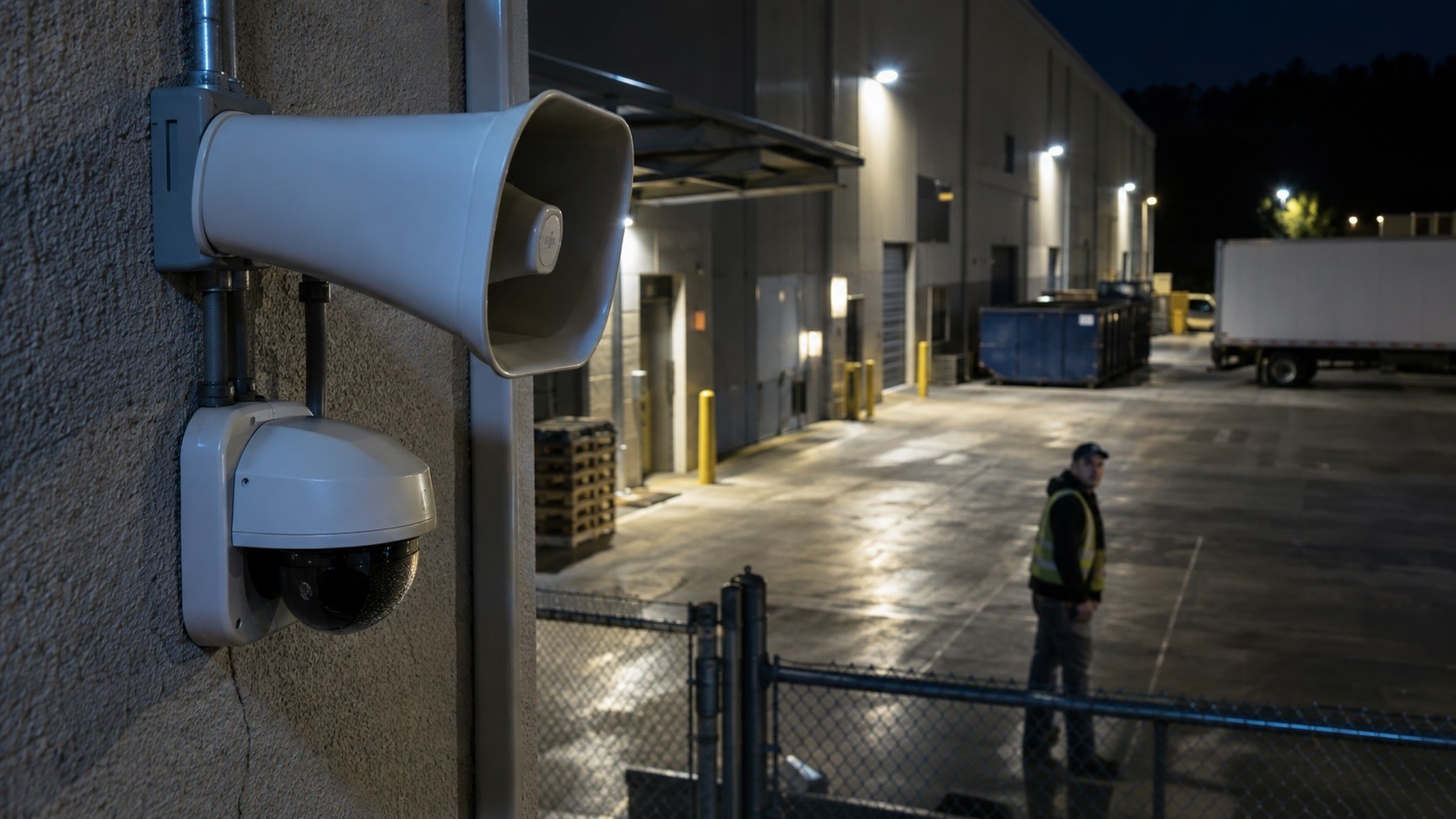
Talk-down is one of the most practical and underutilized tools in outdoor security.
When someone enters a restricted yard and hears:
“You are being monitored. Leave the area immediately.”
Most incidents stop right there.
Why it works:
- It creates immediate awareness
- It removes anonymity
- It signals that a response is already in motion
This is especially effective in:
- Equipment yards
- Automotive lots
- Construction staging areas
- Manufacturing outdoor storage zones
It is simple.
It is direct.
And it prevents escalation.
Checklist: What Should an Outdoor Storage Security System Include?
If you are evaluating your current setup, here is a practical checklist.
A complete outdoor storage area security system should include:
- Perimeter detection covering all entry points
- AI video analytics to reduce false alarms
- Presence detection for real-time alerts
- Live or automated talk-down capability
- Remote video monitoring for verification
- Clear visibility across large, open spaces
- Reliable uptime in harsh conditions
If any of these are missing, your system is likely reactive, not preventative.
From Overnight Theft to Real-Time Prevention: How One Yard Stopped Loss Without Hiring Guards
An industrial client managing a large outdoor equipment yard came to Hoosier after repeated overnight theft.
Their challenges were familiar:
- Cameras were installed but only used after incidents
- No real-time alerts or response capability
- Hiring guards was too expensive to scale
The system was redesigned using SiteWatch Video Monitoring:
- Perimeter zones were established across the yard
- Presence detection was configured for after-hours activity
- Live monitoring agents verified alerts in real time
- Talk-down speakers were installed at key access points
Within the first 90 days:
- Multiple intrusion attempts were stopped before theft occurred
- Law enforcement response times improved due to verified alerts
- The client avoided the cost of hiring overnight guards
The system did not just document activity.
It actively prevented loss.
FAQ
Q: Is remote monitoring as effective as on-site guards?
A: In many cases, it is more effective. Guards have limited visibility and coverage. Remote monitoring systems use multiple cameras, AI detection, and centralized response teams to cover more ground with faster verification.
Q: Will this system create constant false alarms?
A: Not when properly configured. AI analytics filter out irrelevant motion like weather or animals, focusing only on real threats such as people or vehicles in restricted areas.
Q: Can this work in large or harsh outdoor environments?
A: Yes. Systems are designed for manufacturing yards, automotive lots, and industrial sites where conditions include dust, weather exposure, and wide coverage areas.
Q: How does this compare cost-wise to hiring guards?
A: Remote monitoring and detection systems typically cost a fraction of full-time guard services, especially for overnight or multi-site coverage.
Q: What happens when a real threat is detected?
A: The monitoring team verifies the event, issues a talk-down warning, and escalates to law enforcement if necessary. The response is immediate and documented.
Stop Watching Theft After the Fact. Start Preventing It.
Outdoor theft is not a visibility problem.
It is a response problem.
If your current system only shows you what already happened, it is not doing enough.
The best way to understand how outdoor storage area security systems work is to see them in action.
Schedule a visit to the Hoosier Security Experience Center to walk through real-world perimeter detection, presence detection, and talk-down scenarios. Or connect with a Hoosier advisor to evaluate your current setup.
Your assets are already exposed.
Your system should be built to protect them before something goes wrong.