TL;DR: Catalytic converter theft has declined from its peak, but businesses with commercial vehicles parked together overnight still face an expensive security problem. In this article, you’ll learn why fleet lots remain attractive targets, why conventional cameras often provide evidence only after a theft, and how live video monitoring can detect, verify, and respond to suspicious activity before vehicles are damaged. For moving companies, HVAC contractors, plumbing and electrical businesses, logistics operators, dealerships, and other organizations with commercial fleets, the bigger issue is not one catalytic converter.
It is what happens when 10, 20, or 50 valuable vehicles sit together in the same lot after everyone goes home.
A thief who gets into that lot may have access to catalytic converters, tools, fuel, equipment, cargo, vehicle parts, and the vehicles themselves. By the time someone notices the next morning, the damage may already affect multiple trucks or vans.
That is why catalytic converter theft prevention needs to be part of a broader fleet security strategy.
Is Catalytic Converter Theft Still a Problem for Businesses?
Yes, although the numbers have moved in the right direction.
State Farm reported a 74% decrease in catalytic converter theft claims during the first half of 2024 compared with the same period in 2023. Even after that decline, the insurer still handled more than 3,800 claims during those six months and paid approximately $11.2 million. The average claim was nearly $2,900.
For a business fleet, the financial impact can go beyond the replacement part.
A damaged commercial vehicle can create:
- Repair costs and insurance deductibles
- Towing expenses
- Missed service appointments
- Delayed deliveries
- Rental vehicle costs
- Employee downtime
- Rescheduling headaches
- Lost revenue when a truck cannot leave the yard
One stolen catalytic converter is frustrating. Several damaged vehicles on the same morning can become an operations problem.
That is especially true for service businesses that depend on their vehicles to generate revenue every day.
Why Are Commercial Fleet Lots Attractive Targets?
Fleet properties concentrate a lot of value in one place.
A residential thief might find one or two vehicles in a driveway. A commercial property can have rows of vans, trucks, box trucks, trailers, or service vehicles sitting unattended for hours.
Commercial trucks can also provide easier access underneath the vehicle because of their ground clearance. State Farm specifically identifies trucks as common catalytic converter targets partly because thieves can reach the component more easily.
But the catalytic converter is only one target.
Once someone enters the vehicle area, they may also have access to:
- Power tools
- Copper and other materials
- HVAC equipment
- Plumbing supplies
- Electrical equipment
- Batteries
- Fuel
- Cargo
- Trailers
- Vehicle contents
For moving companies, home-service contractors, logistics companies, dealerships, and similar businesses, commercial fleet security has to account for the entire yard, not just individual vehicles.
Why Aren’t Security Cameras Enough to Stop Catalytic Converter Theft?
Traditional cameras are very good at answering one question:
What happened?
That is valuable after an incident. Good video can help identify when someone entered the property, which vehicles they approached, what direction they came from, and potentially what vehicle they used.
The problem is timing.
If nobody is watching the camera when the theft happens, the system may simply create a clear recording of someone cutting a catalytic converter off your truck.
You find the footage at 7:00 a.m.
The thief left at 2:13 a.m.
That is not prevention.
It is documentation.
This is the same gap we see across many after-hours commercial security environments. The most important activity often happens when the building is empty and nobody is actively watching the property.
A better question is:
Can your security system recognize suspicious activity while the person is still standing next to your vehicles?
What Changes When a Fleet Lot Can Detect and Verify Activity?
This is where live video monitoring changes the security model.
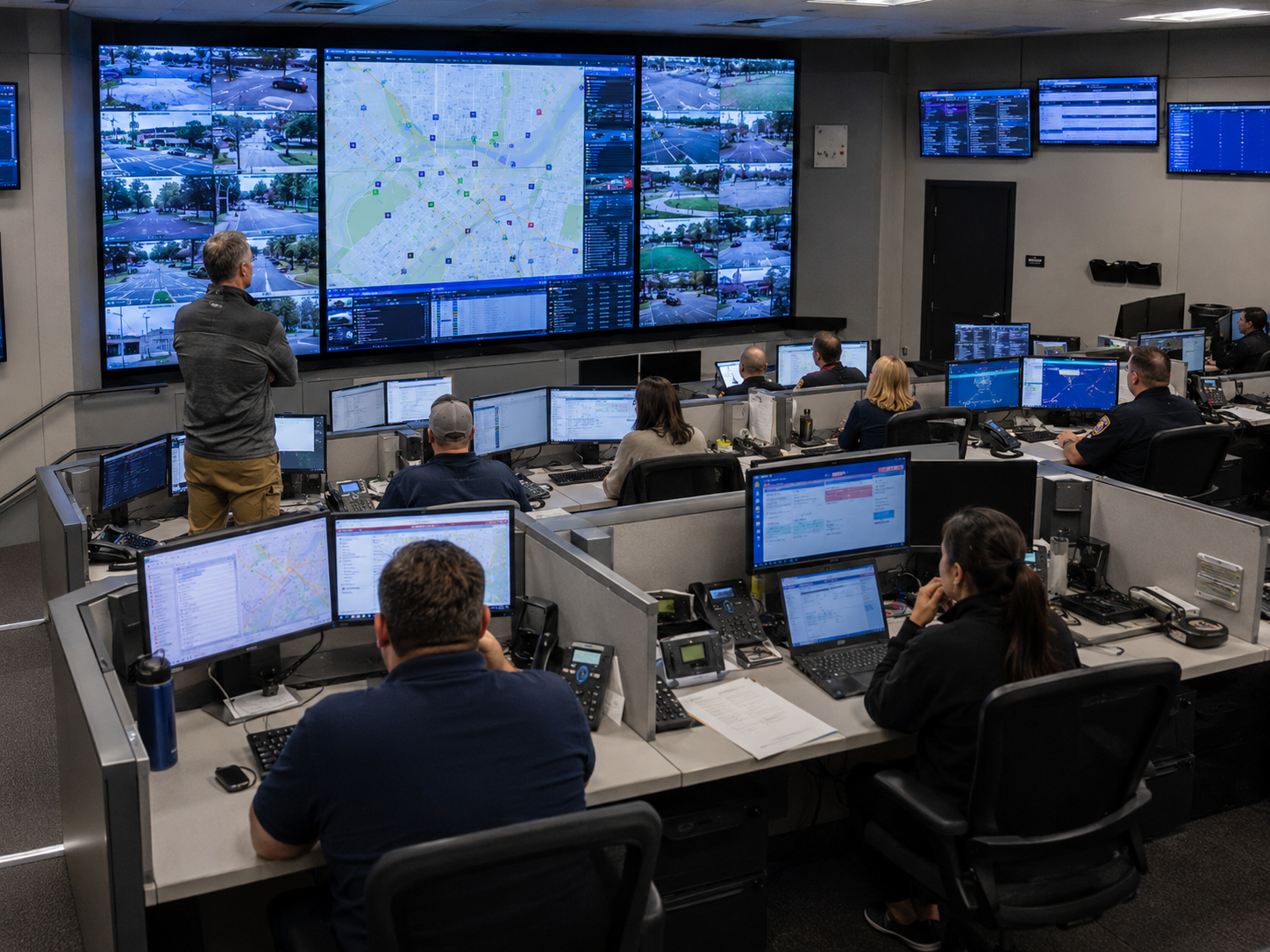
With SiteWatch Video Monitoring, video becomes part of the alarm response instead of something your team reviews the next morning.
When suspicious activity triggers the system, operators can visually assess what is happening rather than responding to a generic alarm with no context. Hoosier’s SiteWatch system is designed to provide video verification so operators can distinguish between legitimate activity and a real security event before escalating the situation.
For a fleet lot, that creates a very different sequence:
- Detect: Analytics or perimeter devices identify a person entering or moving through a restricted vehicle area after hours.
- Verify: A monitoring operator reviews the video to determine whether the activity appears legitimate or suspicious.
- Respond: Depending on the system design and the situation, the response can include live audio talk-down, notifications, escalation, or police dispatch.
The objective is simple.
Respond while the person is still on the property.
Hoosier can also incorporate talk-down speakers into monitored security designs, including mobile surveillance applications. That gives operators the ability to make it clear that someone has been seen and the property is actively monitored.
A thief who believes nobody is watching has time.
A thief who suddenly hears a live warning does not have the same advantage.
What Should Catalytic Converter Theft Prevention Look Like for a Commercial Fleet?
There is no single device that solves fleet theft.
A stronger approach creates layers around the vehicles.
1. Detect people entering the fleet area
The first goal is identifying activity before someone reaches a truck.
Depending on the property, that may involve video analytics, perimeter detection, intrusion sensors, or a combination of technologies.
The system should be able to distinguish meaningful activity from routine environmental movement so every tree branch, animal, or weather event does not become an alarm.
2. Cover the places thieves actually approach
A camera mounted high on the front of a building may technically see the parking lot without giving operators the detail they need.
Fleet security camera placement should account for:
- Vehicle rows
- Fence lines
- Gates
- Pedestrian approaches
- Rear property lines
- Areas between buildings
- Blind spots created by trucks and trailers
- Entrances from neighboring properties
Coverage should be designed around how someone would actually enter and move through the property.
3. Verify the alarm with video
An alert saying “motion detected” leaves too much interpretation to the person receiving it.
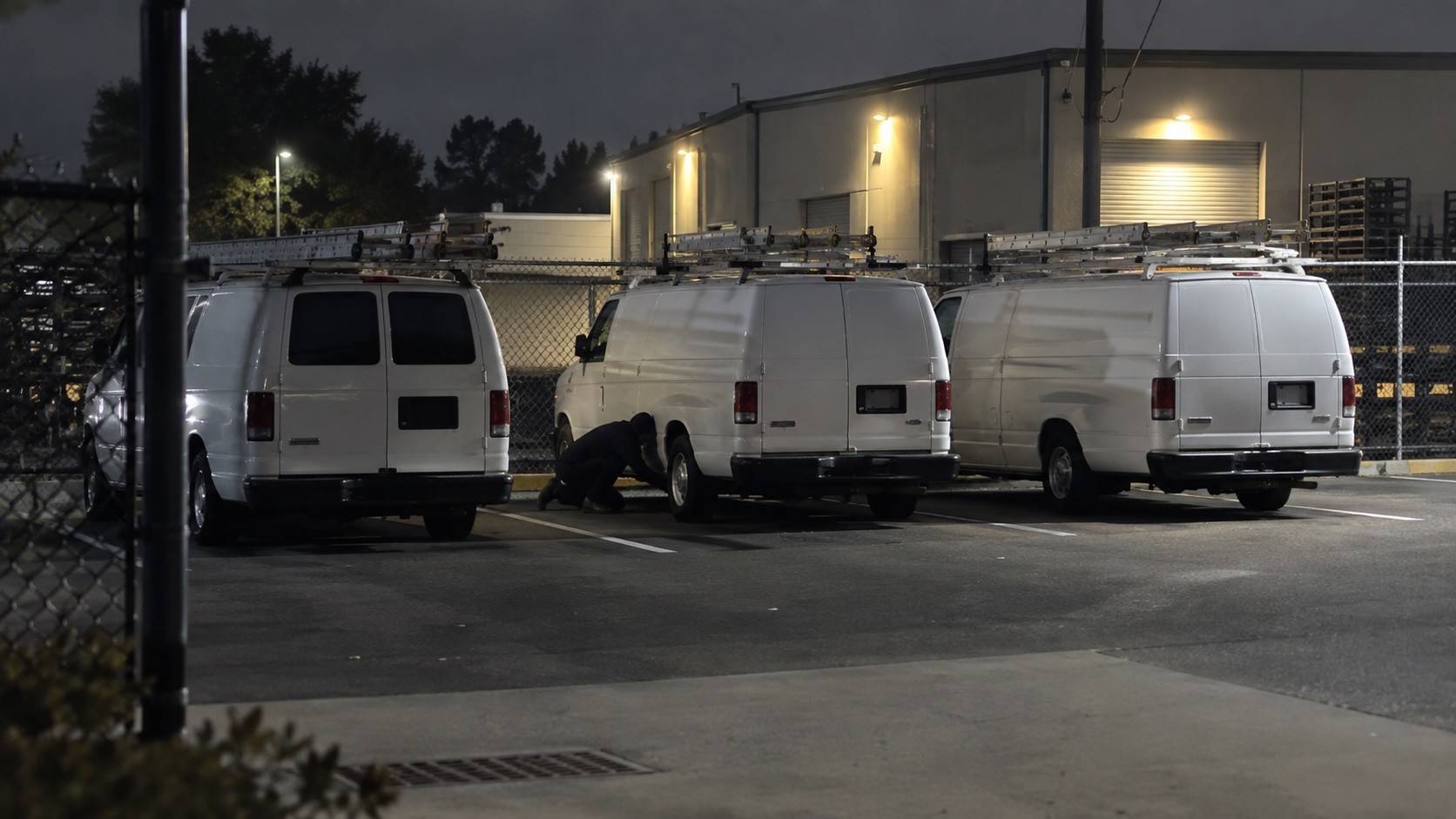
Video verification lets someone see whether the motion is an employee arriving early, an animal crossing the lot, or a person crouching between two service vans at 2:00 a.m.
That context matters.
4. Build an actual response plan
Detection without response is another version of recording without action.
Define what should happen when suspicious activity is confirmed.
That could include:
- Live audio talk-down
- Contacting a manager
- Calling an on-site guard
- Escalating to a monitoring center
- Dispatching law enforcement when appropriate
The right sequence depends on the facility, operating hours, location, and threat level.
5. Make sure the system is working every night
A fleet security system cannot protect vehicles if a camera has been offline for three weeks and nobody noticed.
System health and maintenance should be part of the plan.
That is also why Hoosier focuses on proactive service instead of waiting for customers to discover a problem during an investigation.
Which Businesses Should Be Paying Attention to Fleet Theft Risk?
Catalytic converter theft prevention matters anywhere commercial vehicles are concentrated overnight, but certain operations have more exposure than others.
Moving Companies
Moving trucks and box trucks often sit together overnight with nobody on-site. One incident can affect multiple vehicles before morning dispatch.
HVAC, Plumbing, and Electrical Companies
Service vans contain more than catalytic converters. They may also hold thousands of dollars in tools, equipment, copper, and specialized inventory.
For these companies, a trespasser reaching the vehicle lot creates several potential loss scenarios at once.
Logistics and Transportation Companies
Large vehicle yards can be difficult to monitor visually, especially when trailers and trucks create blind spots. After-hours movement may also be common, which makes intelligent detection and verification especially important.
Automotive Dealerships
Dealerships often have a large number of vehicles outdoors by design. Security needs to distinguish legitimate customer or employee activity from someone entering restricted inventory areas after hours.
Contractors and Other Fleet-Based Businesses
Landscapers, restoration companies, construction firms, delivery businesses, and other organizations with trucks and equipment face the same basic problem.
Your revenue-generating assets spend a significant part of every day parked outside
What Does Proactive Fleet Security Look Like in Practice?
Consider a plumbing company with 25 service vans parked behind its building.
The property already has cameras.
At 1:40 a.m., someone walks behind the building and enters the row of vans. A traditional system records the person moving through the lot. Nobody sees the footage until employees arrive around 6:30 a.m.
By then, several vehicles could be damaged.
Now change the sequence.
The same person enters a defined after-hours detection area. The system generates an alert. A monitoring operator reviews live video and confirms that the person is moving between vehicles. The person receives a live audio warning that the property is being monitored. If the activity continues, the event can be escalated based on the company’s response plan.
The cameras did not suddenly become better cameras.
The difference is what happened between detection and response.
That is the gap fleet security needs to close.
Do Physical Catalytic Converter Theft Deterrents Still Matter?
Yes.
Vehicle-level protection and property-level security solve different parts of the problem.
Physical shields, cages, identification markings, secure parking practices, lighting, gates, and vehicle positioning can all make theft more difficult or increase deterrence.
State Farm recommends measures such as secure or well-lit parking, alarms, cameras, VIN engraving, and physical barriers designed to make the converter more difficult to remove.
Those measures become stronger when the property can also identify someone approaching the fleet and respond.
Think in layers:
Make entry harder. Make theft harder. Detect activity earlier. Verify what is happening. Respond before the damage is done.
What About Fleet Lots That Do Not Have Permanent Security Infrastructure?
Some vehicle yards do not have ideal camera mounting locations, network connections, power, or existing security infrastructure.
That does not mean they need to stay exposed.
A mobile surveillance trailer can provide temporary or flexible coverage for parking lots, remote yards, construction environments, overflow areas, and other locations where a permanent installation does not make sense yet.
Modern trailers can include video analytics, 24/7 recording, cellular connectivity, monitoring, police dispatch, and talk-down speakers.
For more detail, read What Makes a Mobile Surveillance Trailer Effective? 7 Features That Actually Impact Crime Deterrence.
Can AI Help Protect Commercial Vehicles?
AI video analytics can help security systems focus on activity that matters.
Instead of treating every pixel change as motion, modern analytics can identify people, vehicles, and activity within defined areas.
That is particularly useful in fleet yards because the security team may want an immediate alert when a person enters the van parking area at 2:00 a.m., but not when headlights pass on the road 200 feet away.
Platforms such as Verkada can also identify people and vehicles in video and provide centralized visibility across multiple sites, which can be useful for businesses managing several branches or fleet yards.
Technology still needs a response process behind it.
An intelligent alert sitting unread on someone’s phone is not a security strategy.
How Do You Know if Your Fleet Lot Is Actually Protected?
Start with a simple walkthrough after dark.
Look at the property the way someone approaching it at 2:00 a.m. would.
Ask:
- Can someone enter the vehicle area without being detected?
- Are fence lines and gates visible?
- Can cameras clearly see between vehicle rows?
- Would your system distinguish a person from irrelevant motion?
- Who receives an alert after hours?
- Is someone actually verifying alerts?
- Can anyone intervene while the incident is happening?
- What happens if the first person on the call list does not answer?
- Do you know whether every critical camera is currently online?
- Could you quickly retrieve video after an incident?
If several of those answers are unclear, the problem is bigger than catalytic converter theft.
Your fleet may have an after-hours response gap.
For a broader look at protecting outdoor equipment and vehicle areas, read How to Secure Outdoor Assets Without Guards Using an Outdoor Storage Area Security System.
FAQ: Catalytic Converter Theft and Commercial Fleet Security
Is catalytic converter theft still common?
Catalytic converter theft has decreased significantly from its peak, but thefts still occur. State Farm reported more than 3,800 claims during the first half of 2024, representing approximately $11.2 million in claim payments. Businesses with multiple vehicles parked together can face greater operational disruption when several vehicles are targeted during the same incident.
Why do thieves target catalytic converters?
Catalytic converters contain valuable precious metals, including platinum, palladium, and rhodium. They can also be accessible from underneath certain vehicles, particularly vehicles with higher ground clearance.
Can security cameras prevent catalytic converter theft?
Cameras can help deter theft and provide evidence, but cameras alone may only record an incident. A proactive system adds detection, video verification, monitoring, and a defined response so suspicious activity can be addressed while it is happening.
What is the best security system for a commercial fleet lot?
The right system depends on the property, but effective fleet security typically combines perimeter or video detection, strategically placed cameras, video verification, monitoring, and a clear response plan. Live audio talk-down and other deterrence tools may also make sense for higher-risk sites.
How does SiteWatch help protect commercial vehicles?
Hoosier Security’s SiteWatch Video Monitoring provides visual verification of alarm events so monitoring operators can determine what is happening before escalating a response. For vehicle yards and outdoor assets, that helps move security from simply recording activity toward identifying and responding to suspicious behavior in real time.
Protect the Fleet Before the Morning Damage Report
Your vehicles should be leaving the lot to make deliveries, complete service calls, move customers, and generate revenue.
They should not be waiting for a tow truck because someone spent the night moving unnoticed between the rows.
Catalytic converter theft may be the incident that gets your attention, but the larger question is whether your fleet property can detect, verify, and respond when someone enters after hours.
Hoosier Security can walk your vehicle yard, identify the areas where your current system is vulnerable, and show you how solutions like SiteWatch Video Monitoring, AI-enabled cameras, live monitoring, talk-down, and mobile surveillance can work together.
Schedule a site walkthrough (Call 317-644-0570) or visit the Hoosier Security Experience Center to see what proactive fleet protection actually looks like.