TL;DR: A mobile surveillance trailer is only effective when it does more than record video. The right trailer should detect suspicious activity, verify what is happening, alert the right people, and help stop crime before it turns into theft, vandalism, tenant complaints, or liability exposure.For industrial property managers, mobile surveillance trailers are especially useful for temporary risk windows like vacancies, buildouts, post-incident hardening, construction activity, outdoor storage, and lots with recurring after-hours issues.
Why Exterior Property Crime Becomes the Property Manager’s Problem
Most tenants are focused on what happens inside their space.
They are running operations, managing employees, handling inventory, and serving customers. But the exterior of the property is a different story. Parking lots, loading areas, yards, shared drives, vacant suites, utility areas, and perimeter spaces often sit in the gray area between tenant responsibility and property management responsibility.
That is where problems show up.
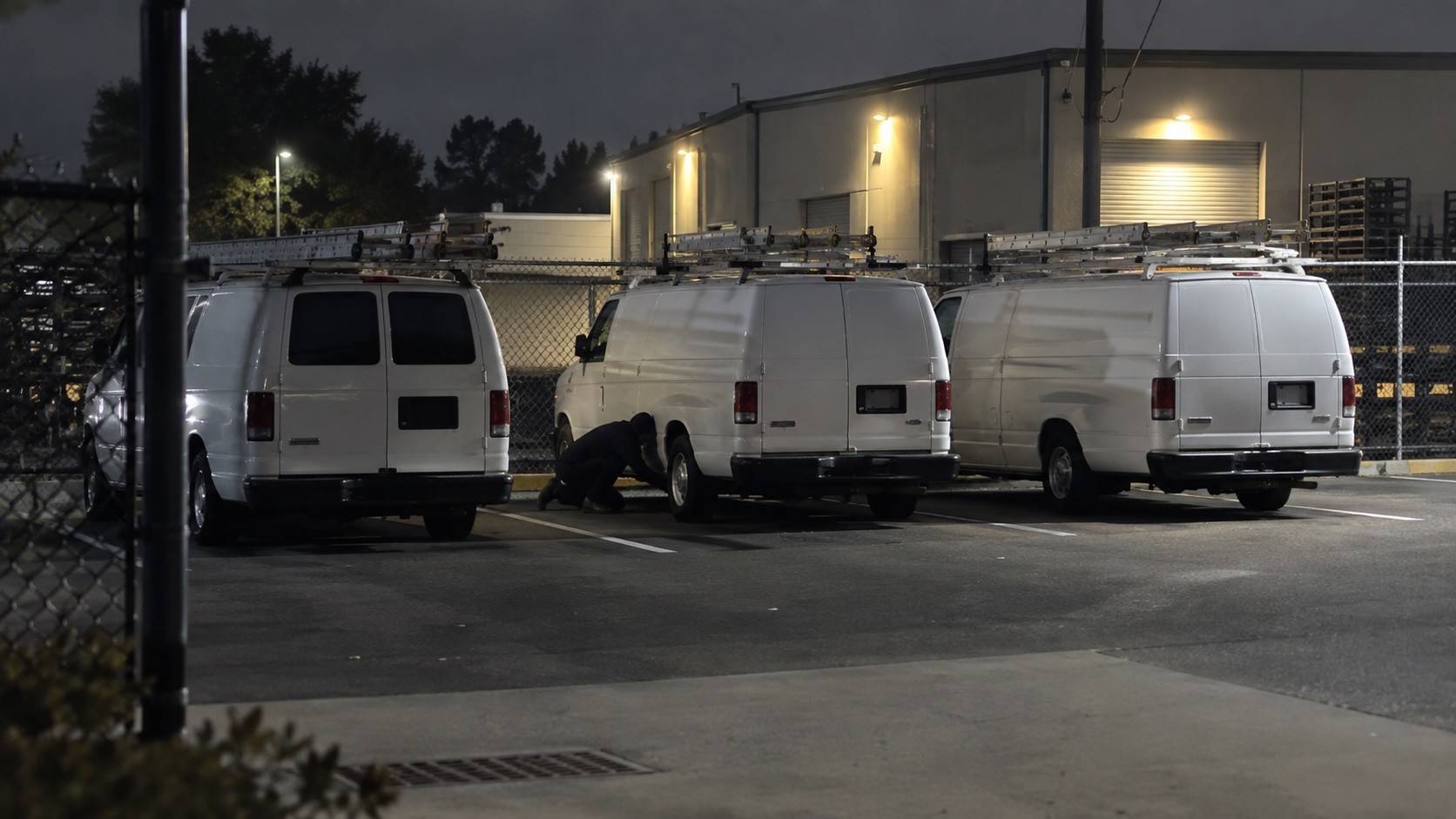
A catalytic converter gets stolen from a tenant vehicle. Someone cuts through a fence near an outdoor storage area. A vacant building becomes a loitering spot. A contractor reports missing materials from a buildout. Someone damages an overhead door after hours.
Even when the tenant is not directly at fault, the call often lands on the property manager’s desk.
That is why the question is not just, “Do we have cameras?”
The better question is, “Can we detect, verify, and respond before the issue becomes a claim, complaint, or dispute?”
For property managers looking for a mobile surveillance trailer in Indianapolis, the value is not in the trailer itself. The value is in how quickly it can reduce exposure during a temporary or high-risk period.
When Does a Commercial Property Need a Mobile Surveillance Trailer?
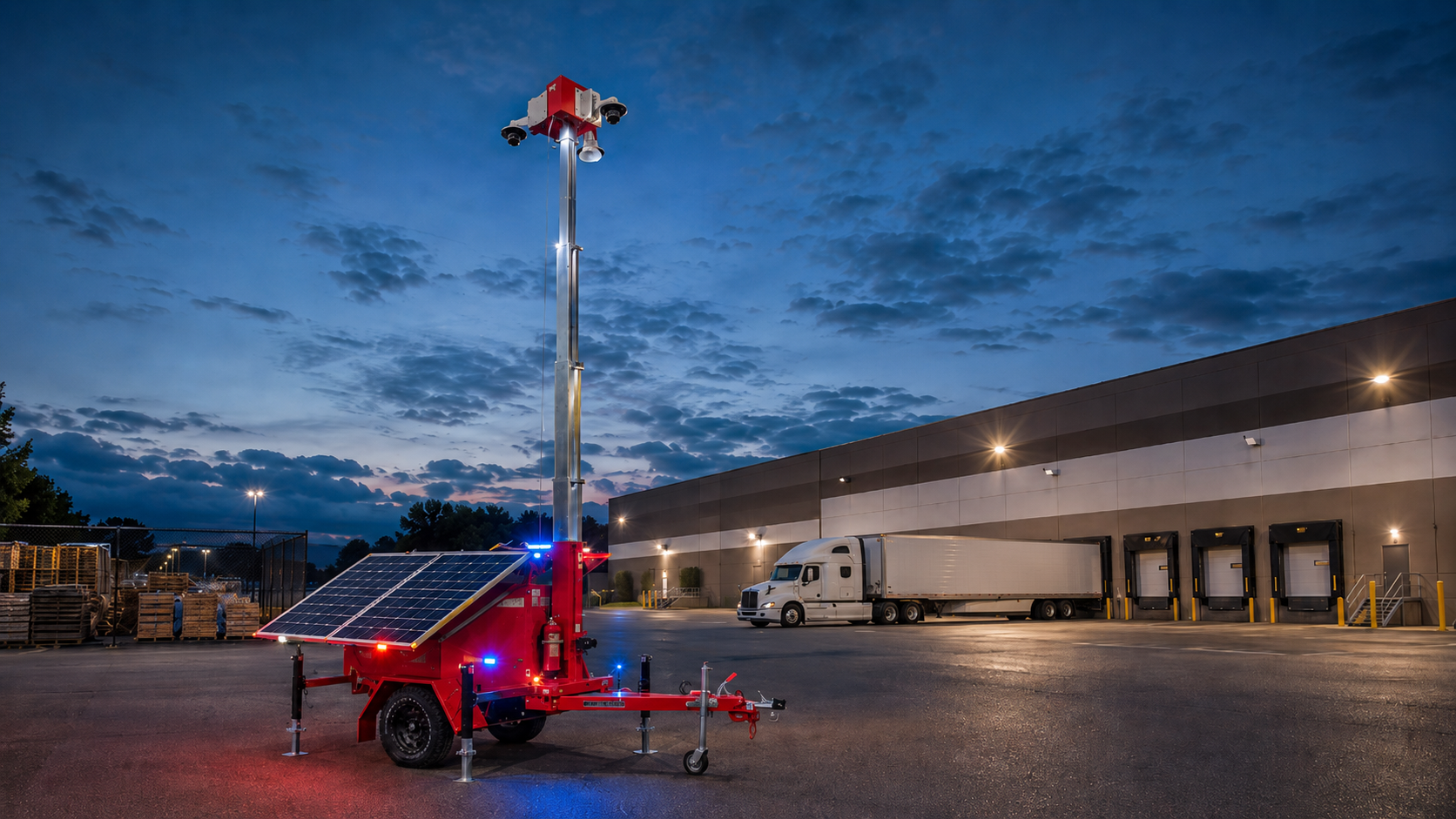
A mobile surveillance trailer is most useful when a property has an exterior security gap that needs to be solved quickly without installing a permanent system.
That makes trailers a strong fit for:
- Vacant industrial buildings
- Tenant turnover periods
- Construction and buildout projects
- Outdoor storage yards
- Truck courts and loading areas
- Parking lots with vehicle break-ins
- Sites that recently experienced theft or vandalism
- Properties waiting on permanent infrastructure
- Areas without reliable power or network access
For property managers, this matters because many exterior problems are temporary. You may not need a permanent pole, trenching, conduit, power work, and long-term hardware investment for a vacancy that may only last three months.
A security trailer rental for commercial properties gives you coverage when the risk is active. Then it can be removed when the property stabilizes.
That is the practical benefit of Hoosier Security’s lease model for Famous Trailers: no large capital expense, no long-term commitment, and no permanent installation for a problem that may not be permanent.
Learn more about Hoosier Security’s mobile security trailers here: https://hoosiersecurity.com/indianapolis-security-system-services/mobile-security-trailers/
What Makes a Surveillance Trailer Effective?
An effective surveillance trailer should help deter crime, not just document it afterward.
Recording matters. Footage can help answer questions, support insurance documentation, and show what happened. But recording alone does not stop someone from entering the yard, breaking into a vehicle, or damaging property.
The most effective trailers combine visibility, detection, verification, and response.
Here are the seven features that actually impact crime deterrence.
1. Why Does Solar Autonomy Matter?
Solar autonomy matters because exterior property risks do not always happen where power is convenient.
Vacant properties, construction sites, storage yards, and remote corners of industrial properties may not have usable power nearby. Even when power exists, running electrical service to a temporary location can be expensive, slow, and unnecessary.
A solar-powered mobile surveillance trailer helps solve that problem. It allows the trailer to operate in areas where permanent infrastructure is not available or not worth installing.
For property managers, this is especially useful during:
- Vacancies
- Buildouts
- Temporary outdoor storage
- Construction activity
- Post-incident coverage
- Lots or yards without nearby power
A trailer without reliable power becomes another thing to babysit. A trailer with solar autonomy is built for temporary, exterior deployment where speed and flexibility matter.
2. Why Is Cellular Failover Important for Commercial Security Trailers?
Cellular connectivity matters because many temporary sites do not have a network connection ready to use.
A vacant property may not have active internet service. A construction site may not have its network installed yet. A remote yard may be too far from the building to connect to existing infrastructure.
Cellular failover allows the trailer to keep communicating even when wired internet is unavailable or unstable.
That matters because a mobile surveillance trailer is only useful when alerts, video, and monitoring connections can move reliably. If the trailer cannot communicate, the system becomes a camera on a pole with no practical response path.
For vacant property security and construction site surveillance, cellular connectivity is often the difference between having a system that looks impressive and having one that actually works.
3. Why Do 360° Coverage and LPR Matter?
Coverage matters because criminals rarely enter through the most convenient camera angle.
A strong mobile surveillance trailer should help cover the full environment around the trailer, not just one narrow view. For exterior properties, 360° camera coverage can help monitor parking areas, drives, fence lines, loading areas, and approach paths from one deployment point.
License plate recognition, or LPR, adds another layer of value.
LPR can help capture vehicle details tied to after-hours activity, repeated drive-throughs, illegal dumping, break-ins, theft, or vandalism. For property managers, that documentation can be useful when working with tenants, ownership, insurance, or law enforcement.
The goal is not to collect video for the sake of video. The goal is to make it easier to answer questions like:
- What vehicle came onsite?
- When did it arrive?
- Where did it go?
- Did it match the timing of the incident?
- Can we provide usable information to support follow-up?
When a property has recurring vehicle-related incidents, 360° coverage and LPR can make the difference between vague suspicion and usable evidence.
4. How Do On-Board AI Analytics Improve Deterrence?
AI analytics help separate meaningful activity from background motion.
Traditional motion detection can be noisy. Wind, headlights, shadows, animals, and moving debris can create false alerts. When alerts are constant, people stop trusting them.
On-board AI analytics can help identify activity that matters more, such as people, vehicles, or movement in a restricted area after hours. That gives monitoring teams and property managers better information faster.
For example, there is a difference between a tree branch moving near a fence and a person walking through a loading area at 2:17 AM.
That distinction matters.
AI analytics can help support:
- After-hours intrusion detection
- Loitering alerts
- Vehicle activity alerts
- Perimeter monitoring
- Restricted area detection
- Faster video verification
This is where a trailer starts moving from passive recording to active risk reduction.
5. Why Does Audio Talkdown Matter?
Audio talkdown gives the system a voice.
When a person enters a restricted area, loiters near a vacant building, or approaches stored materials after hours, a live or triggered audio warning can make it clear that the activity has been detected.
That message changes the situation.
Instead of hoping someone notices the footage tomorrow, audio talkdown allows the system to intervene while the person is still onsite.
Through SiteWatch remote intervention and video-verified monitoring, suspicious activity can be reviewed and acted on with more context. The point is simple: verify what is happening, then respond in a way that can stop escalation.
For property managers, this is important because many exterior incidents are preventable when someone knows they are being watched before they commit the crime.
6. Why Do Red and Blue Strobes Help Deter Crime?
Red and blue strobes help create a visible deterrent.
Cameras can be missed. A trailer with active lighting is much harder to ignore. When someone enters a monitored area and the trailer activates with lights, it signals that the site is not passive, abandoned, or unwatched.
That is especially useful for vacant property security.
Vacant buildings can attract the wrong kind of attention because people assume no one is watching. A visible mobile surveillance trailer changes that perception. It tells potential trespassers, thieves, and vandals that the property has active exterior protection in place.
The psychology matters. A visible deterrent can push opportunistic crime somewhere else before it starts.
7. Why Is Rapid Deployment One of the Most Important Features?
Rapid deployment matters because property managers often need security after the problem has already started.
A tenant calls about break-ins. Ownership asks what is being done after vandalism. A vacant suite starts attracting loitering. A contractor reports missing materials. A vehicle gets hit in the lot.
In those moments, waiting weeks for trenching, cabling, permits, permanent poles, or network setup is not practical.
A mobile surveillance trailer can be deployed quickly to cover the risk window. That is why trailers work so well for temporary exterior-property problems.
They give property managers a practical way to harden the site without turning a short-term problem into a long-term capital project.
The Vacant Industrial Building With After-Hours Activity
Consider a property manager overseeing a vacant industrial building while ownership is working through leasing options.
The tenant is gone. Interior activity is limited. The lot is mostly empty after hours. Within a few weeks, the property starts attracting unwanted activity: vehicles pulling in late at night, people walking near dock doors, and damage near a fenced utility area.
A permanent camera expansion may not make sense yet. The building may be leased soon. The future tenant may have different needs. But doing nothing creates exposure.
A mobile surveillance trailer can be placed near the main drive or truck court to provide visible deterrence, 360° coverage, AI-based detection, audio talkdown, and monitoring support. The property manager now has a way to detect after-hours activity, verify what is happening, and document incidents without sending someone onsite every time there is a concern.
When the building is leased or the risk period ends, the trailer can be pulled.
That is the value of the lease model. Deploy when you need it. Remove it when you do not.
How Mobile Surveillance Trailers Support Portfolio Risk Reduction
For industrial property managers, exterior security is not only about stopping one theft. It is about reducing portfolio-wide risk, workload, and liability.
A good mobile surveillance trailer helps answer several key questions:
- Can you detect after-hours activity before a tenant calls?
- Can you verify what is happening without going onsite?
- Are properties actively monitored when no one is there?
- Can you identify who is responsible when damage or theft occurs?
- Do you have documentation to protect yourself in disputes?
- Are issues detected early enough to prevent escalation?
Those questions matter because they separate systems that record problems from systems that help reduce them.
For a property manager, that is the difference between being surprised by the next incident and having a practical response plan already in place.
What Should Property Managers Look for in a Security Trailer Rental for Commercial Properties?
Not every trailer is built the same. Before choosing a security trailer rental for a commercial property, ask what the system can actually do.
Use this checklist:
- Does it run on solar power for areas without easy electrical access?
- Does it use cellular connectivity or failover when site internet is unavailable?
- Does it provide wide-area coverage, not just one fixed camera angle?
- Can it support LPR for vehicle-related incidents?
- Does it use AI analytics to reduce false alerts and detect relevant activity?
- Does it support audio talkdown for real-time intervention?
- Does it include visible deterrents like red and blue strobes?
- Can it be monitored through a video-verified response process?
- Can it be deployed quickly?
- Can it be leased instead of purchased?
- Can it be removed once the risk period ends?
- Does the integrator support the system locally?
For Indianapolis property managers, the local support piece matters. A mobile surveillance trailer is not helpful if it sits onsite with a camera issue, connectivity problem, or monitoring gap that no one fixes.
Hoosier Security’s role is to help property managers find the right deployment strategy, not just drop off a trailer and hope it solves the problem.
Where Do Famous Trailers and SiteWatch Fit?
Hoosier Security’s Famous Trailers are built for temporary exterior protection where flexibility matters.
SiteWatch video-verified monitoring can help connect alerts to real review, so response teams are not relying on blind alarm signals. Video verification gives monitoring teams better context before escalation.
SiteWatch remote intervention adds the response layer. When suspicious activity is detected, the system can support live intervention through audio talkdown instead of simply saving footage for later.
Together, these tools support a more practical security model:
- Detect the activity
- Verify what is happening
- Intervene when appropriate
- Document the event
- Reduce the property manager’s workload
That is what makes a mobile surveillance trailer more than a temporary camera setup.
FAQ
What is a mobile surveillance trailer?
A mobile surveillance trailer is a portable security unit equipped with cameras, power, connectivity, and visible deterrent features. It is typically used to monitor outdoor areas where permanent cameras are not available, not practical, or not needed long term.
For commercial properties, mobile surveillance trailers are often used for parking lots, vacant buildings, construction sites, storage yards, and areas with recurring after-hours issues.
Is a mobile surveillance trailer better than installing permanent cameras?
It depends on the problem. Permanent cameras are often best for long-term security coverage. Mobile surveillance trailers are better for temporary or changing risk areas, such as vacancies, buildouts, post-incident coverage, or outdoor areas without existing infrastructure.
For many property managers, the right answer is both. Permanent systems protect stable areas. Mobile trailers cover temporary gaps.
How does a surveillance trailer deter crime?
A surveillance trailer deters crime by making security visible and active. Cameras, strobes, AI alerts, audio talkdown, and video-verified monitoring can make it clear that suspicious activity is being detected and reviewed.
This can discourage trespassing, theft, vandalism, loitering, and vehicle break-ins before they escalate.
Can mobile surveillance trailers be used for vacant property security?
Yes. Vacant property security is one of the strongest use cases for mobile surveillance trailers. Vacant buildings often have lower activity, fewer witnesses, and higher exposure after hours.
A trailer can provide visible deterrence, after-hours monitoring, video documentation, and remote intervention without requiring a permanent installation.
Are mobile surveillance trailers useful for construction site surveillance?
Yes. Construction site surveillance is another strong use case because sites often have changing layouts, temporary materials, limited power, and no permanent network.
A mobile surveillance trailer can be moved as the site changes and removed once the project is complete.
What makes Hoosier Security’s lease model different?
Hoosier Security’s lease model helps property managers avoid a large upfront capital expense for a temporary problem. You can deploy a trailer when risk is high, then pull it when the site no longer needs it.
That makes the solution practical for vacancies, buildouts, temporary exterior storage, construction projects, and post-incident hardening.
Score Your Exterior Property Risk
A mobile surveillance trailer should not be a guess. It should be part of a clear risk-reduction plan.
Download Hoosier Security’s Industrial Property Portfolio Risk Scorecard to evaluate where your properties are exposed, especially after hours and in situations involving damage, disputes, theft, and liability.
Then schedule a portfolio walkthrough or virtual Experience Center session with Hoosier Security. We will help you compare the risk across your sites, identify where mobile surveillance trailers make sense, and build a plan that fits the way your properties actually operate.