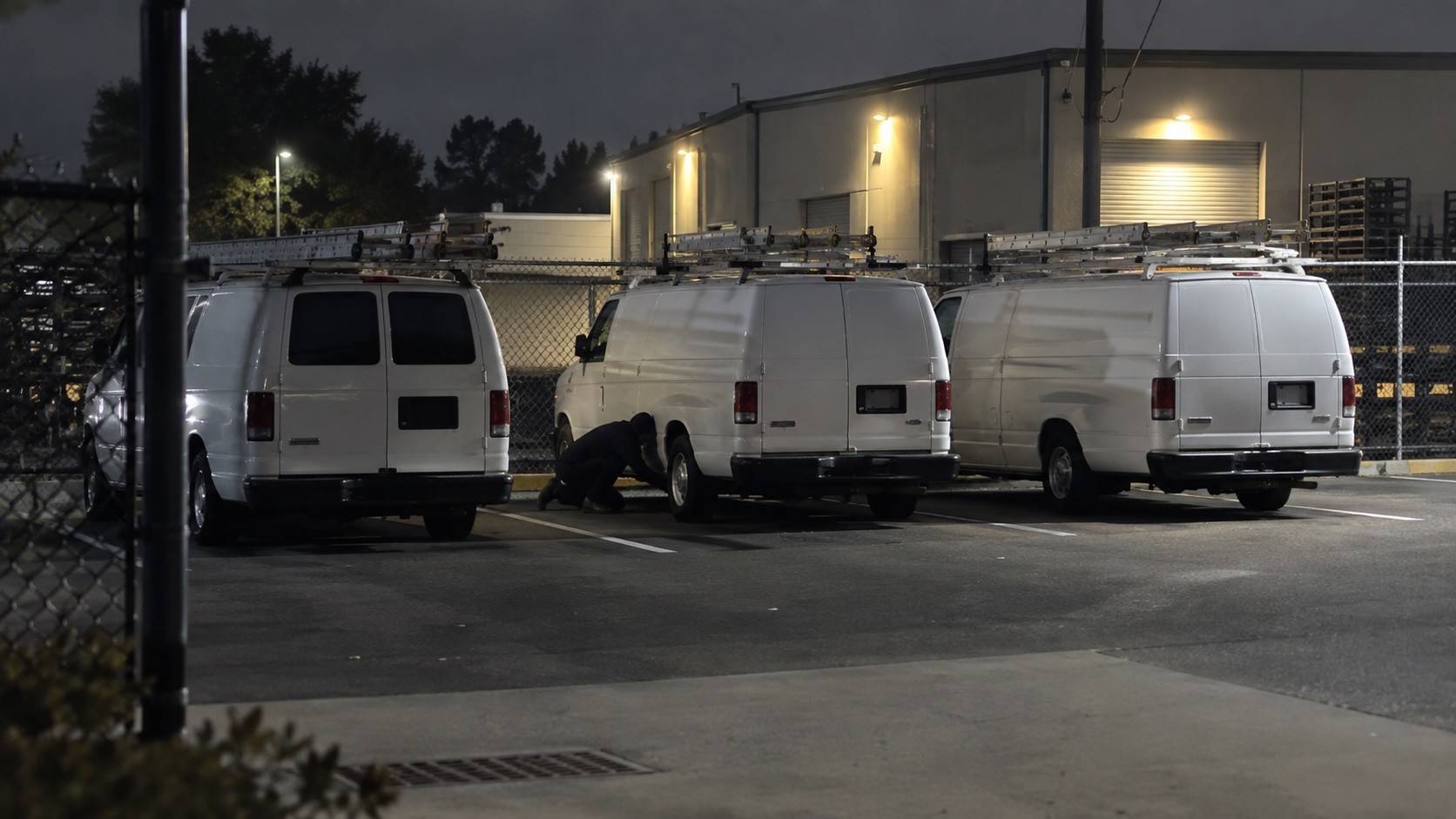
When something happens after hours, your cameras only tell the story from your property line, which can be a problem.
A vehicle may enter from a neighboring lot. A person may walk across an adjacent property before approaching your building. A theft may start near a shared access road and end at your loading dock. By the time your team reviews footage the next morning, you may have only one piece of the story.
That is where B-Link Indianapolis changes the value of your camera system.
B-Link is the Indianapolis-area community camera program that allows approved private cameras to help IMPD when an incident happens nearby. For commercial property owners, property managers, dealerships, logistics sites, industrial facilities, and multi-site operators, the ROI is not just about your own cameras. It is about creating a larger evidence network that supports faster response, stronger investigations, and better visibility around your properties.
TL;DR: B-Link Indianapolis gives commercial property owners and managers a way to make their camera systems more valuable beyond their own property lines. By connecting approved exterior cameras to the IMPD community camera network, businesses can help police access relevant footage faster when incidents happen nearby, while also strengthening after-hours visibility, investigations, and portfolio-level security strategy. For properties with exterior cameras, LPR, shared access roads, parking lots, or recurring after-hours issues, B-Link can turn isolated cameras into part of a larger public safety network, and Hoosier Security is the largest B-Link Indy Integrator helping businesses enroll correctly.What Is B-Link Indianapolis?
B-Link Indianapolis is a community camera program powered by the Indy Public Safety Foundation and IMPD. The program allows residents to register camera locations and allows participating businesses to provide IMPD with access to approved camera feeds when an incident or public safety threat occurs nearby.
For commercial properties, this is commonly referred to as B-Link Pro. The goal is simple: give IMPD better visibility when seconds matter and when investigators need footage from the surrounding area.
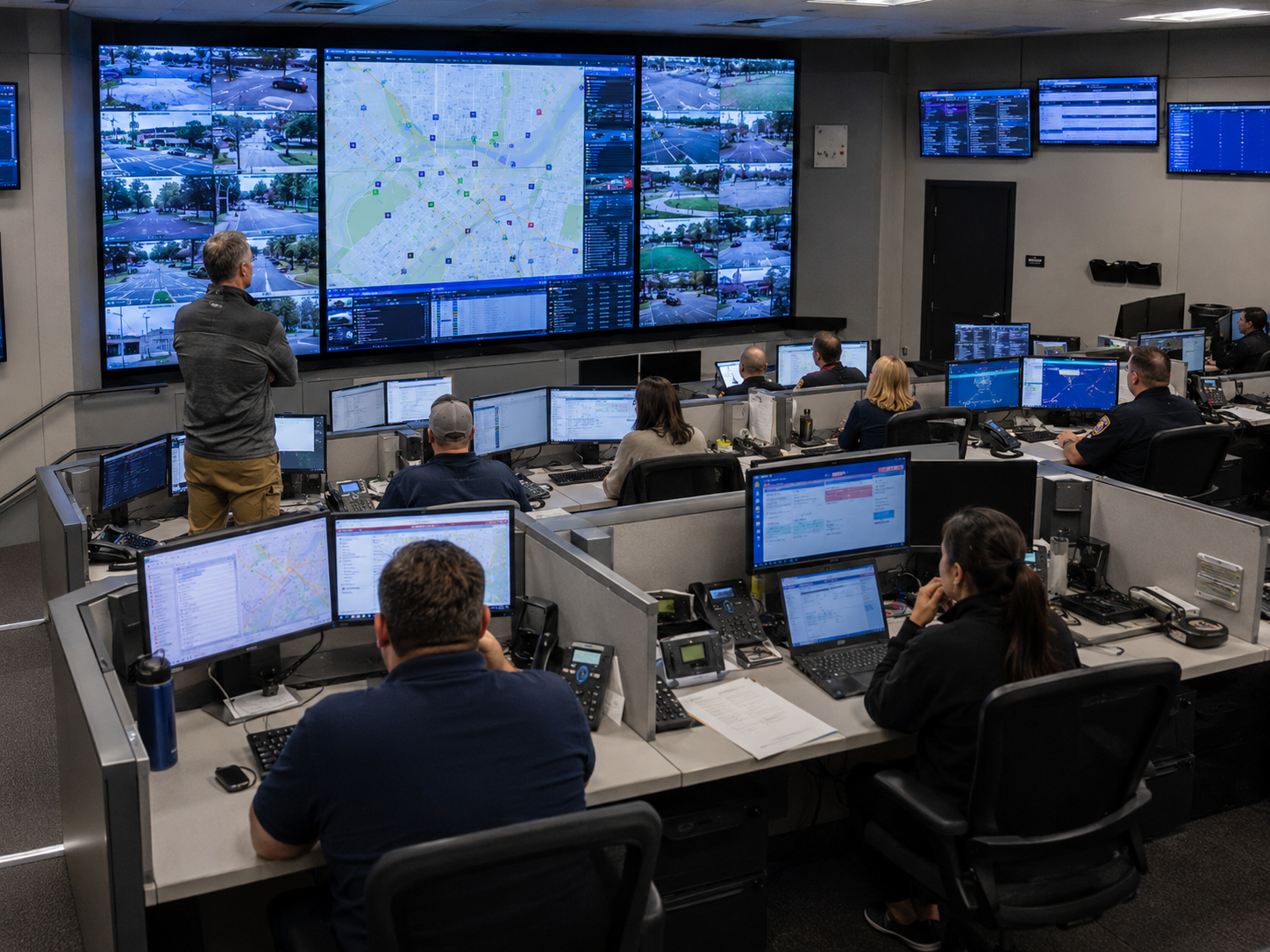
B-Link is not a replacement for your own video management system, live monitoring, intrusion detection, or access control. It is also not a service where IMPD continuously watches your cameras. It is an incident-driven public safety tool designed to help law enforcement access relevant footage faster when something happens in proximity to your site.
For businesses, enrollment typically requires a certified B-Link integrator. That matters because the cameras, connection, placement, and program requirements need to be reviewed before the site can participate.
Why Does B-Link Indianapolis Improve Security ROI?
Most commercial security cameras are purchased to protect one property. That makes sense, but real incidents rarely respect property lines.
A community camera program turns your camera system into part of a larger public safety network. That creates ROI in several practical ways:
- More investigative context: Your footage can show what happened on your property, while nearby participating cameras may show where a suspect, vehicle, or incident came from.
- Faster evidence access: Instead of waiting for manual footage requests across multiple businesses, IMPD can identify useful video sources faster.
- Stronger after-hours visibility: Many incidents happen when staff, tenants, or managers are not onsite. B-Link helps support investigations when no one is physically watching the property.
- Better value from exterior cameras: Cameras covering entrances, exits, lots, alleys, shared drives, and public-facing areas become more useful when they support a broader network.
- More value from LPR: License plate recognition is powerful on its own, but it becomes more useful when paired with nearby camera footage that shows direction of travel, vehicle movement, and related activity.
- Community credibility: Participation shows tenants, employees, customers, and neighboring businesses that your organization is serious about safety.
The ROI is not just “did this stop one crime?” The better question is, “Did this help us reduce blind spots, speed up evidence sharing, and make our security system more useful when something happened?” For many commercial properties, that answer is yes.
How Does a Community Camera Network Help After Hours?
After-hours incidents are frustrating because the timeline is usually unclear.
A property manager may arrive to a broken gate, damaged vehicle, missing materials, or vandalized exterior door with no immediate idea of when it happened. The camera review begins from scratch. Someone has to search footage, determine the time window, identify a person or vehicle, export clips, and decide whether anything is useful enough to send to police.
B-Link supports this process by extending the evidence picture beyond the property itself.
For example, a camera at your building may show a truck entering the lot at 2:14 a.m. A neighboring participating property may show that same truck circling the area at 2:07 a.m. Another camera may show the direction the truck left after the incident. Your own footage still matters, but the surrounding network may help IMPD build a clearer sequence of events.
That is where B-Link ties directly to after-hours risk. It gives investigators more ways to understand what happened when tenants, managers, and staff were not there to see it.
This does not replace live operator response through SiteWatch or video-verified monitoring through platforms like CHEKT. Those services are designed to intervene in real time. B-Link serves a different purpose: it helps IMPD access useful camera information when an incident affects the surrounding area.
The strongest properties often need both: proactive monitoring to respond in the moment and community camera participation to support public safety and investigations.
How Does B-Link Extend Portfolio Visibility?
For multi-site property owners and managers, security visibility is usually fragmented.
One building has newer cameras. Another has an older recorder. One site has LPR. Another has blind spots around a shared drive. One property has a strong relationship with neighboring businesses, while another operates in a corridor where no one shares information quickly.
B-Link Indianapolis helps extend portfolio visibility by giving your properties a connection to a broader IMPD camera network.
That does not mean your team gets access to every nearby camera. It means your approved cameras can support a larger incident response and investigation process when something happens nearby. For portfolio managers, that matters because your risk is rarely isolated to one building.
A vehicle break-in pattern may affect several nearby commercial lots. A theft crew may move between industrial parks. A trespasser may test multiple properties before forcing entry at one site. A public safety incident near your building may affect tenants, employees, and visitors even when the event did not start on your property.
B-Link creates a more connected security posture across the Indianapolis area. For property managers, that is the network-multiplier effect: each participating camera can create value beyond the individual building where it is installed.
Where Does LPR Fit Into the B-Link ROI Conversation?
License plate recognition is one of the strongest tools for identifying vehicles connected to suspicious activity, theft, vandalism, dumping, or after-hours trespassing. But LPR is not the whole story.
A plate capture may tell you what vehicle entered or exited. It may not show what the driver did, whether anyone got out, which direction the vehicle came from, or whether it visited neighboring properties first.
That is why LPR becomes more valuable when it is part of a broader camera strategy.
A strong commercial property setup may include:
- LPR cameras at main entrances and exits
- Overview cameras for lots, loading areas, and shared drives
- Building cameras for doors, gates, docks, and tenant entrances
- Cloud video search through platforms like Verkada or Avigilon Alta
- B-Link participation for public-facing cameras that meet program requirements
- Live monitoring through SiteWatch where real-time intervention is needed
The point is not to install every tool everywhere. The point is to make sure each layer supports the others.
For example, LPR may capture the vehicle. Your overview camera may show the activity. A neighboring B-Link participant may help show direction of travel. IMPD may be able to use that larger picture to respond or investigate more effectively.
That is a stronger ROI story than a camera system that only records isolated clips no one can connect.
What Types of Commercial Properties Benefit Most From B-Link?
B-Link can be valuable for many Indianapolis-area properties, but it is especially useful for locations with public-facing exterior cameras and recurring after-hours risk.
Strong candidates include:
- Industrial parks
- Multi-tenant warehouse properties
- Logistics and distribution facilities
- Automotive dealerships and service lots
- Retail centers
- Downtown commercial properties
- Parking lots and garages
- Municipal-adjacent commercial corridors
- Properties near shared access roads, alleys, or public sidewalks
- Multi-site portfolios with repeated exterior incidents
The common thread is exposure. Properties with exterior activity, vehicle traffic, shared boundaries, or after-hours risk often benefit most because incidents do not always start and stop on one site.
For industrial property managers, this matters even more. While tenants operate inside the building, the property manager is often responsible for the exterior environment: gates, lots, lighting, cameras, shared access areas, and overall site security. B-Link can help extend visibility around those shared areas without turning the property manager into a full-time investigator.
What Should a Business Review Before Joining B-Link?
B-Link participation starts with the basics: camera location, compatibility, connectivity, and purpose.
Before enrolling, commercial property leaders should review:
- Exterior camera coverage
Do you have cameras covering entrances, exits, lots, sidewalks, alleys, drives, or public-facing areas? - Camera quality
Are images clear enough to identify useful details such as vehicle direction, clothing, activity, or distinguishing features? - Lighting conditions
Does the camera perform well at night, especially between 10 p.m. and 5 a.m.? - Internet connection
Is the site network reliable enough to support the required connection? - Camera compatibility
Do your existing cameras meet the technical requirements for B-Link, or do they need to be replaced or supplemented? - Privacy boundaries
Are cameras focused on appropriate public-facing or exterior areas rather than private spaces? - Decision-maker approval
Is the property owner, business owner, or authorized manager ready to approve enrollment and any required agreement? - Portfolio strategy
Do you want to enroll one site as a pilot, or review multiple properties for B-Link readiness?
This is where the right integrator matters. A certified B-Link integrator can tell you what works, what does not, and what needs to change before enrollment.
Why Choose Hoosier Security for B-Link Indianapolis?
Hoosier Security is the largest B-Link Indy Integrator. We know the program, we know the camera requirements, and we have enrolled more sites than anyone in the market.
That experience matters because B-Link is not just a camera install. It requires the right equipment, the right placement, the right connection, and the right process with IMPD and the Indy Public Safety Foundation.
Hoosier helps commercial properties:
- Review current cameras for B-Link compatibility
- Identify which exterior cameras make the most sense to connect
- Install new cameras where needed
- Establish the required cloud-based connection
- Support ongoing service needs for B-Link cameras
- Build a larger camera strategy around B-Link, LPR, cloud video, and monitoring
We also help businesses avoid overcomplicating the process. Not every camera needs to be connected. Not every site needs the same setup. The goal is a practical system that supports your property, your portfolio, and the larger Indianapolis community.
How Do Verkada and Avigilon Alta Fit Into the Strategy?
Modern cloud-based video platforms like Verkada and Avigilon Alta can play an important role in a broader security strategy for commercial properties.
These platforms help teams manage cameras across multiple sites, search footage faster, monitor system health, and improve visibility without relying on old DVR workflows. For property managers and multi-site operators, that matters because the system needs to be usable when something happens.
B-Link adds another layer to that strategy.
Your internal team still needs reliable cameras and a clean video platform. Your tenants still need security coverage around the building. Your property team still needs fast access to footage. B-Link helps connect approved exterior camera visibility into a public safety program that supports IMPD when nearby incidents occur.
In plain English: Verkada or Avigilon Alta can help your team see and manage your own sites more effectively. B-Link helps approved cameras support a larger community safety network.
Hoosier can help determine which camera stack, connection path, and enrollment approach makes sense for each property.
What Is the Real ROI of Participating in B-Link?
The ROI of B-Link Indianapolis comes from making your camera investment more useful when it matters.
For commercial properties, that value can show up in several ways:
- Faster support for police investigations
- Less time spent manually chasing footage after incidents
- Better visibility around shared property boundaries
- Stronger evidence when activity crosses multiple properties
- More value from exterior cameras and LPR
- Better tenant and employee confidence
- Stronger public safety partnership
- A more connected portfolio security strategy
There is also a practical reputational benefit. When tenants, employees, customers, and neighboring businesses know your property participates in a community camera program, it signals that security is being managed with intention.
That does not mean B-Link guarantees crime prevention. No camera program can promise that.
It does mean your cameras may do more than record isolated clips. They may help IMPD build a stronger picture of what happened, where it happened, and how the incident moved through the area.
For many commercial property leaders, that is a smarter return on the cameras they already own.
A Practical Portfolio Scenario
Consider a property manager responsible for several industrial buildings on the west side of Indianapolis.
One property has recurring after-hours vehicle activity near the loading docks. Another has experienced catalytic converter theft in the parking lot. A third sits near a shared access road where vehicles often cut through after hours.
Each property has cameras, but the systems are different. One site has decent exterior coverage. Another has outdated cameras with poor night visibility. A third has good entrance coverage but no LPR.
Hoosier reviews the portfolio and identifies the best B-Link candidates first: the sites with exterior cameras facing entrances, exits, shared drives, and public-facing areas. We check compatibility, recommend improvements where needed, and help connect approved cameras through the B-Link process.
The result is not just better footage at one building. The property manager now has a clearer strategy:
- Upgrade weak exterior cameras first
- Use LPR where vehicle identification matters most
- Connect eligible public-facing cameras to B-Link
- Use cloud video platforms for faster internal review
- Add live monitoring where real-time intervention is needed
That is how B-Link becomes part of a larger ROI strategy. It helps the property manager move from isolated cameras to connected visibility.
B-Link Indianapolis Readiness Checklist
Use this checklist to decide whether your property may be a strong candidate for B-Link:
- Do you manage a commercial property in the Indianapolis area?
- Do you have exterior cameras facing public-facing or shared areas?
- Do you have recurring after-hours concerns?
- Do vehicles enter and exit your property after business hours?
- Do tenants, employees, customers, or visitors use shared parking areas?
- Do nearby properties experience similar security issues?
- Do you have reliable internet at the site?
- Are your cameras clear enough to provide useful footage?
- Do you know who can approve participation?
- Would LPR help identify vehicles connected to incidents?
- Would your team benefit from faster incident review?
- Would your portfolio benefit from a more connected security strategy?
A “yes” to several of these questions is a good reason to have Hoosier review your site.
FAQ
Is B-Link Indianapolis the same as security monitoring?
No. B-Link is not a live monitoring service. IMPD does not continuously watch enrolled cameras. The program is designed to support public safety when an incident or threat occurs nearby.
For real-time intervention, businesses should consider services like SiteWatch video monitoring or video-verified monitoring workflows. B-Link supports investigations and incident visibility. Monitoring supports active response.
Can IMPD access my business cameras anytime?
B-Link is designed around incident-related access, not constant surveillance. Business and residential participation paths are different, so Hoosier walks each commercial client through the current access model, approval requirements, and connection process before enrollment.
The goal is to support public safety while keeping the process clear for property owners and business leaders.
Do I need to replace my cameras to participate in B-Link?
Not always. Some existing cameras may be compatible, while others may need replacement or supplemental installation. Hoosier reviews your current cameras, placement, video quality, and connection requirements before recommending changes.
The goal is not to replace equipment unnecessarily. The goal is to connect the right cameras the right way.
What types of cameras are best for B-Link?
Public-facing exterior cameras are typically the most useful. Examples include cameras covering parking lots, entrances, exits, alleys, sidewalks, shared drives, gates, and building approaches.
Interior cameras, private areas, and cameras with poor visibility are usually not the best fit for a community camera program.
How does B-Link work with LPR?
LPR helps identify vehicles. B-Link can help add surrounding video context when an incident happens nearby. Together, they can support a stronger investigation by connecting plates, vehicle movement, and activity across a wider area.
For many commercial properties, LPR at entrances and exits plus strong overview cameras creates a much better evidence trail.
Why should we use Hoosier Security for B-Link Indianapolis?
Hoosier Security is the largest B-Link Indy Integrator. We know the program requirements, compatible camera considerations, connection process, and common issues that slow enrollment down.
That means your team does not have to figure it out from scratch. We review the site, recommend the right path, handle the technical details, and help you build a camera strategy that supports your property and the larger Indianapolis community.
Hoosier Security is the Largest B-Link Indy Integrator
Your cameras should do more than record what happened after the damage is done.
With B-Link Indianapolis, your commercial camera system can become part of a broader public safety network that supports IMPD, strengthens after-hours visibility, and increases the value of your security investment.
Hoosier Security is the largest B-Link Indy Integrator. We know the program, the requirements, and the enrollment process.
Schedule a B-Link readiness review with Hoosier Security. We will look at your current cameras, identify the strongest connection points, and help you decide whether B-Link is the right fit for one property or your broader portfolio.